Linsmayer Denise, Eckert Gunter P, Reiff Julia, Braus Dieter F
Vitos Klinikum Rheingau, Kloster-Eberbach-Straße 4, 65346, Eltville, Deutschland.
Institut für Ernährungswissenschaft, Justus-Liebig-Universität Gießen, Wilhelmstraße 20, 35392, Gießen, Deutschland.
Nervenarzt. 2024 Jul;95(7):667-680. doi: 10.1007/s00115-024-01678-6. Epub 2024 Jun 17.
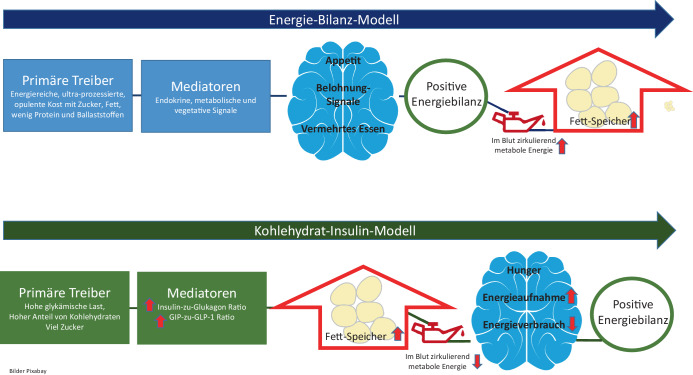
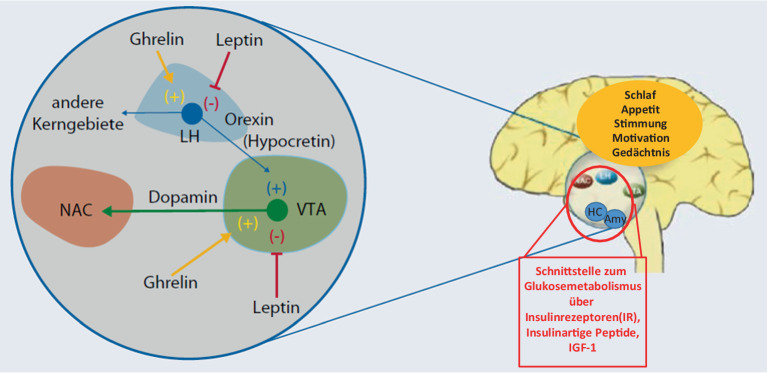
This review article explores the intricate relationship between nutrition, metabolism, brain function and mental health. It highlights two key complementary models: the energy balance model and the more comprehensive carbohydrate-insulin model, to understand the development of obesity and metabolic dysfunctions. It particularly focuses on the role of dopamine in dietary regulation and insulin in the brain, both of which are crucial in the pathogenesis of neurodegenerative and stress-associated mental disorders. Additionally, the significance of sleep and dietary habits, such as medically assisted calorie restriction for mental health and the concept of "brain food" are described. These findings emphasize the importance of nutritional medicine in psychiatry and psychotherapy and the consideration of metabolic states for the prevention and treatment of mental and neurodegenerative diseases.
这篇综述文章探讨了营养、代谢、脑功能和心理健康之间的复杂关系。它强调了两个关键的互补模型:能量平衡模型和更全面的碳水化合物-胰岛素模型,以理解肥胖和代谢功能障碍的发展。它特别关注多巴胺在饮食调节中的作用以及胰岛素在大脑中的作用,这两者在神经退行性和应激相关精神障碍的发病机制中都至关重要。此外,还描述了睡眠和饮食习惯的重要性,如用于心理健康的医学辅助热量限制以及“健脑食物”的概念。这些发现强调了营养医学在精神病学和心理治疗中的重要性,以及在预防和治疗精神和神经退行性疾病时考虑代谢状态的重要性。