Unit of Population Epidemiology, Division of Primary Care, Department of Health and Community Medicine, Geneva University Hospitals and Faculty of Medicine, University of Geneva, Geneva, Switzerland.
Division of Oncology, Department of Oncology, Geneva University Hospitals, Geneva, Switzerland.
J Clin Oncol. 2024 Aug 20;42(24):2908-2917. doi: 10.1200/JCO.23.02099. Epub 2024 Jun 18.
Socioeconomic status (SES) influences the survival outcomes of patients with early breast cancer (EBC). However, limited research investigates social inequalities in their quality of life (QoL). This study examines the socioeconomic inequalities in QoL after an EBC diagnosis and their time trends.
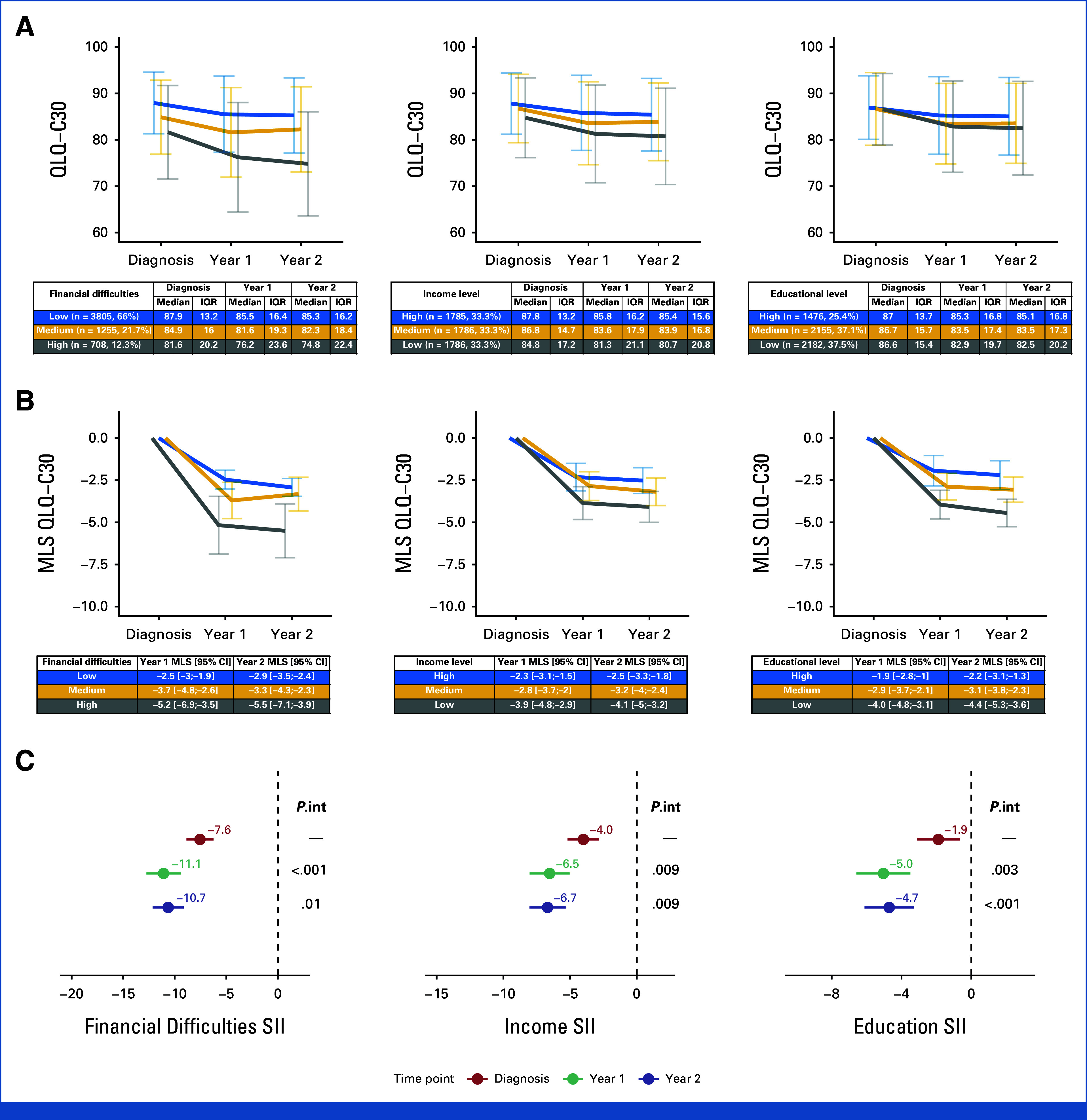
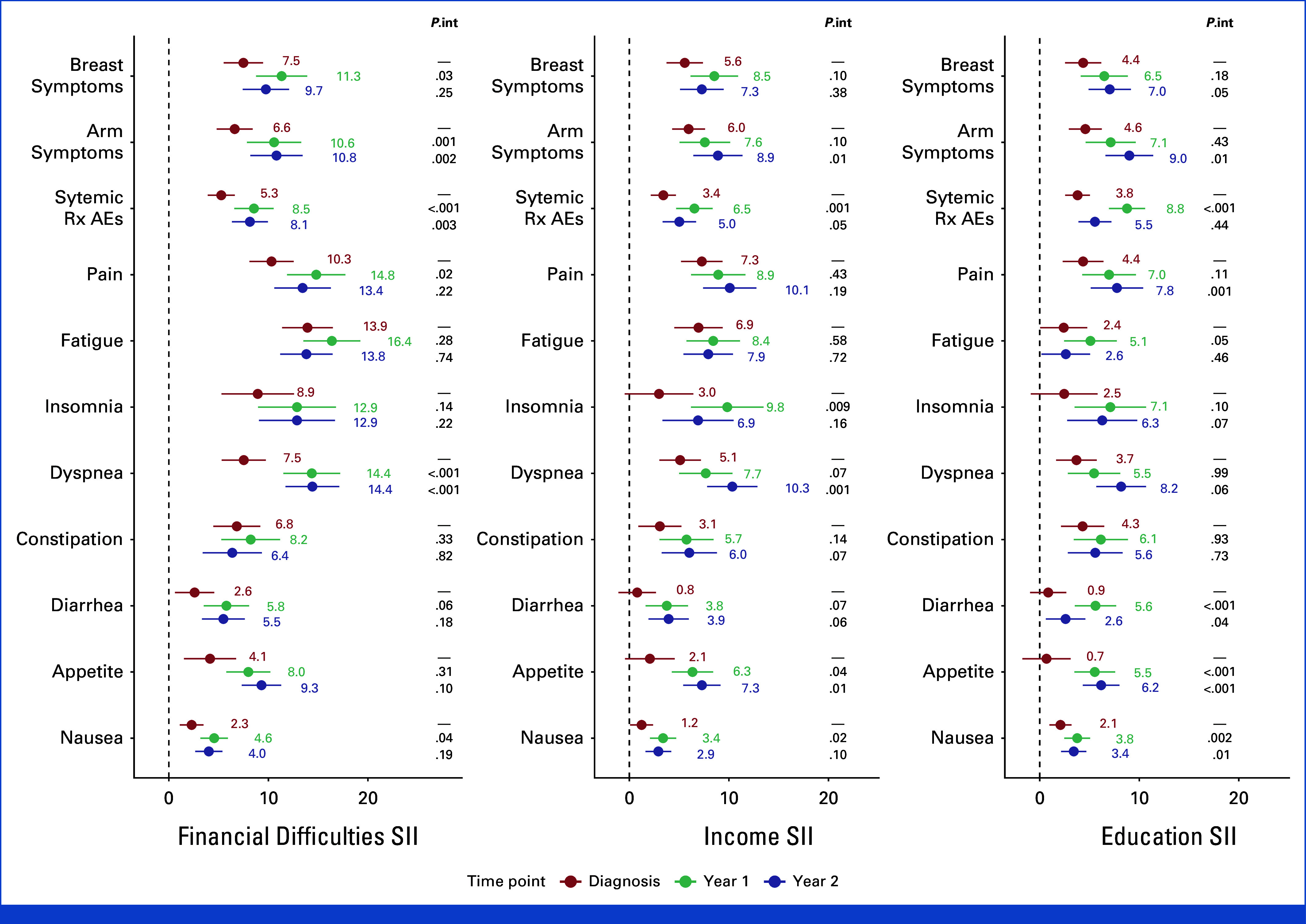
We used data from the French prospective multicentric CANTO cohort (ClinicalTrials.gov identifier: NCT01993498), including women with EBC enrolled between 2012 and 2018. QoL was assessed using the European Organisation for Research and Treatment of Cancer QoL Core 30 questionnaire (QLQ-C30). summary score at diagnosis and 1 and 2 years postdiagnosis. We considered three indicators of SES separately: self-reported financial difficulties, household income, and educational level. We first analyzed the trajectories of the QLQ-C30 summary score by SES group. Then, social inequalities in QLQ-C30 summary score and their time trends were quantified using the regression-based slope index of inequality (SII), representing the absolute change in the outcome along socioeconomic gradient extremes. The analyses were adjusted for age at diagnosis, Charlson Comorbidity Index, disease stage, and type of local and systemic treatment.
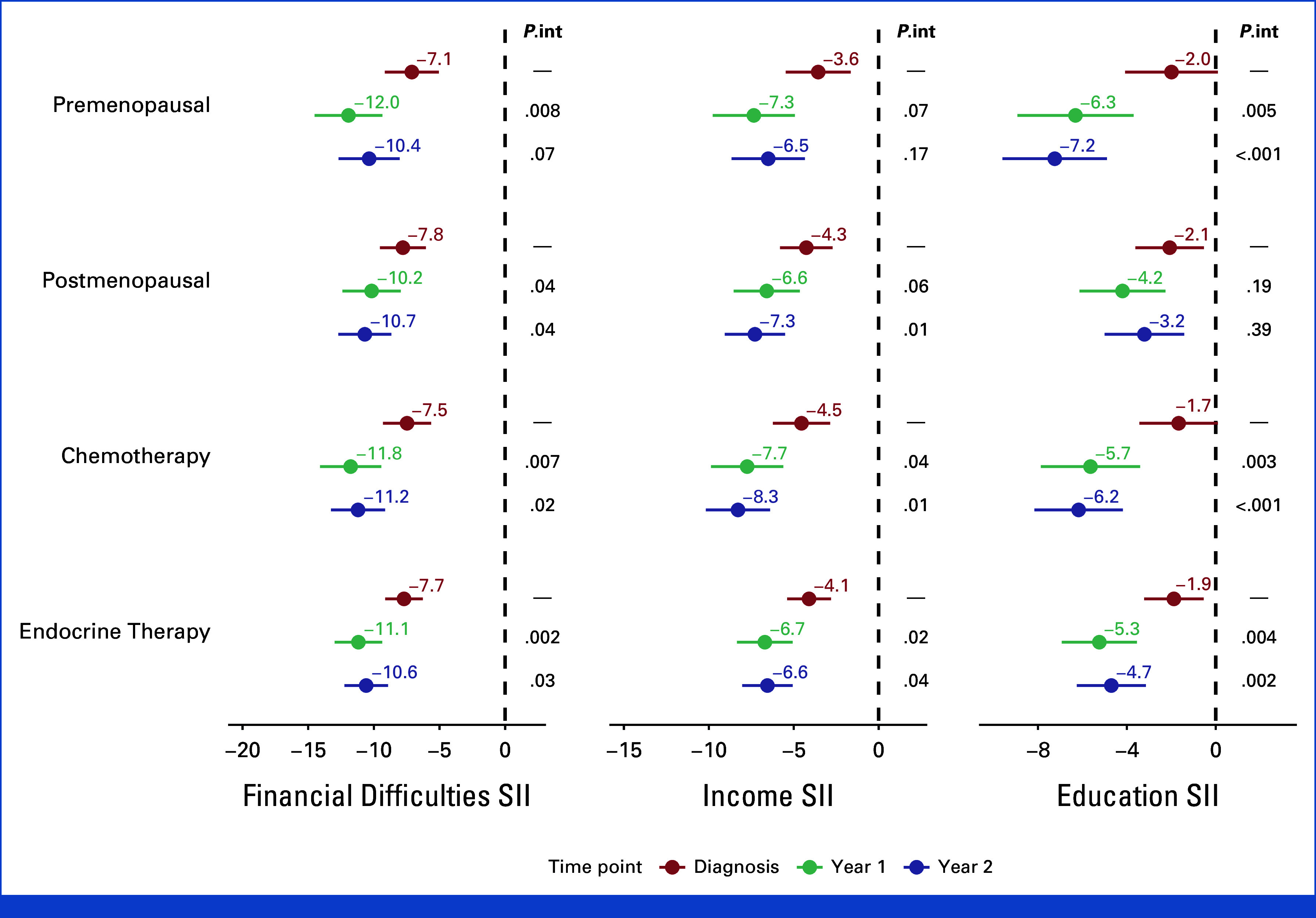
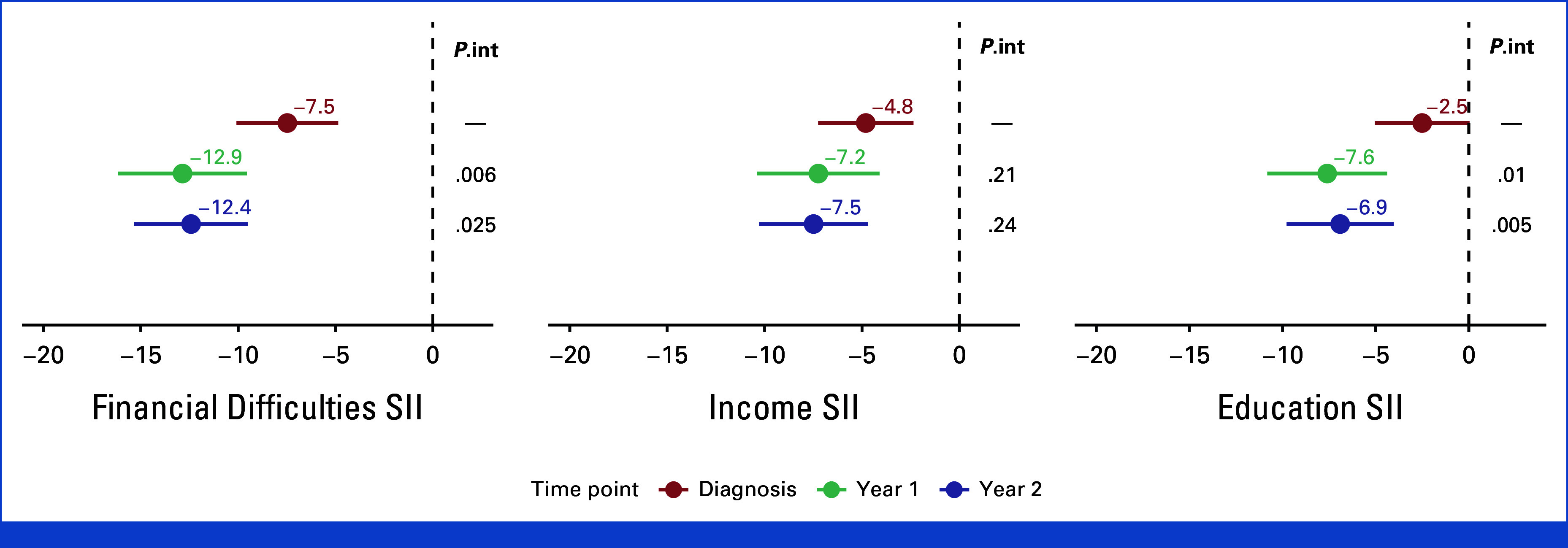
Among the 5,915 included patients with data on QoL at diagnosis and at the 2-year follow-up, social inequalities in QLQ-C30 summary score at baseline were statistically significant for all SES indicators (SII = -7.6 [-8.9; -6.2], SII = -4.0 [-5.2; -2.8]), SII = -1.9 [-3.1; -0.7]). These inequalities significantly increased (interaction < .05) in year 1 and year 2 postdiagnosis, irrespective of prediagnosis health, tumor characteristics, and treatment. Similar results were observed in subgroups defined by menopausal status and type of adjuvant systemic treatment.
The magnitude of preexisting inequalities in QoL increased over time after EBC diagnosis, emphasizing the importance of considering social determinants of health during comprehensive cancer care planning.
社会经济地位(SES)影响早期乳腺癌(EBC)患者的生存结局。然而,关于生活质量(QoL)方面的社会不平等问题,相关研究还很有限。本研究旨在探讨 EBC 诊断后 QoL 方面的社会经济不平等及其时间趋势。
我们使用了法国前瞻性多中心 CANTO 队列(ClinicalTrials.gov 标识符:NCT01993498)的数据,该队列纳入了 2012 年至 2018 年间确诊的 EBC 女性患者。使用欧洲癌症研究与治疗组织生活质量核心 30 问卷(QLQ-C30)评估 QoL。在诊断时和诊断后 1 年和 2 年评估 QLQ-C30 总评分。我们分别考虑了 SES 的三个指标:自我报告的经济困难、家庭收入和教育水平。我们首先分析了按 SES 分组的 QLQ-C30 总评分的轨迹。然后,使用基于回归的不平等斜率指数(SII)量化了 QLQ-C30 总评分的社会不平等及其时间趋势,该指数代表了沿着社会经济梯度极值的结局的绝对变化。分析调整了诊断时的年龄、Charlson 合并症指数、疾病分期以及局部和全身治疗类型。
在纳入的 5915 名有诊断时和 2 年随访时 QoL 数据的患者中,所有 SES 指标的 QLQ-C30 总评分的基线社会不平等均具有统计学意义(SII=-7.6[-8.9;-6.2],SII=-4.0[-5.2;-2.8]),SII=-1.9[-3.1;-0.7])。在诊断后 1 年和 2 年,无论预测前健康状况、肿瘤特征和治疗情况如何,这些不平等均显著增加(交互作用<.05)。在绝经状态和辅助全身治疗类型定义的亚组中也观察到了类似的结果。
EBC 诊断后,预先存在的 QoL 不平等程度随着时间的推移而增加,这强调了在全面癌症护理计划中考虑健康的社会决定因素的重要性。