Stanford Cancer Institute, Stanford University School of Medicine, Stanford, CA, USA.
Cancer Biology Program, Stanford University School of Medicine, Stanford, CA, USA.
Nat Commun. 2024 Jun 18;15(1):5148. doi: 10.1038/s41467-024-49007-4.
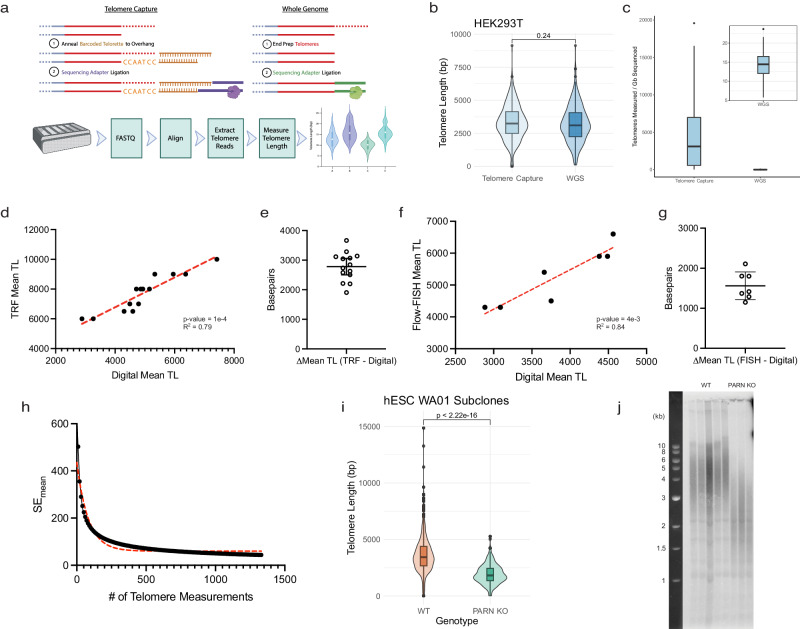
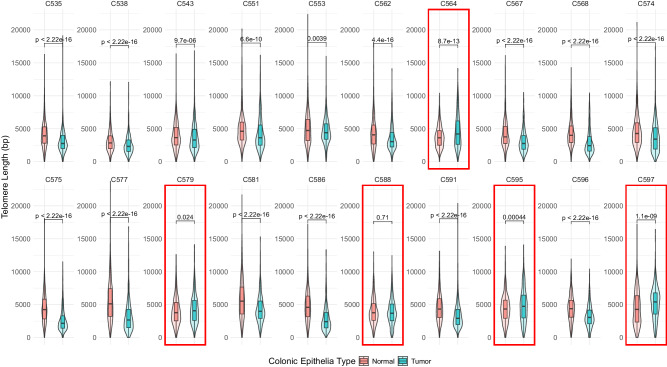
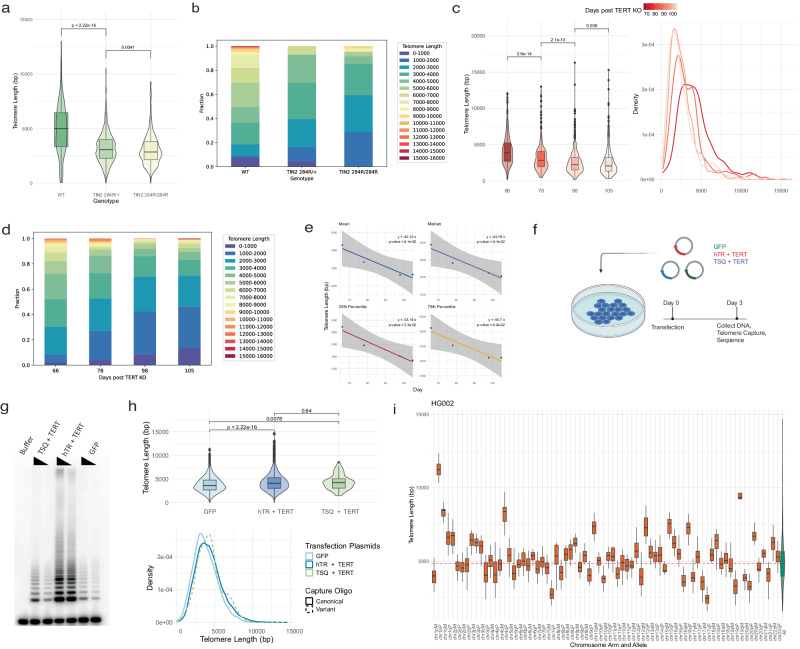
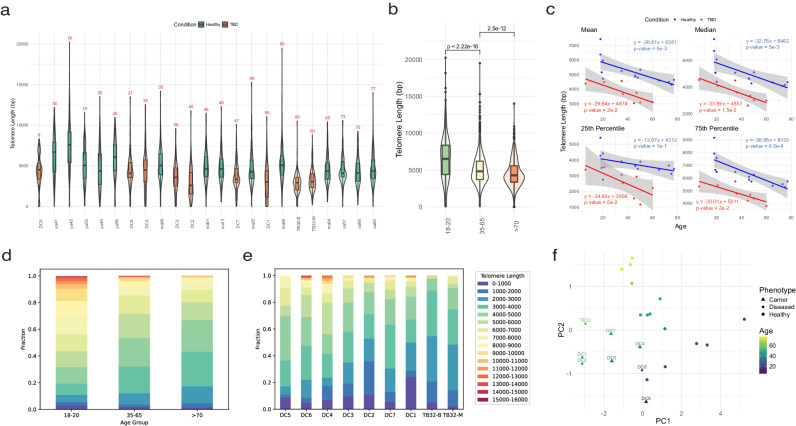
Telomere length is an important biomarker of organismal aging and cellular replicative potential, but existing measurement methods are limited in resolution and accuracy. Here, we deploy digital telomere measurement (DTM) by nanopore sequencing to understand how distributions of human telomere length change with age and disease. We measure telomere attrition and de novo elongation with up to 30 bp resolution in genetically defined populations of human cells, in blood cells from healthy donors and in blood cells from patients with genetic defects in telomere maintenance. We find that human aging is accompanied by a progressive loss of long telomeres and an accumulation of shorter telomeres. In patients with defects in telomere maintenance, the accumulation of short telomeres is more pronounced and correlates with phenotypic severity. We apply machine learning to train a binary classification model that distinguishes healthy individuals from those with telomere biology disorders. This sequencing and bioinformatic pipeline will advance our understanding of telomere maintenance mechanisms and the use of telomere length as a clinical biomarker of aging and disease.
端粒长度是生物老化和细胞复制潜能的重要生物标志物,但现有的测量方法在分辨率和准确性上存在局限性。在这里,我们通过纳米孔测序部署数字端粒测量(DTM),以了解人类端粒长度的分布如何随年龄和疾病而变化。我们以高达 30 个碱基对的分辨率,在遗传定义的人类细胞群体、健康供体的血细胞和端粒维持遗传缺陷患者的血细胞中测量端粒损耗和从头伸长。我们发现人类衰老伴随着长端粒的逐渐丧失和短端粒的积累。在端粒维持缺陷的患者中,短端粒的积累更为明显,并与表型严重程度相关。我们应用机器学习来训练一个二进制分类模型,将健康个体与端粒生物学紊乱个体区分开来。这个测序和生物信息学管道将推进我们对端粒维持机制的理解,并将端粒长度用作衰老和疾病的临床生物标志物。