Brain Plasticity Department, Swammerdam Institute for Life Sciences, Faculty of Science, University of Amsterdam, Amsterdam, The Netherlands.
VIB Center for Brain and Disease Research, Leuven, Belgium.
Nat Commun. 2024 Jun 18;15(1):5222. doi: 10.1038/s41467-024-49299-6.
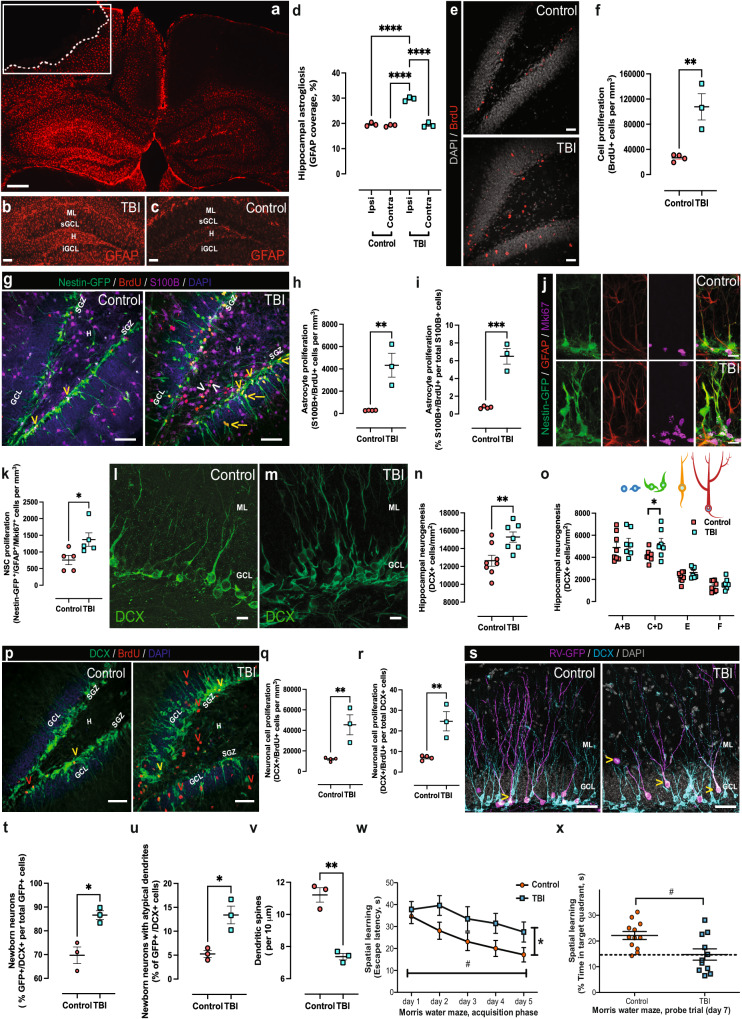
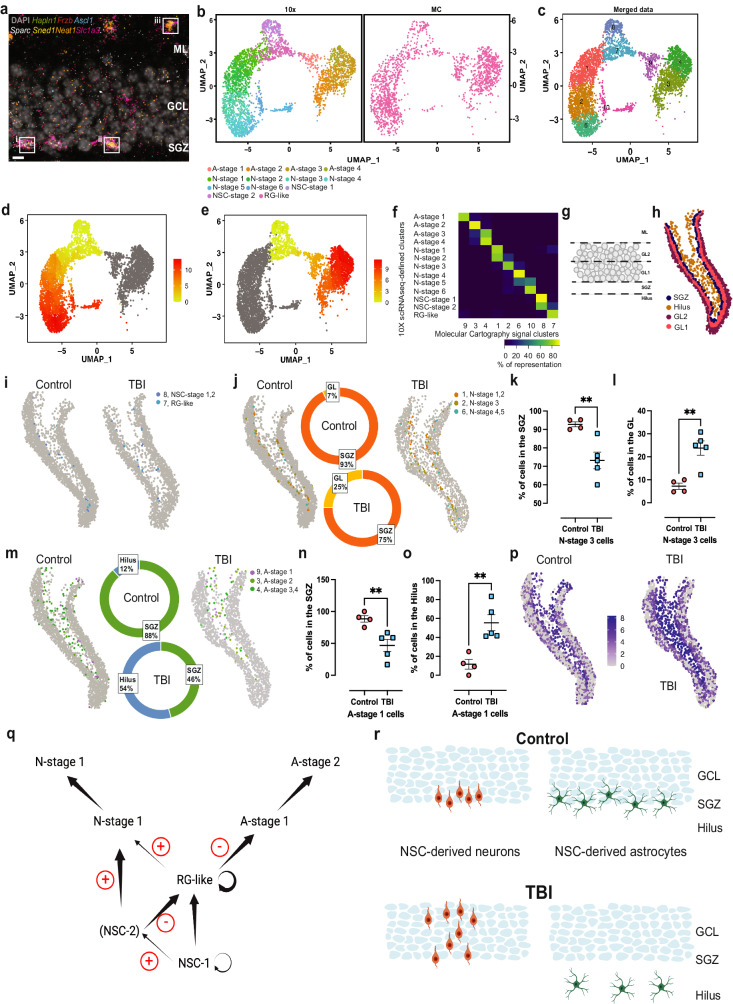
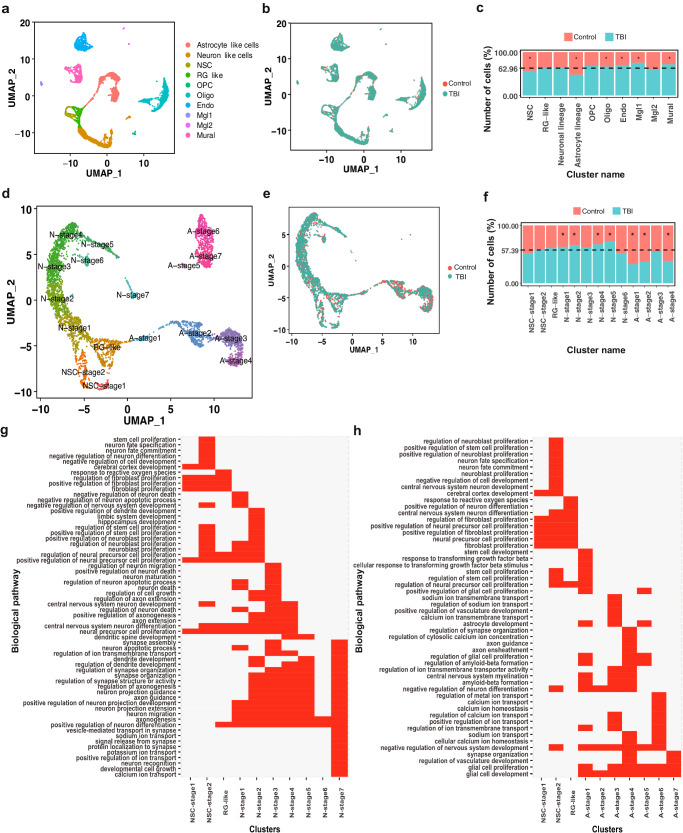
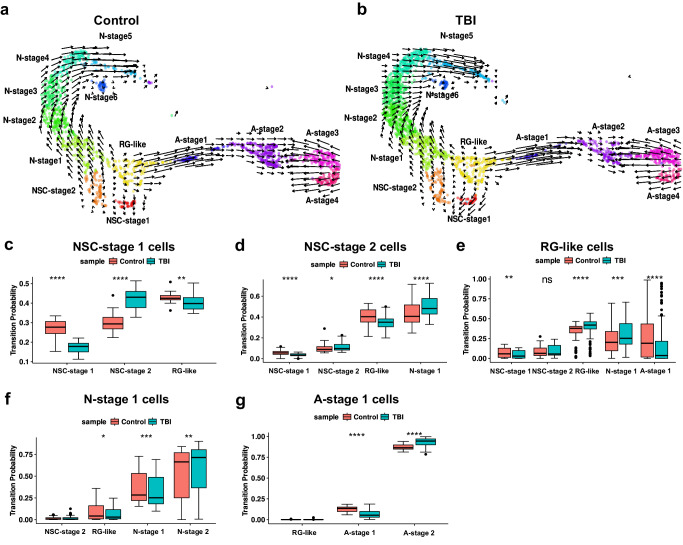
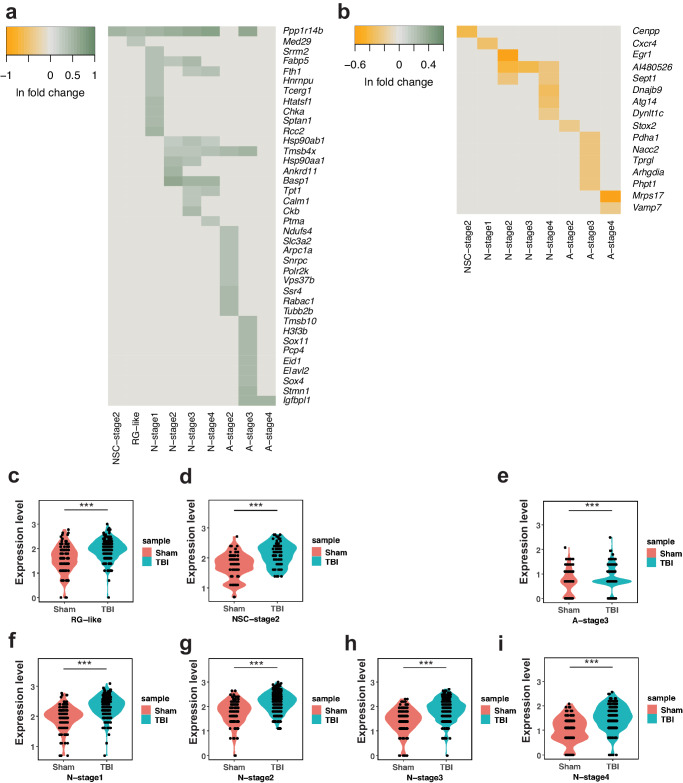
Traumatic brain injury (TBI) can result in long-lasting changes in hippocampal function. The changes induced by TBI on the hippocampus contribute to cognitive deficits. The adult hippocampus harbors neural stem cells (NSCs) that generate neurons (neurogenesis), and astrocytes (astrogliogenesis). While deregulation of hippocampal NSCs and neurogenesis have been observed after TBI, it is not known how TBI may affect hippocampal astrogliogenesis. Using a controlled cortical impact model of TBI in male mice, single cell RNA sequencing and spatial transcriptomics, we assessed how TBI affected hippocampal NSCs and the neuronal and astroglial lineages derived from them. We observe an increase in NSC-derived neuronal cells and a concomitant decrease in NSC-derived astrocytic cells, together with changes in gene expression and cell dysplasia within the dentate gyrus. Here, we show that TBI modifies NSC fate to promote neurogenesis at the cost of astrogliogenesis and identify specific cell populations as possible targets to counteract TBI-induced cellular changes in the adult hippocampus.
创伤性脑损伤 (TBI) 可导致海马功能的长期变化。TBI 对海马的改变导致认知缺陷。成年海马中存在产生神经元(神经发生)和星形胶质细胞(星形胶质发生)的神经干细胞 (NSC)。虽然 TBI 后观察到海马 NSCs 和神经发生失调,但尚不清楚 TBI 如何影响海马星形胶质发生。使用 TBI 的雄性小鼠皮质撞击模型,通过单细胞 RNA 测序和空间转录组学,我们评估了 TBI 如何影响海马 NSCs 以及源自它们的神经元和星形胶质细胞谱系。我们观察到 NSC 衍生的神经元细胞增加,同时 NSC 衍生的星形胶质细胞减少,以及齿状回内的基因表达和细胞异型性改变。在这里,我们表明 TBI 改变 NSC 命运以促进神经发生,代价是星形胶质发生,并确定特定的细胞群体可能成为对抗成年海马中 TBI 诱导的细胞变化的潜在靶点。