• 文献检索
  • 文档翻译
  • 深度研究
  • 学术资讯
  • Suppr Zotero 插件Zotero 插件
  • 邀请有礼
  • 套餐&价格
  • 历史记录
应用&插件
Suppr Zotero 插件Zotero 插件浏览器插件Mac 客户端Windows 客户端微信小程序
定价
高级版会员购买积分包购买API积分包
服务
文献检索文档翻译深度研究API 文档MCP 服务
关于我们
关于 Suppr公司介绍联系我们用户协议隐私条款
关注我们

Suppr 超能文献

核心技术专利:CN118964589B侵权必究
粤ICP备2023148730 号-1Suppr @ 2026

文献检索

告别复杂PubMed语法,用中文像聊天一样搜索,搜遍4000万医学文献。AI智能推荐,让科研检索更轻松。

立即免费搜索

文件翻译

保留排版,准确专业,支持PDF/Word/PPT等文件格式,支持 12+语言互译。

免费翻译文档

深度研究

AI帮你快速写综述,25分钟生成高质量综述,智能提取关键信息,辅助科研写作。

立即免费体验

低于玻璃化转变温度(T)的3D打印聚乳酸(PLA)的热机械行为及应变速率敏感性

Thermo-Mechanical Behavior and Strain Rate Sensitivity of 3D-Printed Polylactic Acid (PLA) below Glass Transition Temperature (T).

作者信息

Slavković Vukašin, Hanželič Blaž, Plesec Vasja, Milenković Strahinja, Harih Gregor

机构信息

Faculty of Engineering, University of Kragujevac, Sestre Janjic 6, 34000 Kragujevac, Serbia.

Laboratory for Integrated Product Development and CAD, Faculty of Mechanical Engineering, University of Maribor, Smetanova ulica 17, SI-2000 Maribor, Slovenia.

出版信息

Polymers (Basel). 2024 May 29;16(11):1526. doi: 10.3390/polym16111526.

DOI:10.3390/polym16111526
PMID:38891472
原文链接:https://pmc.ncbi.nlm.nih.gov/articles/PMC11174730/
Abstract

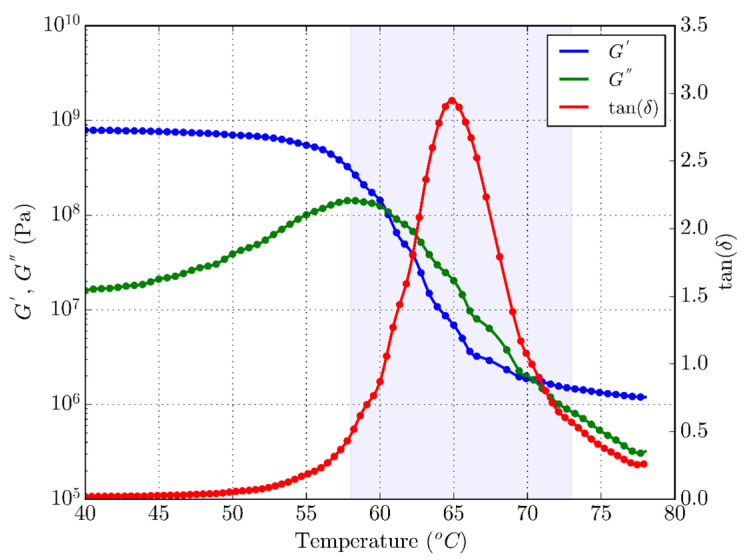
This study investigated the thermomechanical behavior of 4D-printed polylactic acid (PLA), focusing on its response to varying temperatures and strain rates in a wide range below the glass transition temperature (T). The material was characterized using tension, compression, and dynamic mechanical thermal analysis (DMTA), confirming PLA's strong dependency on strain rate and temperature. The glass transition temperature of 4D-printed PLA was determined to be 65 °C using a thermal analysis (DMTA). The elastic modulus changed from 1045.7 MPa in the glassy phase to 1.2 MPa in the rubber phase, showing the great shape memory potential of 4D-printed PLA. The filament tension tests revealed that the material's yield stress strongly depended on the strain rate at room temperature, with values ranging from 56 MPa to 43 MPA as the strain rate decreased. Using a commercial FDM Ultimaker printer, cylindrical compression samples were 3D-printed and then characterized under thermo-mechanical conditions. Thermo-mechanical compression tests were conducted at strain rates ranging from 0.0001 s to 0.1 s and at temperatures below the glass transition temperature (T) at 25, 37, and 50 °C. The conducted experimental tests showed that the material had distinct yield stress, strain softening, and strain hardening at very large deformations. Clear strain rate dependence was observed, particularly at quasi-static rates, with the temperature and strain rate significantly influencing PLA's mechanical properties, including yield stress. Yield stress values varied from 110 MPa at room temperature with a strain rate of 0.1 s to 42 MPa at 50 °C with a strain rate of 0.0001 s. This study also included thermo-mechanical adiabatic tests, which revealed that higher strain rates of 0.01 s and 0.1 s led to self-heating due to non-dissipated generated heat. This internal heating caused additional softening at higher strain rates and lower stress values. Thermal imaging revealed temperature increases of 15 °C and 18 °C for strain rates of 0.01 s and 0.1 s, respectively.

摘要

本研究调查了4D打印聚乳酸(PLA)的热机械行为,重点关注其在低于玻璃化转变温度(T)的宽范围内对不同温度和应变速率的响应。使用拉伸、压缩和动态机械热分析(DMTA)对该材料进行了表征,证实了PLA对应变速率和温度的强烈依赖性。通过热分析(DMTA)确定4D打印PLA的玻璃化转变温度为65°C。弹性模量从玻璃态的1045.7MPa变化到橡胶态的1.2MPa,显示出4D打印PLA具有巨大的形状记忆潜力。长丝拉伸试验表明,材料的屈服应力在室温下强烈依赖于应变速率,随着应变速率降低,其值在56MPa至43MPa范围内变化。使用商用FDM Ultimaker打印机3D打印圆柱形压缩样品,然后在热机械条件下对其进行表征。热机械压缩试验在应变速率为0.0001s至0.1s以及温度低于玻璃化转变温度(T)的25°C、37°C和50°C下进行。所进行的实验测试表明,该材料在非常大的变形下具有明显的屈服应力、应变软化和应变硬化。观察到明显的应变速率依赖性,特别是在准静态速率下,温度和应变速率显著影响PLA的机械性能,包括屈服应力。屈服应力值从室温下应变速率为0.1s时的110MPa变化到50°C下应变速率为0.0001s时的42MPa。本研究还包括热机械绝热试验,结果表明,较高的应变速率0.01s和0.1s会由于产生的热量未消散而导致自热。这种内部加热在较高应变速率下导致额外的软化和较低的应力值。热成像显示,应变速率为0.01s和0.1s时温度分别升高15°C和18°C。

https://cdn.ncbi.nlm.nih.gov/pmc/blobs/7a04/11174730/ab05f7731834/polymers-16-01526-g013.jpg
https://cdn.ncbi.nlm.nih.gov/pmc/blobs/7a04/11174730/e837f621a76b/polymers-16-01526-g001.jpg
https://cdn.ncbi.nlm.nih.gov/pmc/blobs/7a04/11174730/b3eec56e4df7/polymers-16-01526-g002.jpg
https://cdn.ncbi.nlm.nih.gov/pmc/blobs/7a04/11174730/43b71ab16b34/polymers-16-01526-g003.jpg
https://cdn.ncbi.nlm.nih.gov/pmc/blobs/7a04/11174730/e0ffc2cb7cc3/polymers-16-01526-g004.jpg
https://cdn.ncbi.nlm.nih.gov/pmc/blobs/7a04/11174730/494139abb2b1/polymers-16-01526-g005.jpg
https://cdn.ncbi.nlm.nih.gov/pmc/blobs/7a04/11174730/7bbc4f045893/polymers-16-01526-g006.jpg
https://cdn.ncbi.nlm.nih.gov/pmc/blobs/7a04/11174730/855e72a065aa/polymers-16-01526-g007.jpg
https://cdn.ncbi.nlm.nih.gov/pmc/blobs/7a04/11174730/bd299d983395/polymers-16-01526-g008.jpg
https://cdn.ncbi.nlm.nih.gov/pmc/blobs/7a04/11174730/c38a501f0ebe/polymers-16-01526-g009.jpg
https://cdn.ncbi.nlm.nih.gov/pmc/blobs/7a04/11174730/abadf1d9a3fa/polymers-16-01526-g010.jpg
https://cdn.ncbi.nlm.nih.gov/pmc/blobs/7a04/11174730/b0fb7feb7235/polymers-16-01526-g011.jpg
https://cdn.ncbi.nlm.nih.gov/pmc/blobs/7a04/11174730/bfdecf7d28a5/polymers-16-01526-g012.jpg
https://cdn.ncbi.nlm.nih.gov/pmc/blobs/7a04/11174730/ab05f7731834/polymers-16-01526-g013.jpg
https://cdn.ncbi.nlm.nih.gov/pmc/blobs/7a04/11174730/e837f621a76b/polymers-16-01526-g001.jpg
https://cdn.ncbi.nlm.nih.gov/pmc/blobs/7a04/11174730/b3eec56e4df7/polymers-16-01526-g002.jpg
https://cdn.ncbi.nlm.nih.gov/pmc/blobs/7a04/11174730/43b71ab16b34/polymers-16-01526-g003.jpg
https://cdn.ncbi.nlm.nih.gov/pmc/blobs/7a04/11174730/e0ffc2cb7cc3/polymers-16-01526-g004.jpg
https://cdn.ncbi.nlm.nih.gov/pmc/blobs/7a04/11174730/494139abb2b1/polymers-16-01526-g005.jpg
https://cdn.ncbi.nlm.nih.gov/pmc/blobs/7a04/11174730/7bbc4f045893/polymers-16-01526-g006.jpg
https://cdn.ncbi.nlm.nih.gov/pmc/blobs/7a04/11174730/855e72a065aa/polymers-16-01526-g007.jpg
https://cdn.ncbi.nlm.nih.gov/pmc/blobs/7a04/11174730/bd299d983395/polymers-16-01526-g008.jpg
https://cdn.ncbi.nlm.nih.gov/pmc/blobs/7a04/11174730/c38a501f0ebe/polymers-16-01526-g009.jpg
https://cdn.ncbi.nlm.nih.gov/pmc/blobs/7a04/11174730/abadf1d9a3fa/polymers-16-01526-g010.jpg
https://cdn.ncbi.nlm.nih.gov/pmc/blobs/7a04/11174730/b0fb7feb7235/polymers-16-01526-g011.jpg
https://cdn.ncbi.nlm.nih.gov/pmc/blobs/7a04/11174730/bfdecf7d28a5/polymers-16-01526-g012.jpg
https://cdn.ncbi.nlm.nih.gov/pmc/blobs/7a04/11174730/ab05f7731834/polymers-16-01526-g013.jpg

相似文献

1
Thermo-Mechanical Behavior and Strain Rate Sensitivity of 3D-Printed Polylactic Acid (PLA) below Glass Transition Temperature (T).低于玻璃化转变温度(T)的3D打印聚乳酸(PLA)的热机械行为及应变速率敏感性
Polymers (Basel). 2024 May 29;16(11):1526. doi: 10.3390/polym16111526.
2
Probing the complex thermo-mechanical properties of a 3D-printed polylactide-hydroxyapatite composite using synchrotron X-ray scattering.利用同步加速器X射线散射探究3D打印聚乳酸-羟基磷灰石复合材料的复杂热机械性能。
J Adv Res. 2018 Nov 16;16:113-122. doi: 10.1016/j.jare.2018.11.002. eCollection 2019 Mar.
3
Prediction of The Mechanical Behavior of Polylactic Acid Parts with Shape Memory Effect Fabricated by FDM.熔融沉积成型制备的具有形状记忆效应的聚乳酸零件力学行为预测
Polymers (Basel). 2023 Feb 25;15(5):1162. doi: 10.3390/polym15051162.
4
3D Printing of PLA/clay Nanocomposites: Influence of Printing Temperature on Printed Samples Properties.聚乳酸/粘土纳米复合材料的3D打印:打印温度对打印样品性能的影响。
Materials (Basel). 2018 Oct 11;11(10):1947. doi: 10.3390/ma11101947.
5
Temperature and Infill Density Effects on Thermal, Mechanical and Shape Memory Properties of Polylactic Acid/Poly(ε-caprolactone) Blends for 4D Printing.温度和填充密度对用于4D打印的聚乳酸/聚(ε-己内酯)共混物的热、机械和形状记忆性能的影响
Materials (Basel). 2022 Dec 10;15(24):8838. doi: 10.3390/ma15248838.
6
Mechanical Properties and a Constitutive Model of 3D-Printed Copper Powder-Filled PLA Material.3D打印铜粉填充聚乳酸材料的力学性能及本构模型
Polymers (Basel). 2021 Oct 19;13(20):3605. doi: 10.3390/polym13203605.
7
Physiochemical and mechanical characterisation of orthodontic 3D printed aligner material made of shape memory polymers (4D aligner material).正畸 3D 打印用形状记忆聚合物(4D 矫正器材料)的理化和力学特性。
J Mech Behav Biomed Mater. 2024 Feb;150:106337. doi: 10.1016/j.jmbbm.2023.106337. Epub 2023 Dec 25.
8
Thermo-Mechanical Characterization of 4D-Printed Biodegradable Shape-Memory Scaffolds Using Four-Axis 3D-Printing System.使用四轴3D打印系统对4D打印可生物降解形状记忆支架进行热机械表征
Materials (Basel). 2023 Jul 24;16(14):5186. doi: 10.3390/ma16145186.
9
Characterisation and Modelling of PLA Filaments and Evolution with Time.聚乳酸(PLA)长丝的表征、建模及随时间的演变
Polymers (Basel). 2021 Aug 28;13(17):2899. doi: 10.3390/polym13172899.
10
4D Printing of Electroactive Triple-Shape Composites.电活性三重形状复合材料的4D打印
Polymers (Basel). 2023 Feb 7;15(4):832. doi: 10.3390/polym15040832.

引用本文的文献

1
Experimental Investigation of Thermal Conductivity of Selected 3D-Printed Materials.选定的3D打印材料热导率的实验研究
Materials (Basel). 2025 Aug 22;18(17):3950. doi: 10.3390/ma18173950.
2
Biocompatible Thermoplastics in Additive Manufacturing of Bone Defect Fillers: State-of-the-Art and Future Prospects.生物相容性热塑性塑料在骨缺损填充剂增材制造中的应用:现状与未来展望
Materials (Basel). 2025 Aug 8;18(16):3723. doi: 10.3390/ma18163723.
3
4D printing polymeric biomaterials for adaptive tissue regeneration.用于适应性组织再生的4D打印聚合物生物材料。

本文引用的文献

1
Multi-Attribute Decision Making: Parametric Optimization and Modeling of the FDM Manufacturing Process Using PLA/Wood Biocomposites.多属性决策:使用聚乳酸/木材生物复合材料对熔融沉积成型制造工艺进行参数优化与建模
Materials (Basel). 2024 Feb 17;17(4):924. doi: 10.3390/ma17040924.
2
Tailoring mechanical properties in 3D printed multimaterial architected structures.3D 打印多材料结构的机械性能定制。
J Mech Behav Biomed Mater. 2024 Apr;152:106431. doi: 10.1016/j.jmbbm.2024.106431. Epub 2024 Jan 24.
3
Thermo-Mechanical Characterization of 4D-Printed Biodegradable Shape-Memory Scaffolds Using Four-Axis 3D-Printing System.
Bioact Mater. 2025 Feb 22;48:370-399. doi: 10.1016/j.bioactmat.2025.01.033. eCollection 2025 Jun.
使用四轴3D打印系统对4D打印可生物降解形状记忆支架进行热机械表征
Materials (Basel). 2023 Jul 24;16(14):5186. doi: 10.3390/ma16145186.
4
Development, fabrication and mechanical characterisation of auxetic bicycle handlebar grip.开发、制作和机械特性分析的弹性自行车把手套。
Sci Rep. 2023 May 19;13(1):8158. doi: 10.1038/s41598-023-35418-8.
5
Numerical Analysis of a Transtibial Prosthesis Socket Using 3D-Printed Bio-Based PLA.使用3D打印生物基聚乳酸的经胫骨假肢接受腔的数值分析
Materials (Basel). 2023 Feb 28;16(5):1985. doi: 10.3390/ma16051985.
6
Characterization of Polyurethane Shape Memory Polymer and Determination of Shape Fixity and Shape Recovery in Subsequent Thermomechanical Cycles.聚氨酯形状记忆聚合物的表征及后续热机械循环中形状固定率和形状回复率的测定
Polymers (Basel). 2022 Nov 7;14(21):4775. doi: 10.3390/polym14214775.
7
Experimental and Numerical Investigation of 3D Printing PLA Origami Tubes under Quasi-Static Uniaxial Compression.准静态单轴压缩下3D打印聚乳酸折纸管的实验与数值研究
Polymers (Basel). 2022 Oct 2;14(19):4135. doi: 10.3390/polym14194135.
8
Compression Performance and Deformation Behavior of 3D-Printed PLA-Based Lattice Structures.3D打印聚乳酸基晶格结构的压缩性能与变形行为
Polymers (Basel). 2022 Mar 7;14(5):1062. doi: 10.3390/polym14051062.
9
Altering the Elastic Properties of 3D Printed Poly-Lactic Acid (PLA) Parts by Compressive Cyclic Loading.通过压缩循环加载改变3D打印聚乳酸(PLA)部件的弹性性能
Materials (Basel). 2020 Oct 8;13(19):4456. doi: 10.3390/ma13194456.
10
Effect of Moisture on Shape Memory Polyurethane Polymers for Extrusion-Based Additive Manufacturing.水分对用于基于挤出的增材制造的形状记忆聚氨酯聚合物的影响。
Materials (Basel). 2019 Jan 12;12(2):244. doi: 10.3390/ma12020244.