School of Agriculture, Ludong University, Yantai 264025, China.
Yantai Marine Economic Research Institute, Yantai 264003, China.
Molecules. 2024 Jun 5;29(11):2671. doi: 10.3390/molecules29112671.
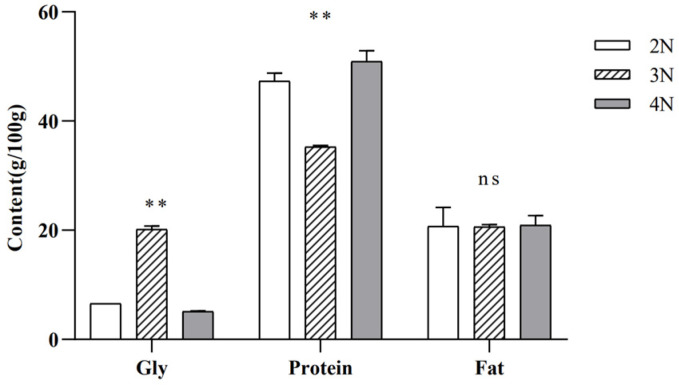
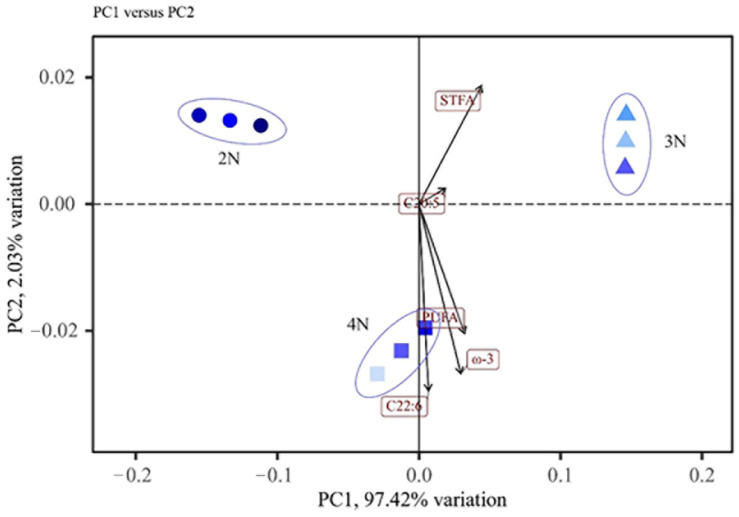
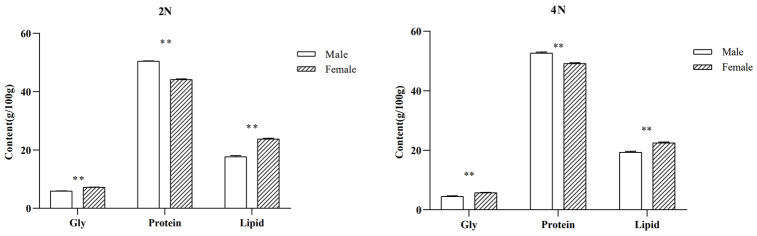
Tetraploid oysters are artificially produced oysters that do not exist in nature. The successful breeding of 100% triploid oysters resolved the difficulties of traditional drug-induced triploids, such as the presence of drug residues and a low triploid induction rate. However, little is known concerning the biochemical composition and nutrient contents of such tetraploids. Therefore, we investigated compositional differences among diploid, triploid, and tetraploid as well as between males and females of diploids and tetraploids. The findings indicated that glycogen, EPA, ∑PUFA, and omega-3 contents were significantly higher in triploid oysters than in diploids or tetraploids; tetraploid oysters had a significantly higher protein content, C14:0, essential amino acid, and flavor-presenting amino acid contents than diploids or triploids. For both diploid and tetraploids, females had significantly higher levels of glutamate, methionine, and phenylalanine than males but lower levels of glycine and alanine. In addition, female oysters had significantly more EPA, DHA, omega-3, and total fatty acids, a result that may be due to the fact that gonadal development in male oysters requires more energy to sustain growth, consumes greater amounts of nutrients, and accumulates more proteins. With these results, important information is provided on the production of , as well as on the basis and backing for the genetic breeding of oysters.
四倍体牡蛎是人工培育的,自然界中并不存在。成功培育出 100%的三倍体牡蛎解决了传统药物诱导三倍体所存在的问题,如药物残留和低三倍体诱导率。然而,对于这种四倍体的生化组成和营养成分知之甚少。因此,我们研究了二倍体、三倍体和四倍体以及二倍体和四倍体雌雄个体之间的成分差异。结果表明,三倍体牡蛎的糖原、EPA、∑PUFA 和 ω-3 含量明显高于二倍体或四倍体;四倍体牡蛎的蛋白质、C14:0、必需氨基酸和呈味氨基酸含量明显高于二倍体或三倍体。对于二倍体和四倍体,雌性的谷氨酸、蛋氨酸和苯丙氨酸含量明显高于雄性,而甘氨酸和丙氨酸含量则较低。此外,雌性牡蛎的 EPA、DHA、ω-3 和总脂肪酸含量明显更高,这可能是因为雄性牡蛎的性腺发育需要更多的能量来维持生长,消耗更多的营养物质,并积累更多的蛋白质。这些结果为牡蛎的生产提供了重要信息,也为牡蛎的遗传育种提供了基础和依据。