Chiefa Francesco, Tedeschi Paola, Cescon Mirco, Costa Valentina, Sarti Elena, Salgado-Ramos Manuel, Pallarés Noelia, Spadafora Natasha Damiana, Aguiari Leonardo, Pasti Luisa
Department of Chemical, Pharmaceutical and Agricultural Sciences, University of Ferrara, Via Luigi Borsari 46, 44121 Ferrara, Italy.
Department of Environmental and Prevention Sciences, University of Ferrara, Via Luigi Borsari 46, 44121 Ferrara, Italy.
Molecules. 2024 Nov 24;29(23):5546. doi: 10.3390/molecules29235546.
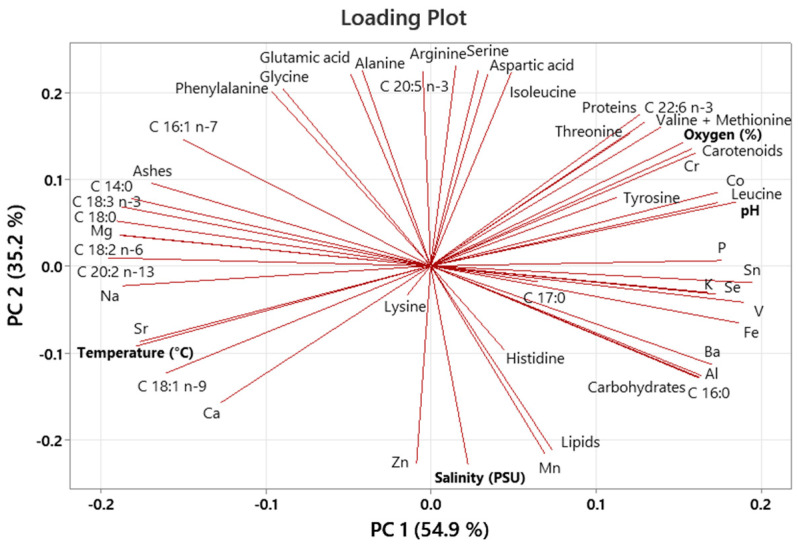
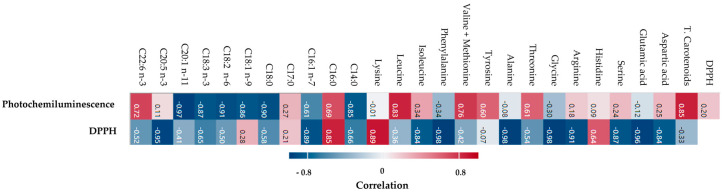
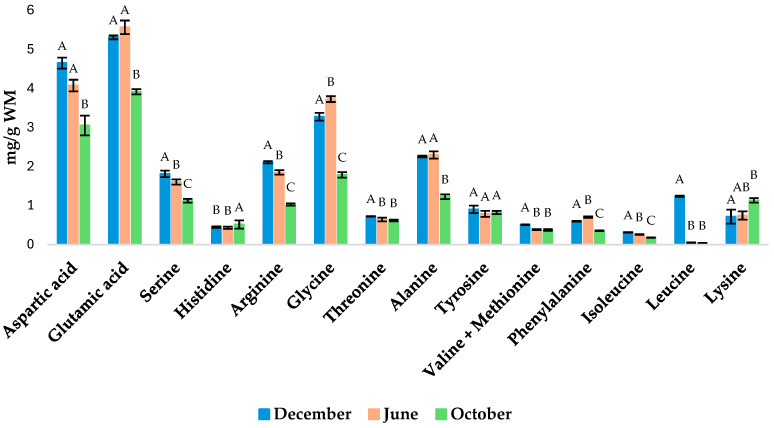
The quality aspects of () cultured in Valli di Comacchio were examined across different seasons. Nutritional quality parameters, antioxidant activity, total carotenoids, and contaminants were determined in winter, summer, and autumn (December, June, and October). Seasonal variations in nutritional parameters were observed. In particular, in the winter samples, proteins, eicosapentaenoic acid, docosahexaenoic acid, threonine, tyrosine, valine and methionine, isoleucine, potassium, and carotenoids showed the highest values, whereas oleic acid, linolenic acid, lysine, and magnesium exhibited the maximum values in the summer. Finally, lipids, carbohydrates, histidine, and magnesium were present at high values in the autumn. The antioxidant activity values differed between the two methods used (DPPH and photochemiluminescence assays); however, the oysters collected in June presented lower antioxidant capacity. Contaminant levels were always below the imposed concentration limits; however, higher levels of toxic metals were detected in the winter, while polycyclic aromatic hydrocarbons were detected in the summer and autumn. It is important to monitor the nutritional and toxicological quality of throughout the cultivation seasons, not only to enhance knowledge of this species and improve its cultivation systems but also to determine the optimal period for human consumption from both nutritional and toxicological perspectives.
对科马基奥谷养殖的()在不同季节的质量方面进行了研究。在冬季、夏季和秋季(12月、6月和10月)测定了营养质量参数、抗氧化活性、总类胡萝卜素和污染物。观察到营养参数的季节性变化。特别是,在冬季样本中,蛋白质、二十碳五烯酸、二十二碳六烯酸、苏氨酸、酪氨酸、缬氨酸和蛋氨酸、异亮氨酸、钾和类胡萝卜素的值最高,而油酸、亚麻酸、赖氨酸和镁在夏季的值最高。最后,脂质、碳水化合物、组氨酸和镁在秋季含量较高。所使用的两种方法(DPPH和光化学发光测定法)的抗氧化活性值有所不同;然而,6月采集的牡蛎抗氧化能力较低。污染物水平始终低于规定的浓度限值;然而,冬季检测到较高水平的有毒金属,夏季和秋季检测到多环芳烃。在整个养殖季节监测()的营养和毒理学质量很重要,这不仅有助于增进对该物种的了解并改进其养殖系统,还能从营养和毒理学角度确定人类消费的最佳时期。