Department of IoT and Robotics Engineering, Bangabandhu Sheikh Mujibur Rahman Digital University, Bangladesh, Kaliakair, Gazipur 1750, Bangladesh.
Division of Computer Science and Engineering, Louisiana State University and Agricultural and Mechanical College, Baton Rouge, LA 70803, USA.
Sensors (Basel). 2024 Jun 6;24(11):3682. doi: 10.3390/s24113682.
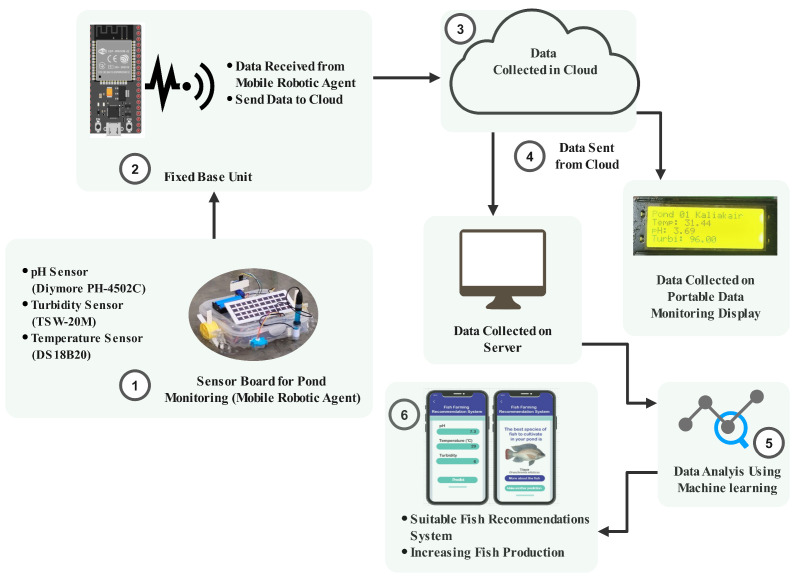
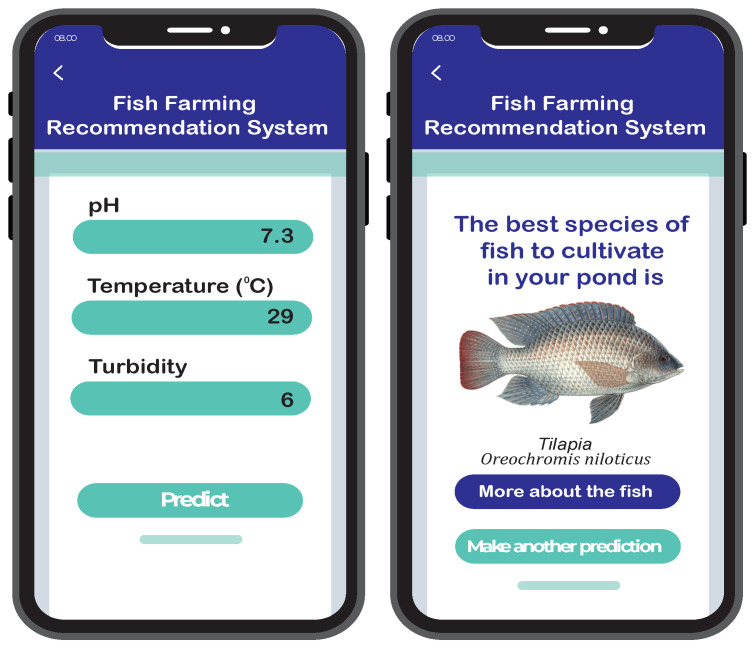
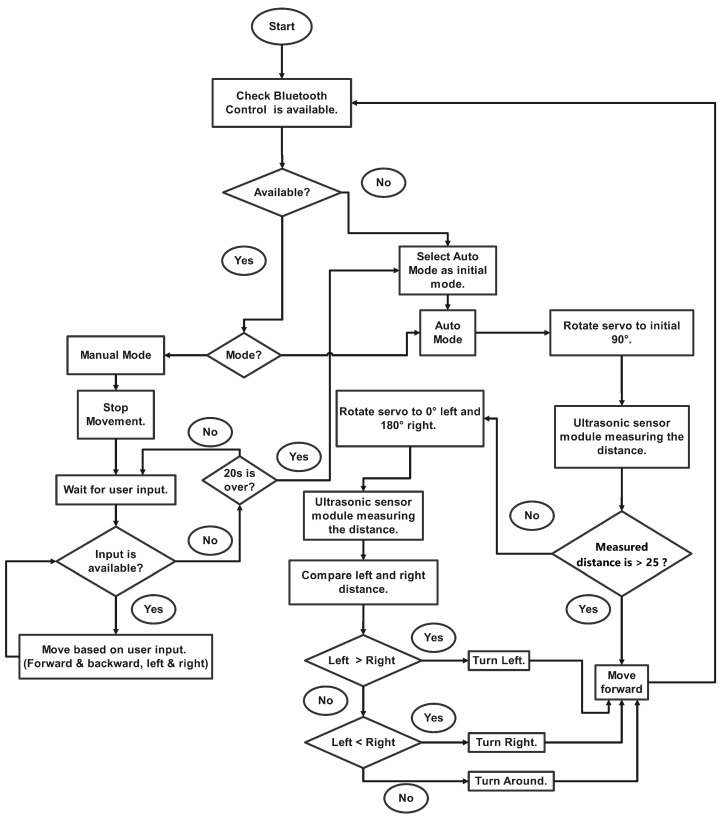
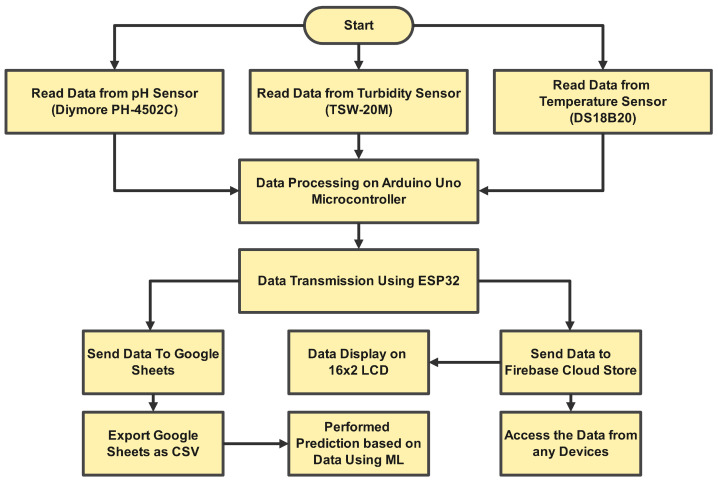
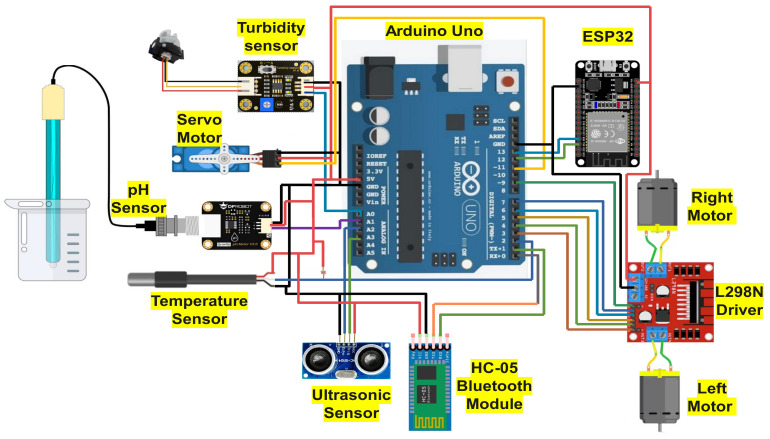
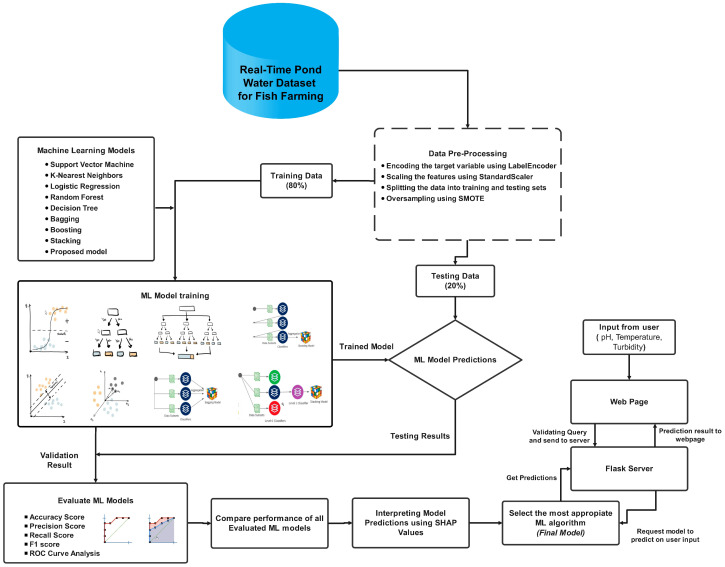
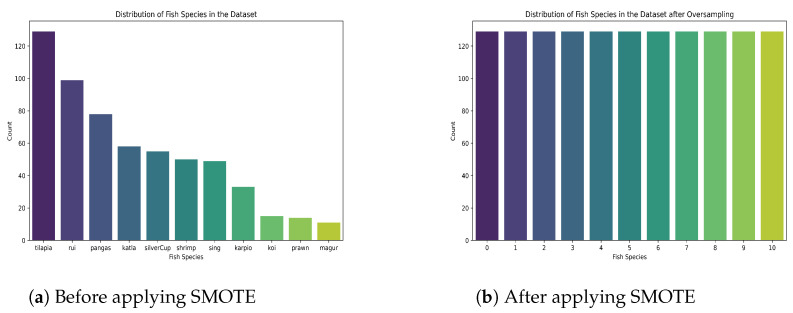
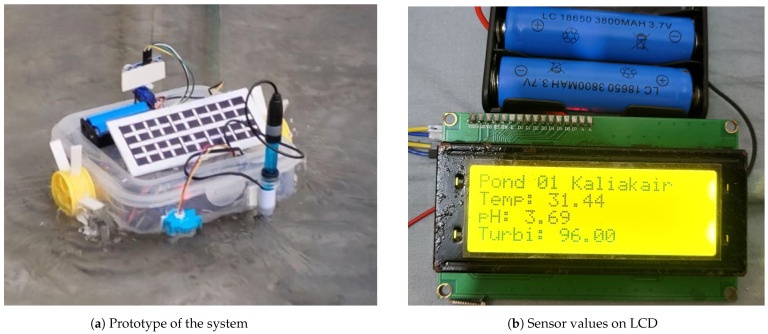
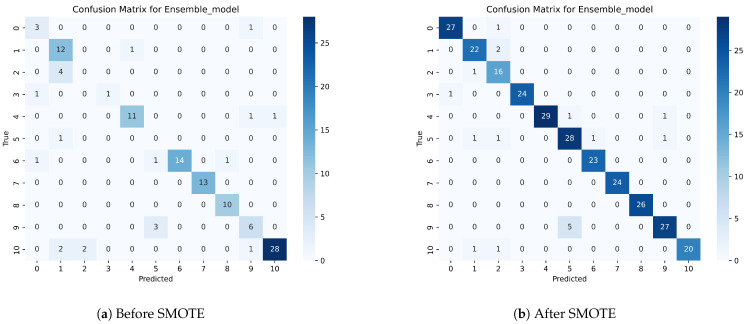
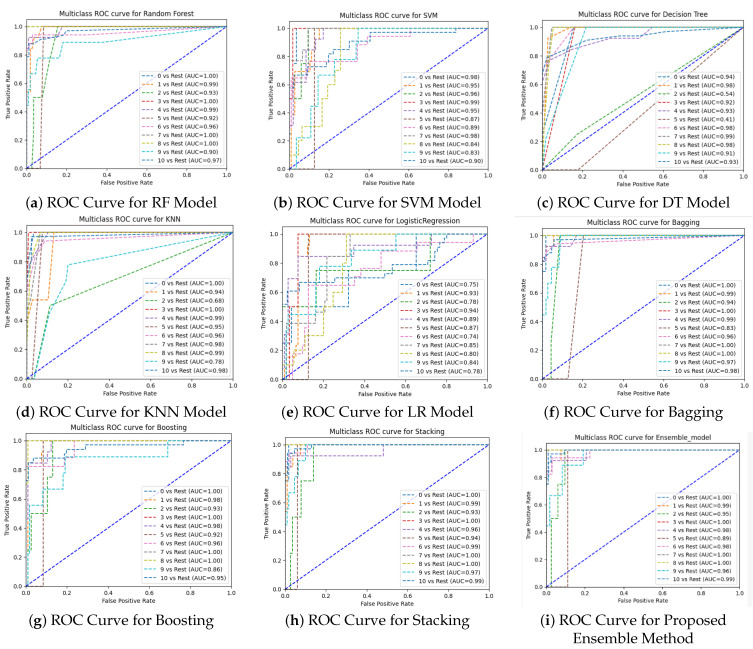
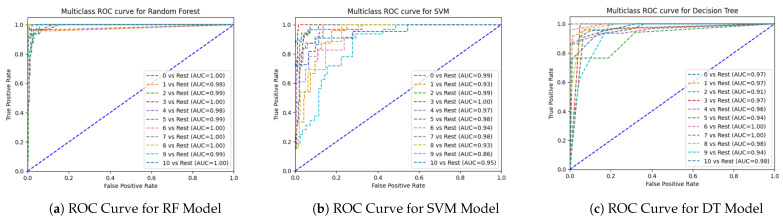
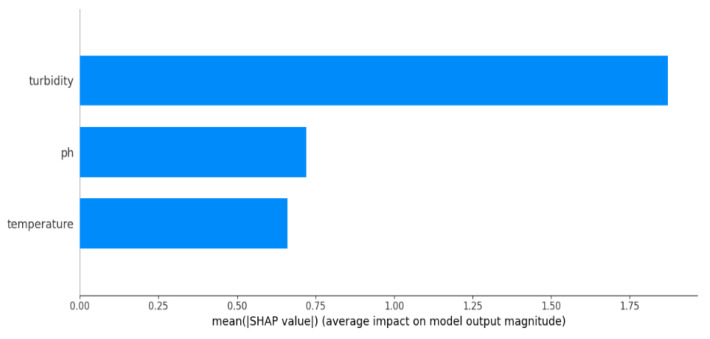
The integration of cutting-edge technologies such as the Internet of Things (IoT), robotics, and machine learning (ML) has the potential to significantly enhance the productivity and profitability of traditional fish farming. Farmers using traditional fish farming methods incur enormous economic costs owing to labor-intensive schedule monitoring and care, illnesses, and sudden fish deaths. Another ongoing issue is automated fish species recommendation based on water quality. On the one hand, the effective monitoring of abrupt changes in water quality may minimize the daily operating costs and boost fish productivity, while an accurate automatic fish recommender may aid the farmer in selecting profitable fish species for farming. In this paper, we present AquaBot, an IoT-based system that can automatically collect, monitor, and evaluate the water quality and recommend appropriate fish to farm depending on the values of various water quality indicators. A mobile robot has been designed to collect parameter values such as the pH, temperature, and turbidity from all around the pond. To facilitate monitoring, we have developed web and mobile interfaces. For the analysis and recommendation of suitable fish based on water quality, we have trained and tested several ML algorithms, such as the proposed custom ensemble model, random forest (RF), support vector machine (SVM), decision tree (DT), K-nearest neighbor (KNN), logistic regression (LR), bagging, boosting, and stacking, on a real-time pond water dataset. The dataset has been preprocessed with feature scaling and dataset balancing. We have evaluated the algorithms based on several performance metrics. In our experiment, our proposed ensemble model has delivered the best result, with 94% accuracy, 94% precision, 94% recall, a 94% F1-score, 93% MCC, and the best AUC score for multi-class classification. Finally, we have deployed the best-performing model in a web interface to provide cultivators with recommendations for suitable fish farming. Our proposed system is projected to not only boost production and save money but also reduce the time and intensity of the producer's manual labor.
物联网 (IoT)、机器人技术和机器学习 (ML) 等前沿技术的融合有可能显著提高传统养鱼的生产力和盈利能力。由于劳动密集型的日程监控和护理、疾病和鱼类突然死亡,使用传统养鱼方法的农民会产生巨大的经济成本。另一个正在进行的问题是基于水质的自动化鱼类推荐。一方面,有效监测水质的突然变化可以最大限度地降低日常运营成本并提高鱼类生产力,而准确的自动鱼类推荐器可以帮助农民选择适合养殖的盈利鱼类品种。在本文中,我们提出了基于物联网的 AquaBot 系统,该系统可以自动收集、监控和评估水质,并根据各种水质指标的值推荐适合养殖的鱼类。设计了一个移动机器人来收集池塘周围的参数值,例如 pH 值、温度和浊度。为了便于监控,我们开发了网络和移动界面。为了根据水质分析和推荐合适的鱼类,我们已经在实时池塘水数据集上训练和测试了几种机器学习算法,例如我们提出的自定义集成模型、随机森林 (RF)、支持向量机 (SVM)、决策树 (DT)、K-最近邻 (KNN)、逻辑回归 (LR)、袋装、提升和堆叠。数据集已经进行了特征缩放和数据集平衡预处理。我们根据几个性能指标对算法进行了评估。在我们的实验中,我们提出的集成模型的表现最佳,准确率为 94%,精度为 94%,召回率为 94%,F1 得分为 94%,MCC 为 93%,多类分类的 AUC 得分最佳。最后,我们在 Web 界面中部署了性能最佳的模型,为种植者提供适合养鱼的建议。我们提出的系统不仅有望提高产量和节省资金,还可以减少生产者的体力劳动时间和强度。