Hick Tessy A H, Geertsema Corinne, Nguyen Wilson, Bishop Cameron R, van Oosten Linda, Abbo Sandra R, Dumenil Troy, van Kuppeveld Frank J M, Langereis Martijn A, Rawle Daniel J, Tang Bing, Yan Kexin, van Oers Monique M, Suhrbier Andreas, Pijlman Gorben P
Laboratory of Virology, Wageningen University and Research, Wageningen, the Netherlands.
Inflammation Biology Group, QIMR Berghofer Medical Research Institute, Brisbane, QLD 4029, Australia.
Mol Ther. 2024 Aug 7;32(8):2519-2534. doi: 10.1016/j.ymthe.2024.06.019. Epub 2024 Jun 17.
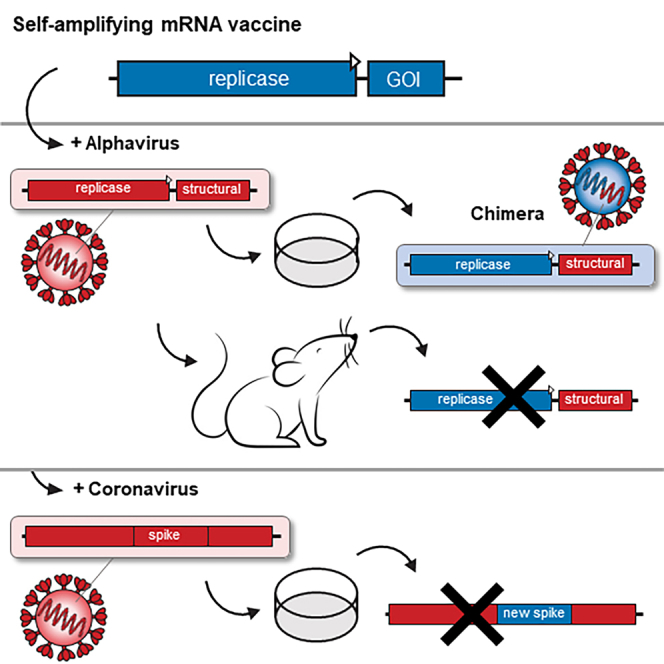
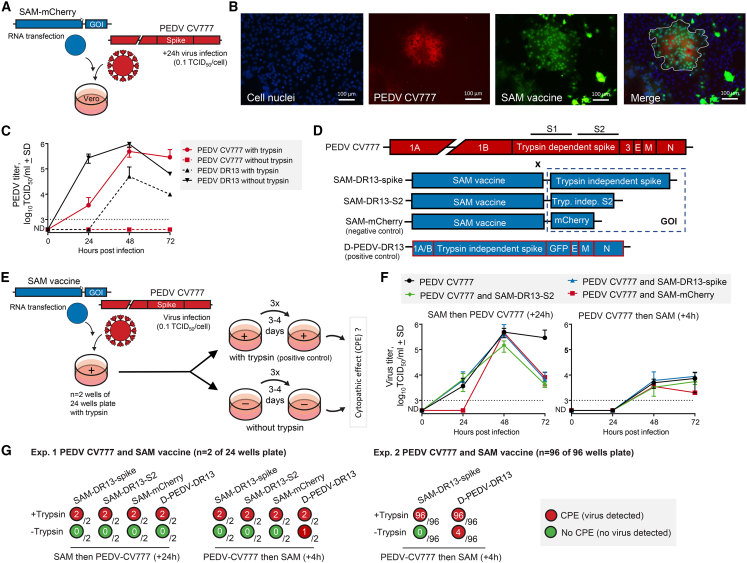
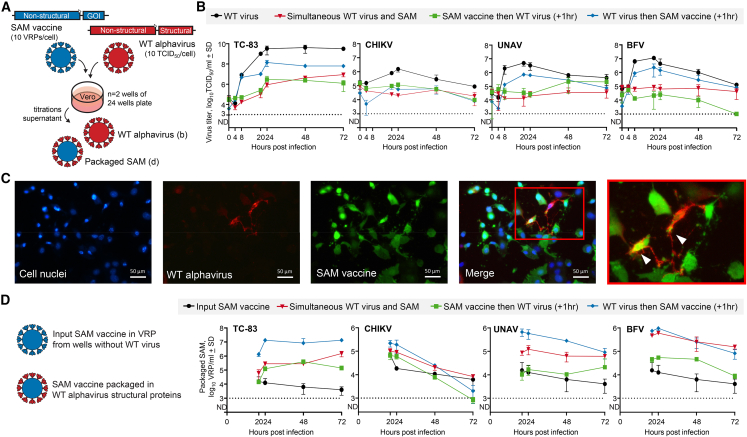
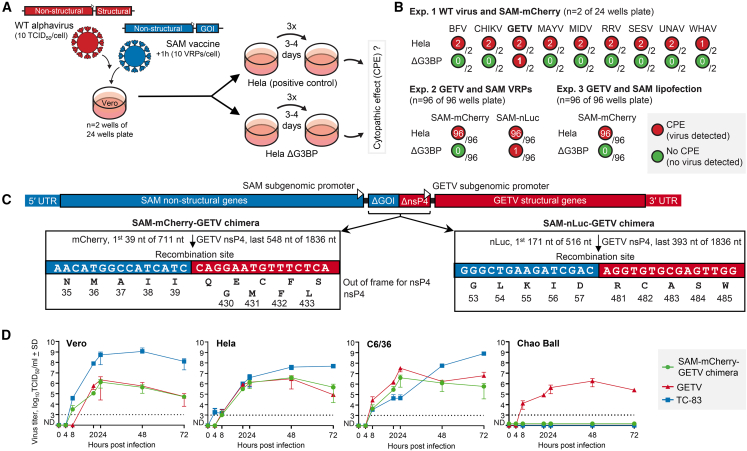
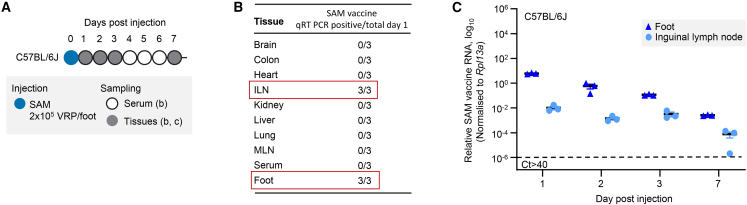
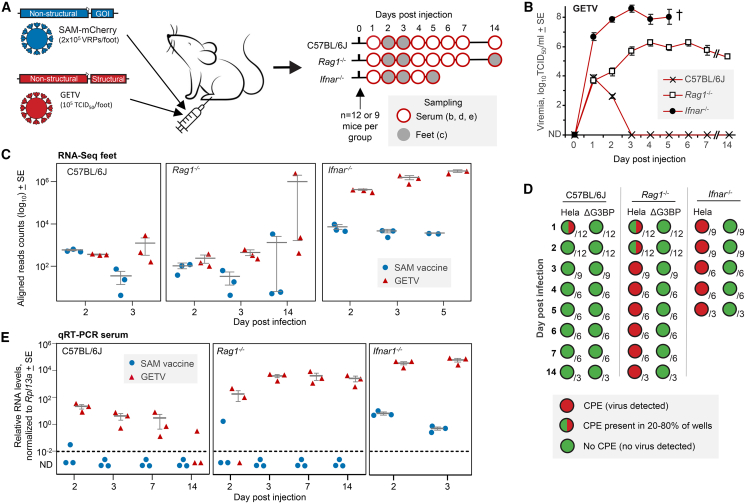
Self-amplifying mRNA (SAM) vaccines can be rapidly deployed in the event of disease outbreaks. A legitimate safety concern is the potential for recombination between alphavirus-based SAM vaccines and circulating viruses. This theoretical risk needs to be assessed in the regulatory process for SAM vaccine approval. Herein, we undertake extensive in vitro and in vivo assessments to explore recombination between SAM vaccine and a wide selection of alphaviruses and a coronavirus. SAM vaccines were found to effectively limit alphavirus co-infection through superinfection exclusion, although some co-replication was still possible. Using sensitive cell-based assays, replication-competent alphavirus chimeras were generated in vitro as a result of rare, but reproducible, RNA recombination events. The chimeras displayed no increased fitness in cell culture. Viable alphavirus chimeras were not detected in vivo in C57BL/6J, Rag1 and Ifnar mice, in which high levels of SAM vaccine and alphavirus co-replicated in the same tissue. Furthermore, recombination between a SAM-spike vaccine and a swine coronavirus was not observed. In conclusion we state that although the ability of SAM vaccines to recombine with alphaviruses might be viewed as an environmental safety concern, several key factors substantially mitigate against in vivo emergence of chimeric viruses from SAM vaccine recipients.
自我扩增mRNA(SAM)疫苗可在疾病暴发时迅速部署。一个合理的安全担忧是基于甲病毒的SAM疫苗与循环病毒之间发生重组的可能性。这种理论风险需要在SAM疫苗批准的监管过程中进行评估。在此,我们进行了广泛的体外和体内评估,以探索SAM疫苗与多种甲病毒和一种冠状病毒之间的重组情况。结果发现,SAM疫苗通过超感染排除有效地限制了甲病毒的共感染,尽管仍有可能发生一些共复制。使用基于细胞的敏感检测方法,由于罕见但可重复的RNA重组事件,在体外产生了具有复制能力的甲病毒嵌合体。这些嵌合体在细胞培养中未表现出适应性增加。在C57BL/6J、Rag1和Ifnar小鼠体内未检测到有活力的甲病毒嵌合体,在这些小鼠中,高水平的SAM疫苗和甲病毒在同一组织中共复制。此外,未观察到SAM刺突疫苗与猪冠状病毒之间的重组。总之,我们指出,尽管SAM疫苗与甲病毒重组的能力可能被视为一个环境安全问题,但几个关键因素在很大程度上减轻了SAM疫苗接种者体内嵌合病毒出现的风险。