Ridges Jackson T, Bladen Jackson, King Thomas D, Brown Nora C, Large Christopher R L, Cooper Jacob C, Jones Amanda J, Loppin Benjamin, Dubruille Raphaëlle, Phadnis Nitin
School of Biological Sciences, University of Utah, Salt Lake City, UT 84112, USA.
Laboratoire de Biologie et Modélisation de la Cellule, École Normale Supérieure de Lyon, CNRS UMR5239, Université Claude Bernard Lyon 1, Lyon, France.
bioRxiv. 2024 Jun 6:2024.06.04.597441. doi: 10.1101/2024.06.04.597441.
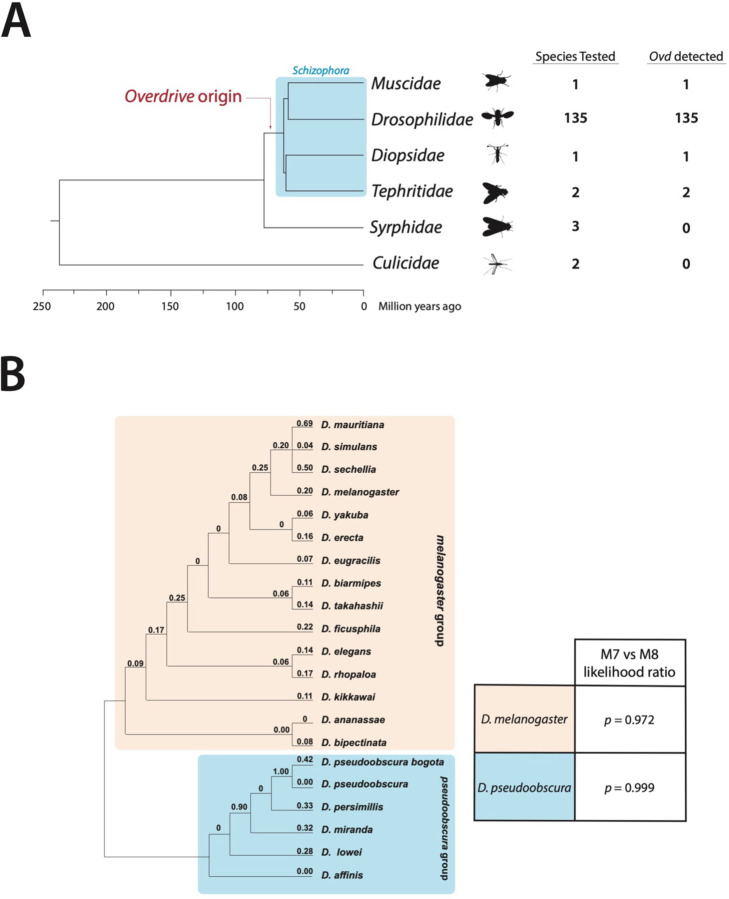
Intra-genomic conflict driven by selfish chromosomes is a powerful force that shapes the evolution of genomes and species. In the male germline, many selfish chromosomes bias transmission in their own favor by eliminating spermatids bearing the competing homologous chromosomes. However, the mechanisms of targeted gamete elimination remain mysterious. Here, we show that , a gene required for both segregation distortion and male sterility in hybrids, is broadly conserved in Dipteran insects but dispensable for viability and fertility. In is required for targeted spermatid elimination after the histone-to-protamine transition in the classical system. We propose that functions as a general spermatid quality checkpoint that is hijacked by independent selfish chromosomes to eliminate competing gametes.
由自私染色体驱动的基因组内冲突是塑造基因组和物种进化的强大力量。在雄性生殖系中,许多自私染色体通过消除携带竞争同源染色体的精子细胞来偏向自身的传递。然而,靶向配子消除的机制仍然神秘。在这里,我们表明,一个在杂种中导致分离畸变和雄性不育所必需的基因,在双翅目昆虫中广泛保守,但对生存力和繁殖力是可有可无的。在经典的系统中,在组蛋白向鱼精蛋白转变后,靶向精子细胞消除需要。我们提出,作为一个一般的精子细胞质量检查点,被独立的自私染色体劫持以消除竞争配子。