Chen Wan, Wang Xuan, Cai Yuanyuan, Huang Xinglong, Li Peng, Liu Wei, Chang Qing, Hu Chaochao
College of Environment and Ecology Jiangsu Open University (The City Vocational College of Jiangsu) Nanjing Jiangsu China.
Jiangsu Academy of Forestry Nanjing Jiangsu China.
Ecol Evol. 2024 Jun 18;14(6):e11515. doi: 10.1002/ece3.11515. eCollection 2024 Jun.
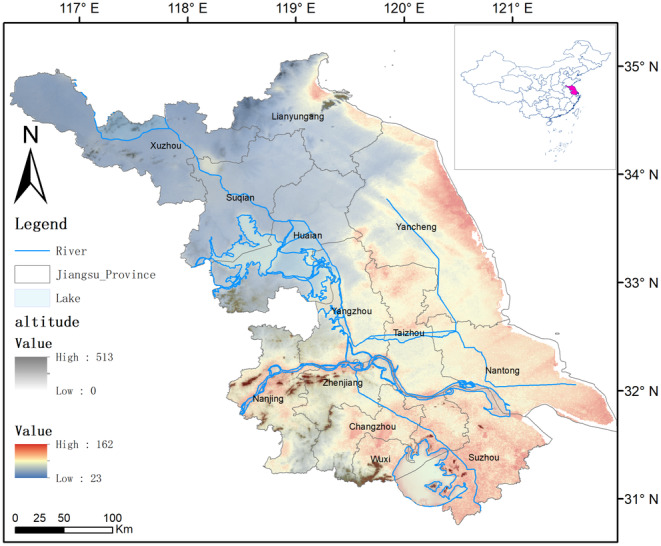
In recent years, increased species extinction and habitat loss have significantly reduced biodiversity, posing a serious threat to both nature and human survival. Environmental factors strongly influence bird distribution and diversity. The potential distribution patterns and species richness offer a conservation modeling framework for policymakers to assess the effectiveness of natural protected areas (PAs) and optimize their existing ones. Very few such studies have been published that cover a large and complete taxonomic group with fine resolution at regional scale. Here, using birds as a study group, the maximum entropy model (MaxEnt) was used to analyze the pattern of bird species richness in Jiangsu Province. Using an unparalleled amount of occurrence data, we created species distribution models (SDMs) for 312 bird species to explore emerging diversity patterns at a resolution of 1 km. The gradient of species richness is steep, decreasing sharply away from water bodies, particularly in the northern part of Jiangsu Province. The migratory status and feeding habits of birds also significantly influence the spatial distribution of avian species richness. This study reveals that the regions with high potential bird species richness are primarily distributed in three areas: the eastern coastal region, the surrounding area of the lower reaches of the Yangtze River, and the surrounding area of Taihu Lake. Compared with species richness hotspots and existing PAs, we found that the majority of hotspots are well-protected. However, only a small portion of the regions, such as coastal areas of Sheyang County in Yancheng City, as well as some regions along the Yangtze River in Nanjing and Zhenjiang, currently have relatively weak protection. Using stacked SDMs, our study reveals effective insights into diversity patterns, directly informing conservation policies and contributing to macroecological research advancements.
近年来,物种灭绝加剧和栖息地丧失显著降低了生物多样性,对自然和人类生存都构成了严重威胁。环境因素对鸟类的分布和多样性有强烈影响。潜在的分布格局和物种丰富度为政策制定者评估自然保护区(PAs)的有效性并优化现有保护区提供了一个保护建模框架。很少有已发表的研究在区域尺度上以高分辨率涵盖一个大型且完整的分类群。在此,以鸟类作为研究对象,使用最大熵模型(MaxEnt)来分析江苏省鸟类物种丰富度的格局。利用大量无与伦比的出现数据,我们为312种鸟类创建了物种分布模型(SDMs),以1公里的分辨率探索新出现的多样性格局。物种丰富度梯度陡峭,远离水体时急剧下降,尤其是在江苏省北部。鸟类的迁徙状态和食性也对鸟类物种丰富度的空间分布有显著影响。本研究表明,鸟类物种丰富度潜力较高的区域主要分布在三个地区:东部沿海地区、长江下游周边地区和太湖周边地区。与物种丰富度热点地区和现有保护区相比,我们发现大多数热点地区得到了良好保护。然而,目前只有一小部分地区,如盐城市射阳县沿海地区以及南京和镇江长江沿线的一些地区,保护力度相对较弱。通过叠加SDMs,我们的研究揭示了对多样性格局的有效见解,直接为保护政策提供信息,并推动宏观生态研究的进展。