Department of Microbiology and Immunology, Cornell University College of Veterinary Medicine, Ithaca, NY, 14853, USA.
Nat Commun. 2024 Jun 19;15(1):5258. doi: 10.1038/s41467-024-49590-6.
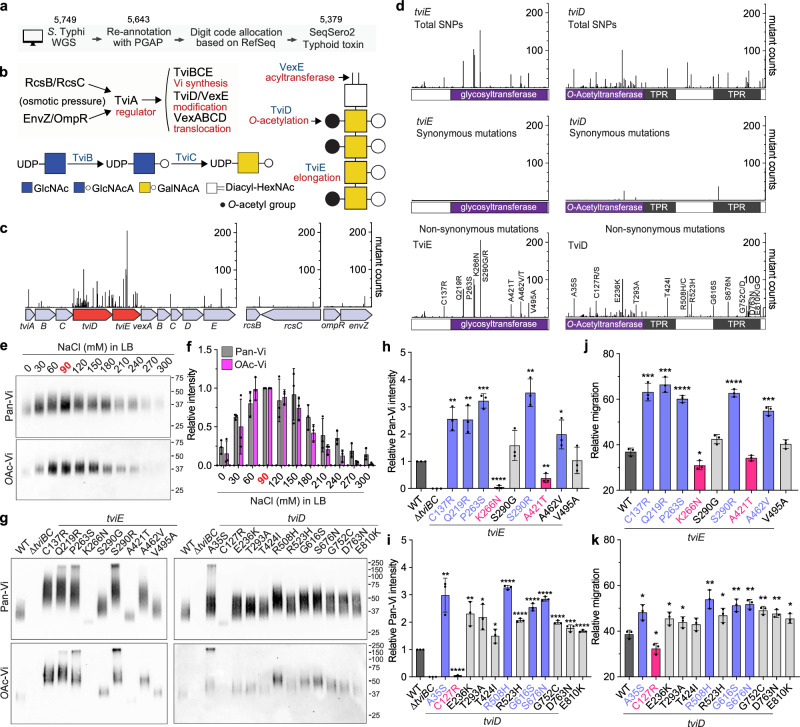
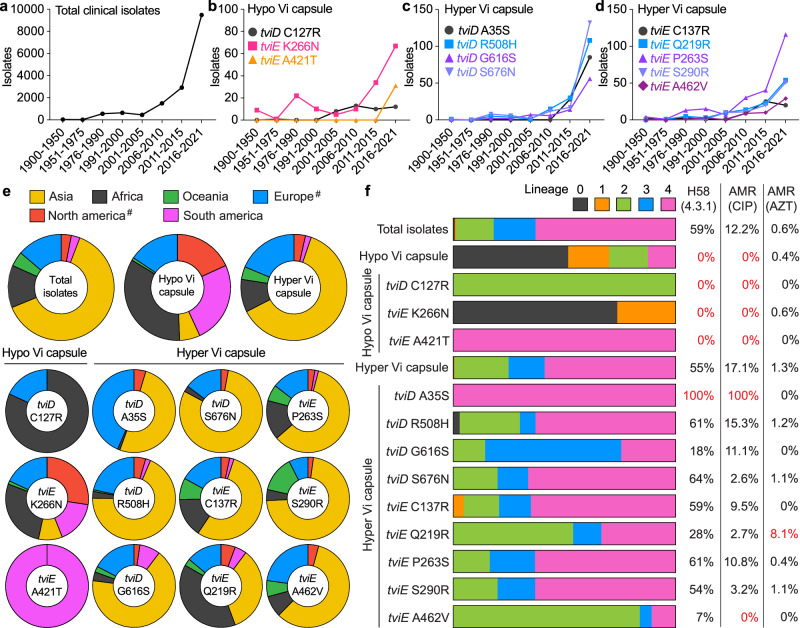
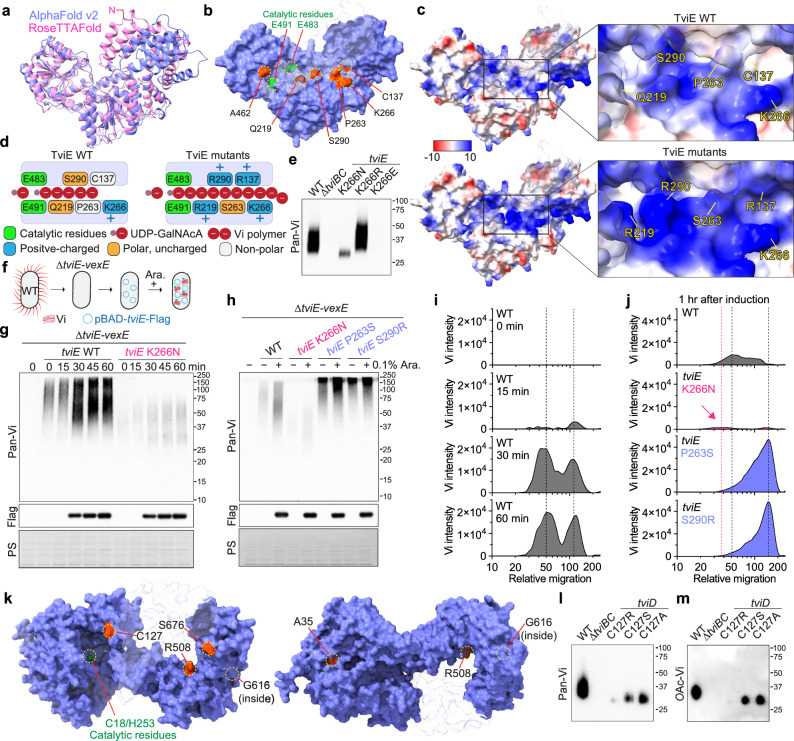
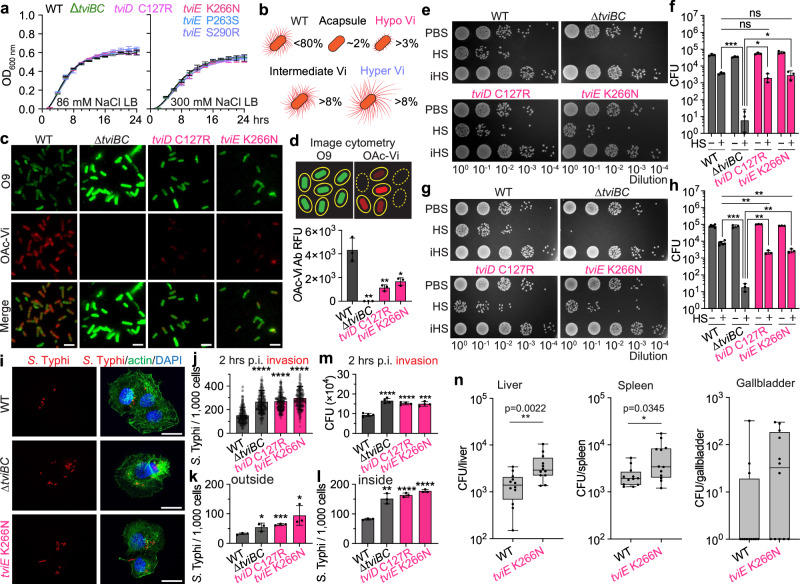
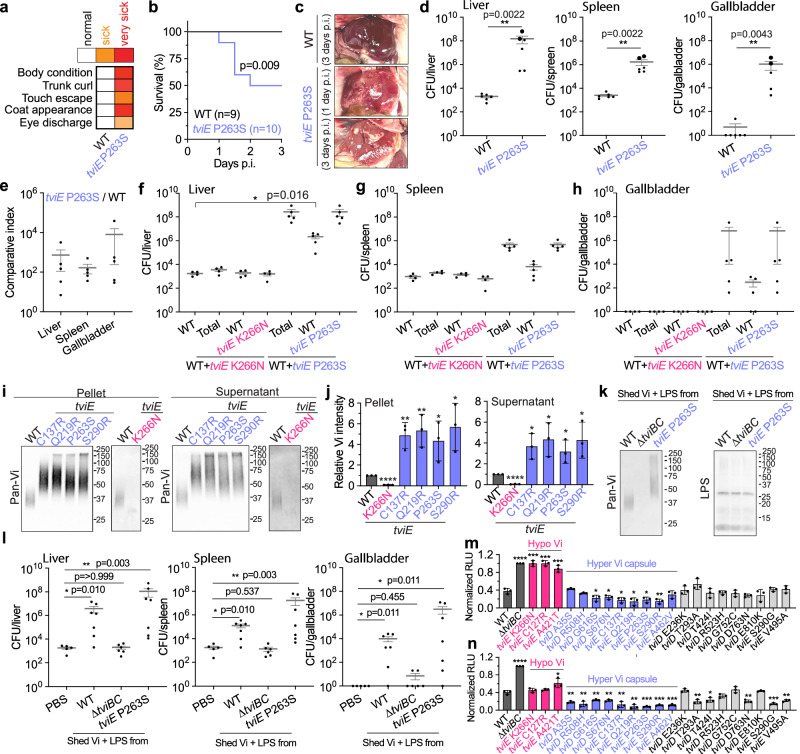
Many bacterial pathogens, including the human exclusive pathogen Salmonella Typhi, express capsular polysaccharides as a crucial virulence factor. Here, through S. Typhi whole genome sequence analyses and functional studies, we found a list of single point mutations that make S. Typhi hypervirulent. We discovered a single point mutation in the Vi biosynthesis enzymes that control Vi polymerization or acetylation is enough to result in different capsule variants of S. Typhi. All variant strains are pathogenic, but the hyper Vi capsule variants are particularly hypervirulent, as demonstrated by the high morbidity and mortality rates observed in infected mice. The hypo Vi capsule variants have primarily been identified in Africa, whereas the hyper Vi capsule variants are distributed worldwide. Collectively, these studies increase awareness about the existence of different capsule variants of S. Typhi, establish a solid foundation for numerous future studies on S. Typhi capsule variants, and offer valuable insights into strategies to combat capsulated bacteria.
许多细菌病原体,包括人类专性病原体伤寒沙门氏菌,都将荚膜多糖作为一种关键的毒力因子来表达。在这里,通过伤寒沙门氏菌全基因组序列分析和功能研究,我们发现了一组单点突变,这些突变使伤寒沙门氏菌具有超强毒性。我们发现,控制 Vi 聚合或乙酰化的 Vi 生物合成酶中的单个点突变足以导致伤寒沙门氏菌的不同荚膜变异。所有变异菌株都是致病性的,但高 Vi 荚膜变异株特别具有超强毒性,这从感染小鼠的高发病率和死亡率中可以看出。低 Vi 荚膜变异株主要在非洲被发现,而高 Vi 荚膜变异株则分布在世界各地。总的来说,这些研究提高了人们对伤寒沙门氏菌不同荚膜变异株存在的认识,为伤寒沙门氏菌荚膜变异株的众多未来研究奠定了坚实的基础,并为对抗荚膜细菌的策略提供了有价值的见解。