School of Psychology, University of Sydney, Sydney, Australia.
Sci Rep. 2024 Jun 19;14(1):14133. doi: 10.1038/s41598-024-64575-7.
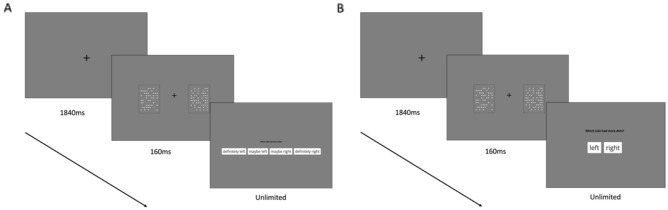
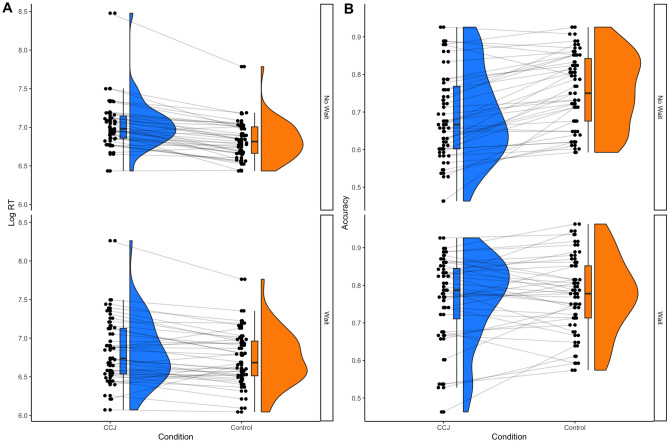
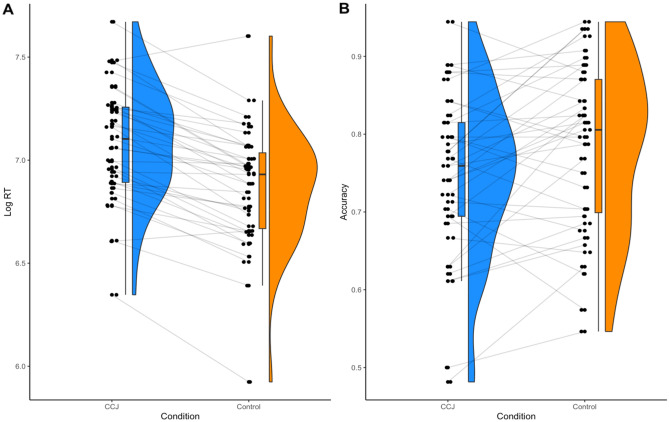
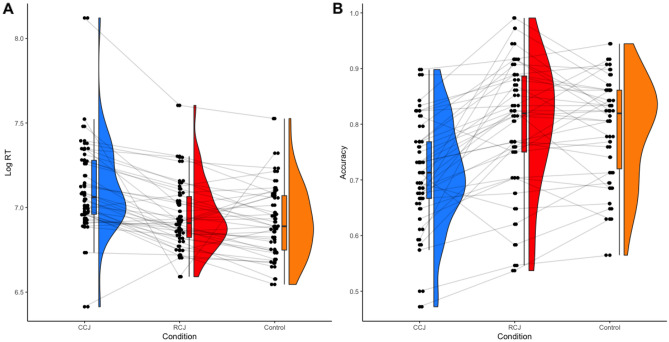
Determining one's confidence in a decision is a vital part of decision-making. Traditionally, psychological experiments have assessed a person's confidence by eliciting confidence judgments. The notion that such judgments can be elicited without impacting the accuracy of the decision has recently been challenged by several studies which have shown reactivity effects-either an increase or decrease in decision accuracy when confidence judgments are elicited. Evidence for the direction of reactivity effects has, however, been decidedly mixed. Here, we report three studies designed to specifically make reactivity effects more prominent by eliciting confidence judgment contemporaneously with perceptual decisions. We show that confidence judgments elicited contemporaneously produce an impairment in decision accuracy, this suggests that confidence judgments may rely on a partially distinct set of cues/evidence than the primary perceptual decision and, additionally, challenges the continued use of confidence ratings as an unobtrusive measure of metacognition.
确定对决策的信心是决策过程的重要组成部分。传统上,心理学实验通过引出信心判断来评估一个人的信心。最近,一些研究质疑了这种判断可以在不影响决策准确性的情况下引出的观点,这些研究表明,当引出信心判断时,会出现反应性效应——决策准确性要么增加,要么减少。然而,对于反应性效应的方向的证据一直存在分歧。在这里,我们报告了三项旨在通过同时引出信心判断来更明显地产生反应性效应的研究。我们表明,同时引出的信心判断会对决策准确性产生损害,这表明信心判断可能依赖于与主要感知决策不同的一组线索/证据,此外,还对将信心评分作为元认知的一种非侵入性衡量标准的继续使用提出了挑战。