Section of Psychiatry and Neurochemistry, Institute of Neuroscience and Physiology, Sahlgrenska Academy, Gothenburg University, Gothenburg, Sweden.
National Specialized Medical Care Unit for Severe Self-Harm Behavior, Department of Psychiatry for Affective Disorders, Sahlgrenska University Hospital, Region Västra Götaland, Gothenburg, Sweden.
Trials. 2024 Jun 19;25(1):397. doi: 10.1186/s13063-024-08230-6.
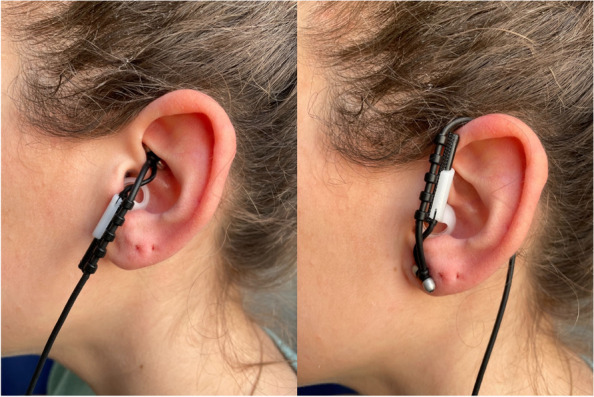
Borderline personality disorder (BPD) is considered a disorder of emotion regulation resulting from the expression of a biologically determined emotional vulnerability (that is, heightened sensitivity to emotion, increased emotional intensity/reactivity, and a slow return to emotional baseline) combined with exposure to invalidating environments. Vagal tone has been associated with activity in cortical regions involved in emotion regulation and a lower resting state of vagal tone has been observed in BPD patients relative to healthy controls. Non-invasive transcutaneous auricular vagus nerve stimulation (taVNS) has been shown to reduce temper outbursts in adults with Prader-Willi Syndrome, to enhance recognition of emotions in healthy students, and to improve depressive and anxiety symptoms. Furthermore, a single session of taVNS has been shown to acutely alter the recognition of facial expressions of negative valence in adolescents with MDD and increase emotion recognition in controls. However, the effect of taVNS on emotional vulnerability and regulation in individuals diagnosed with BPD has not been investigated. Our aims are to determine if taVNS is effective in acutely reducing emotional vulnerability and improve emotional regulation in BPD patients.
Forty-two patients will be randomized to a single session of taVNS or sham-taVNS while going through an affect induction procedure. It will consist of the presentation of one neutral and three negative affect-evoking 4-min-long videos in sequence, each of which is followed by a 4-min post-induction period during which participants will rate the quality and intensity of their current self-reported emotions (post-induction ratings) and the perceived effectiveness in managing their emotions during the video presentation. The rating of the current self-reported emotions will be repeated after every post-induction period (recovery ratings). Mixed models with individuals as random effect will be used to investigate the ratings at each stage of the study, taking into account the repeated measures of the same individuals at baseline, pre-induction, post-induction, and recovery.
The study has potential to yield new insights into the role of vagal tone in emotion dysregulation in BPD and offer preliminary data on the effectiveness of taVNS as a possible non-invasive brain stimulation to treat a core symptom of BPD.
ClinicalTrials.gov NCT05892900. Retrospectively registered on Jun 07, 2023.
边缘型人格障碍(BPD)被认为是一种情绪调节障碍,源于生物学决定的情绪脆弱性的表达(即对情绪的高度敏感、情绪强度/反应性增加,以及情绪恢复基线的缓慢),加上暴露于无效环境中。迷走神经张力与参与情绪调节的皮质区域的活动有关,并且在 BPD 患者中观察到迷走神经张力的静息状态较低。非侵入性经皮耳迷走神经刺激(taVNS)已被证明可减少 Prader-Willi 综合征成年患者的脾气发作,增强健康学生对情绪的识别,并改善抑郁和焦虑症状。此外,单次 taVNS 治疗已被证明可急性改变 MDD 青少年对负性面部表情的识别,并增加对照组的情绪识别。然而,taVNS 对 BPD 个体情绪脆弱性和调节的影响尚未得到研究。我们的目的是确定 taVNS 是否能有效急性降低 BPD 患者的情绪脆弱性并改善情绪调节。
42 名患者将被随机分配到 taVNS 或 sham-taVNS 单次治疗组,同时进行情感诱发程序。它将包括连续呈现一个中性和三个负性情绪诱发的 4 分钟长视频,每个视频之后是 4 分钟的诱导后期,在此期间参与者将对当前自我报告的情绪的质量和强度(诱导后评分)以及在视频呈现期间管理情绪的有效性进行评分。在每次诱导后期间(恢复评分)重复对当前自我报告情绪的评分。采用个体为随机效应的混合模型,对研究的每个阶段的评分进行调查,同时考虑到同一个体在基线、诱导前、诱导后和恢复时的重复测量。
该研究有潜力深入了解迷走神经张力在 BPD 情绪失调中的作用,并提供 taVNS 作为一种潜在的非侵入性脑刺激治疗 BPD 核心症状的有效性的初步数据。
ClinicalTrials.gov NCT05892900。于 2023 年 6 月 7 日回顾性注册。