Oncobell Program, Bellvitge Biomedical Research Institute (IDIBELL), 08908, L'Hospitalet de Llobregat, Barcelona, Spain.
Rutgers Cancer Institute of New Jersey, Rutgers University, 08901, New Brunswick, NJ, USA.
Nat Commun. 2024 Jun 24;15(1):5352. doi: 10.1038/s41467-024-49718-8.
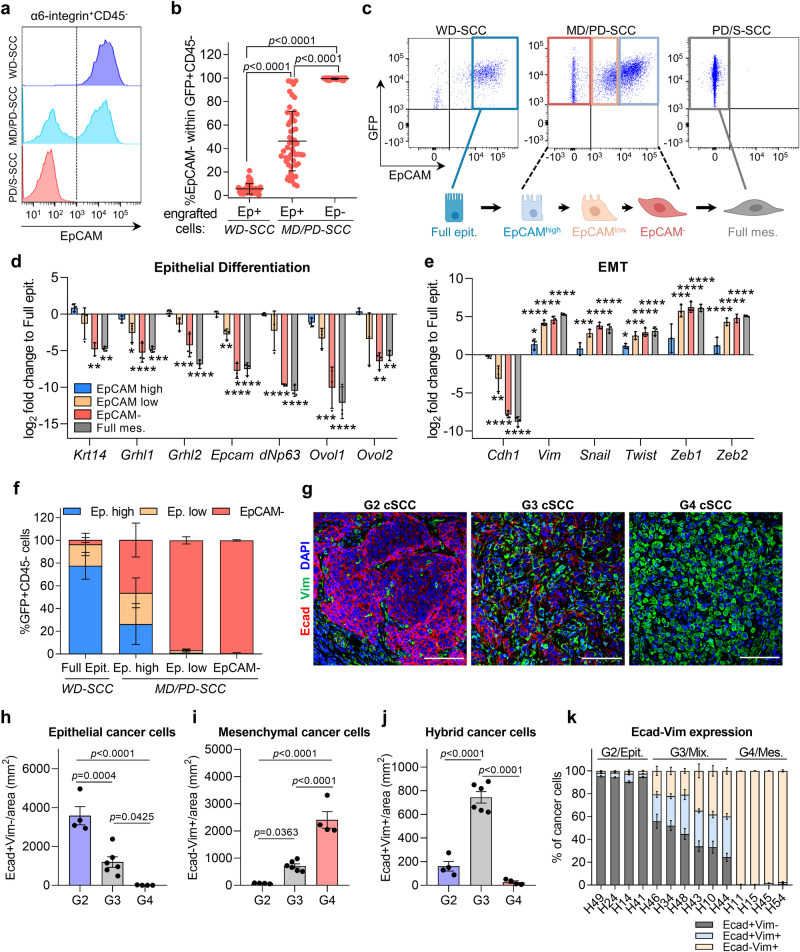
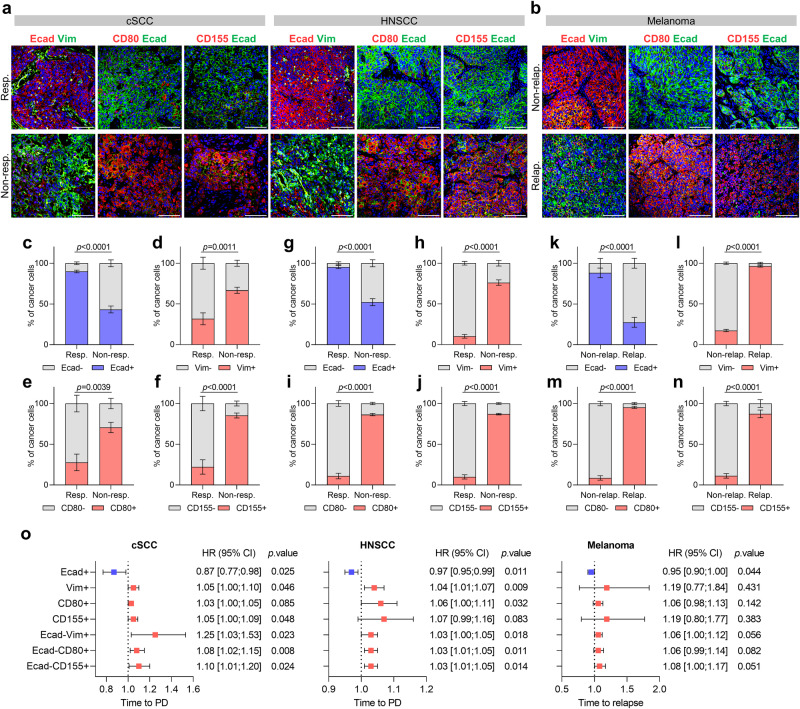
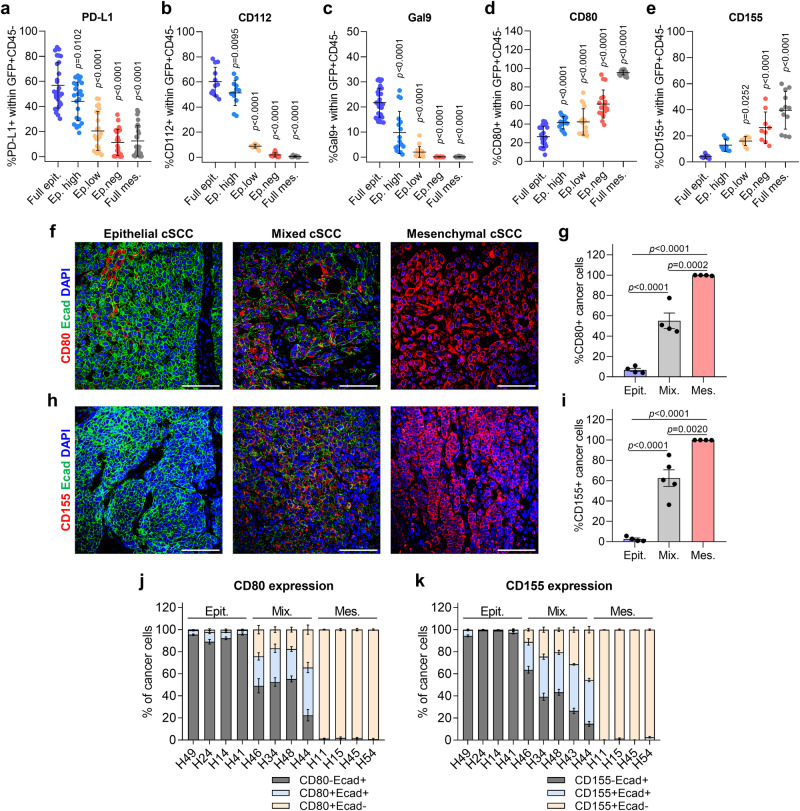
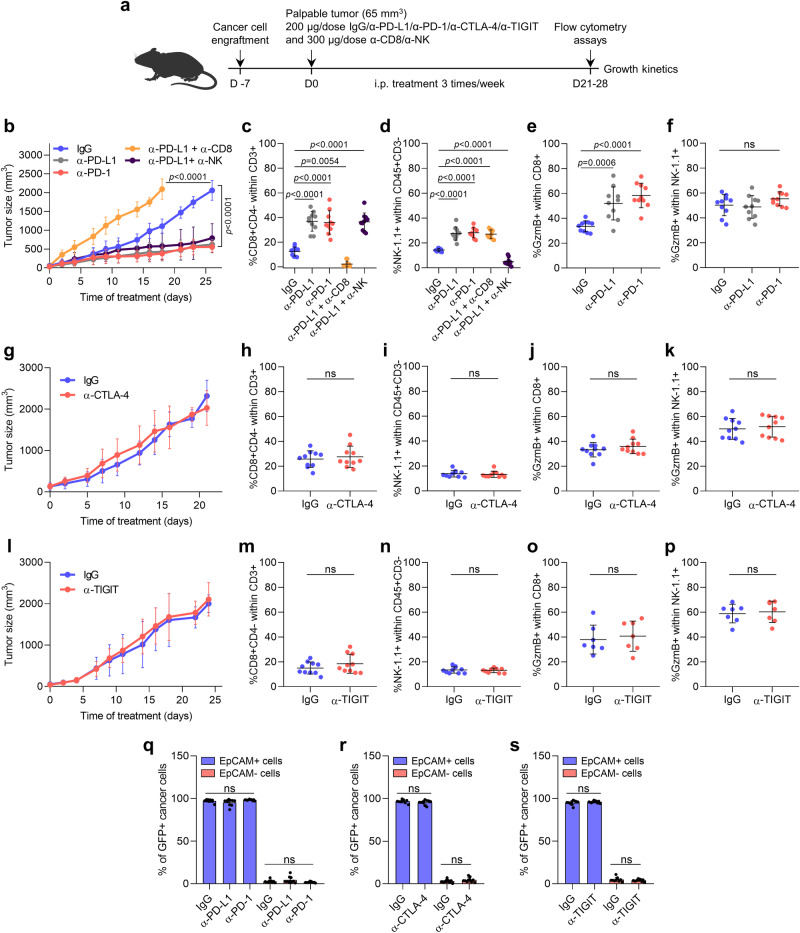
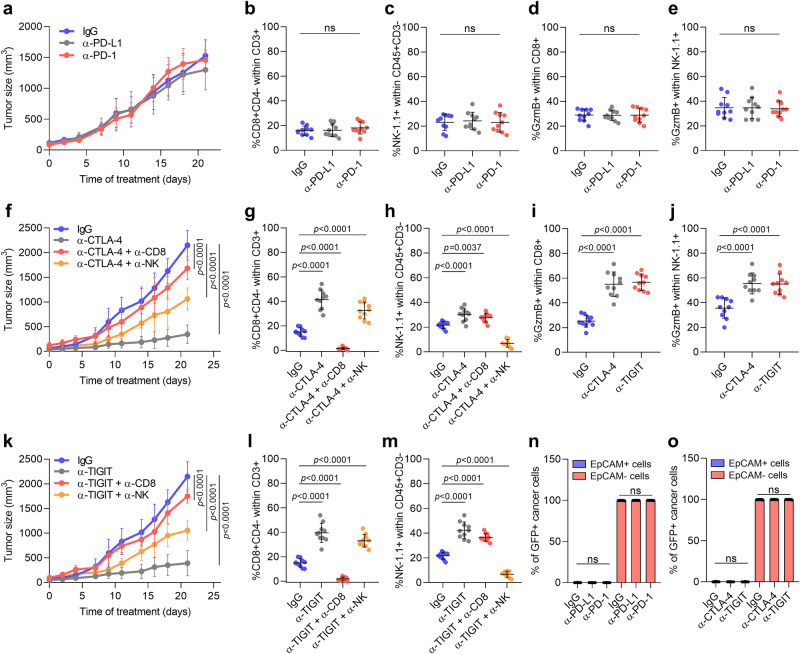
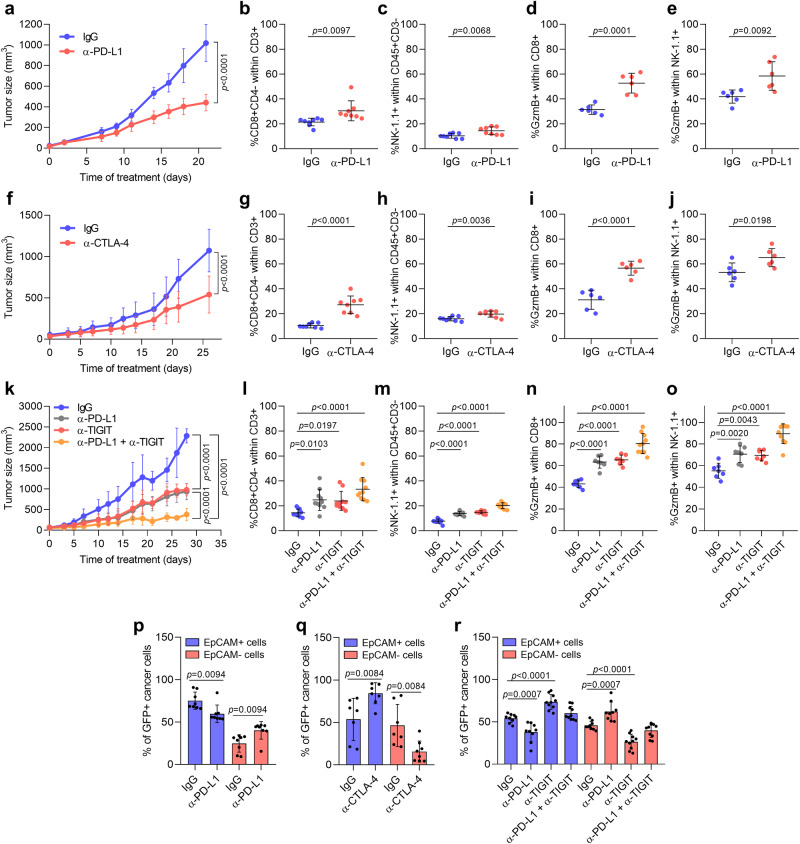
Immune checkpoint blockade (ICB) approaches have changed the therapeutic landscape for many tumor types. However, half of cutaneous squamous cell carcinoma (cSCC) patients remain unresponsive or develop resistance. Here, we show that, during cSCC progression in male mice, cancer cells acquire epithelial/mesenchymal plasticity and change their immune checkpoint (IC) ligand profile according to their features, dictating the IC pathways involved in immune evasion. Epithelial cancer cells, through the PD-1/PD-L1 pathway, and mesenchymal cancer cells, through the CTLA-4/CD80 and TIGIT/CD155 pathways, differentially block antitumor immune responses and determine the response to ICB therapies. Accordingly, the anti-PD-L1/TIGIT combination is the most effective strategy for blocking the growth of cSCCs that contain both epithelial and mesenchymal cancer cells. The expression of E-cadherin/Vimentin/CD80/CD155 proteins in cSCC, HNSCC and melanoma patient samples predicts response to anti-PD-1/PD-L1 therapy. Collectively, our findings indicate that the selection of ICB therapies should take into account the epithelial/mesenchymal features of cancer cells.
免疫检查点阻断 (ICB) 方法改变了许多肿瘤类型的治疗格局。然而,半数皮肤鳞状细胞癌 (cSCC) 患者仍无反应或产生耐药性。在这里,我们表明,在雄性小鼠的 cSCC 进展过程中,癌细胞获得上皮/间充质可塑性,并根据其特征改变其免疫检查点 (IC) 配体谱,决定参与免疫逃逸的 IC 途径。上皮癌细胞通过 PD-1/PD-L1 途径,间充质癌细胞通过 CTLA-4/CD80 和 TIGIT/CD155 途径,差异阻断抗肿瘤免疫反应,并决定对 ICB 治疗的反应。因此,抗 PD-L1/TIGIT 联合是阻断含有上皮和间充质癌细胞的 cSCC 生长的最有效策略。cSCC、HNSCC 和黑色素瘤患者样本中 E-cadherin/Vimentin/CD80/CD155 蛋白的表达可预测抗 PD-1/PD-L1 治疗的反应。总之,我们的研究结果表明,ICB 治疗的选择应考虑癌细胞的上皮/间充质特征。