Oncode Institute and Department of Cell and Chemical Biology, Leiden University Medical Center, Einthovenweg 20, 2333 ZC Leiden, Netherlands.
Institutes of Biology and Medical Science, Soochow University, Suzhou 215123, China.
Sci Adv. 2023 Jul 14;9(28):eadf9915. doi: 10.1126/sciadv.adf9915.
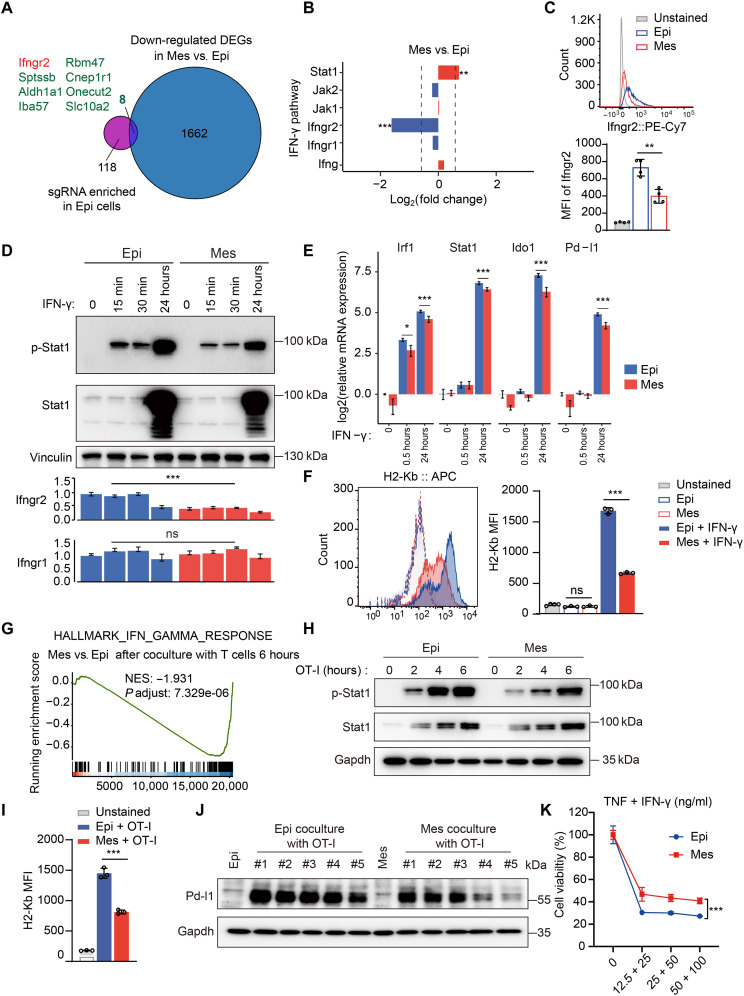
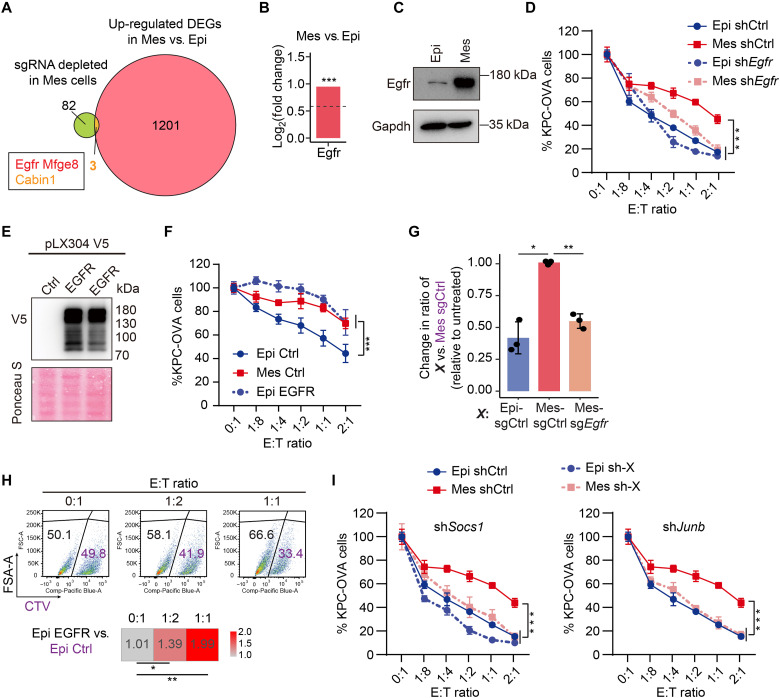
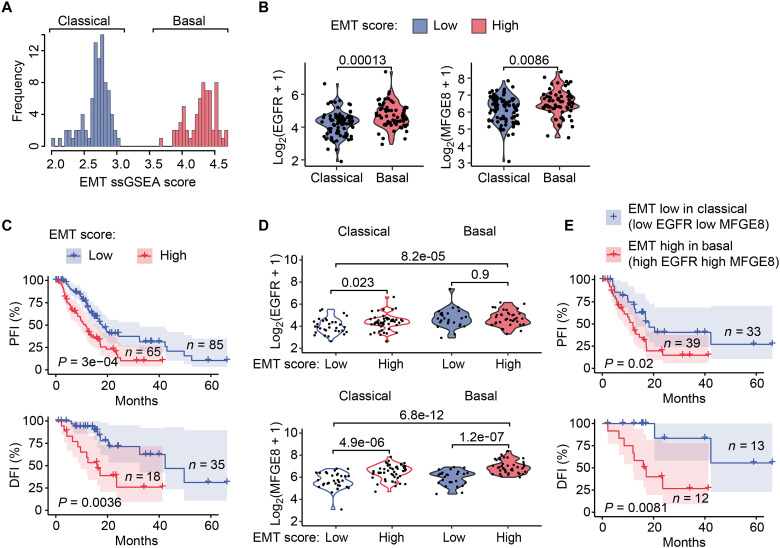
The genetic circuits that allow cancer cells to evade immune killing via epithelial mesenchymal plasticity remain poorly understood. Here, we showed that mesenchymal-like (Mes) KPC3 pancreatic cancer cells were more resistant to cytotoxic T lymphocyte (CTL)-mediated killing than the parental epithelial-like (Epi) cells and used parallel genome-wide CRISPR screens to assess the molecular underpinnings of this difference. Core CTL-evasion genes (such as IFN-γ pathway components) were clearly evident in both types. Moreover, we identified and validated multiple Mes-specific regulators of cytotoxicity, such as Egfr and Mfge8. Both genes were significantly higher expressed in Mes cancer cells, and their depletion sensitized Mes cancer cells to CTL-mediated killing. Notably, Mes cancer cells secreted more Mfge8 to inhibit proliferation of CD8 T cells and production of IFN-γ and TNFα. Clinically, increased Egfr and Mfge8 expression was correlated with a worse prognosis. Thus, Mes cancer cells use Egfr-mediated intrinsic and Mfge8-mediated extrinsic mechanisms to facilitate immune escape from CD8 T cells.
癌症细胞通过上皮间质可塑性逃避免疫杀伤的遗传回路仍然知之甚少。在这里,我们表明,间充质样(Mes)KPC3 胰腺癌细胞比亲本上皮样(Epi)细胞更能抵抗细胞毒性 T 淋巴细胞(CTL)介导的杀伤,并用平行的全基因组 CRISPR 筛选来评估这种差异的分子基础。核心 CTL 逃逸基因(如 IFN-γ 途径成分)在这两种类型中都很明显。此外,我们鉴定并验证了多个细胞毒性的 Mes 特异性调节剂,如 Egfr 和 Mfge8。这两个基因在 Mes 癌细胞中的表达明显更高,其耗竭使 Mes 癌细胞对 CTL 介导的杀伤敏感。值得注意的是,Mes 癌细胞分泌更多的 Mfge8 来抑制 CD8 T 细胞的增殖以及 IFN-γ 和 TNFα 的产生。临床上,Egfr 和 Mfge8 表达的增加与预后不良相关。因此,Mes 癌细胞利用 Egfr 介导的内在机制和 Mfge8 介导的外在机制来促进对 CD8 T 细胞的免疫逃逸。