Department of Physiotherapy and Rehabilitation, Faculty of Health Sciences, SANKO University, 27090 Gaziantep, Turkey.
Department of Radiology, SANKO University Hospital, 27090 Gaziantep, Turkey.
Medicina (Kaunas). 2024 May 23;60(6):852. doi: 10.3390/medicina60060852.
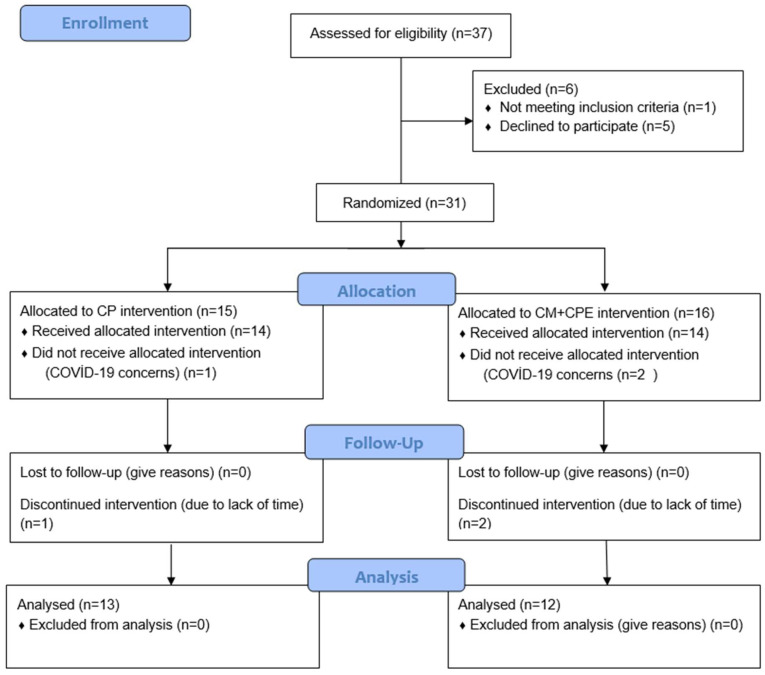
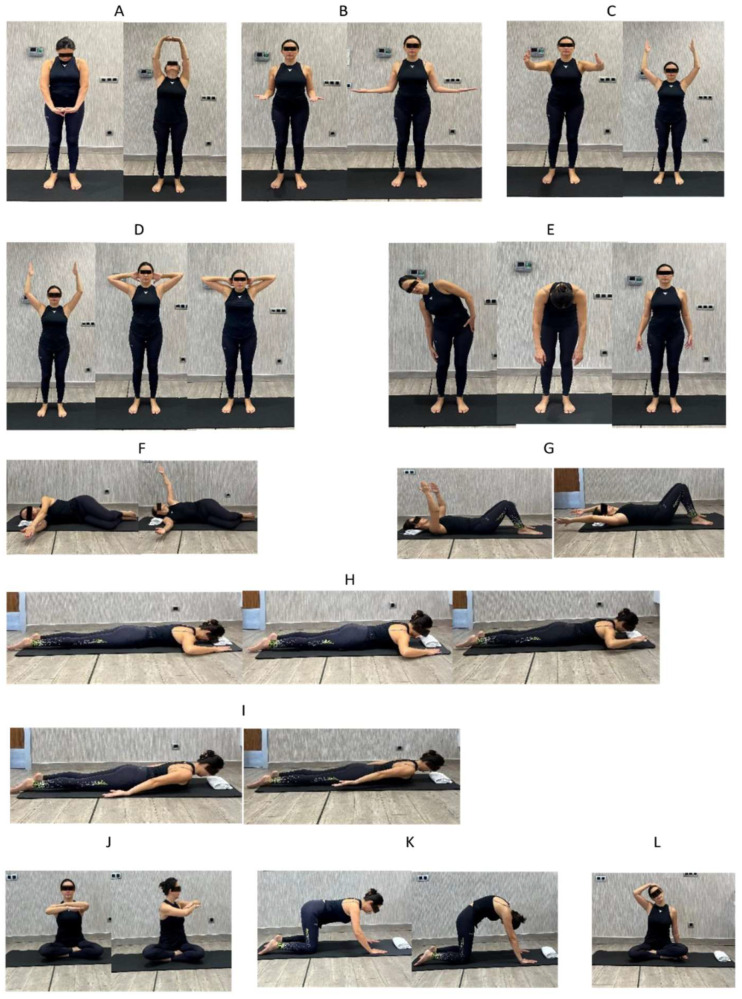
: Physiotherapy approaches are used to eliminate the problems caused by cervicogenic headache (CHA), known as secondary headache associated with the structures of the upper cervical region. This study aimed to investigate the effects of cervical mobilization (CM) with clinical Pilates exercises (CPE) on pain, muscle stiffness and head-neck blood flow in CGH. : A total of 25 patients participated in this randomized controlled study and were randomized into either the CM group or the CM+CPE group. All treatment methods were applied 3 days a week for 6 weeks. The outcome measure was headache intensity and frequency, the number of analgesics, muscle stiffness and vertebral artery (VA) and internal carotid artery (ICA) blood flow. Headache intensity was measured by a visual analogue scale, muscle stiffness by a myotonometer and blood flow by Doppler US. Evaluations were repeated after 6 weeks of treatment. Within-group comparisons were made by the Wilcoxon signed rank test, and between-group comparisons were made by the Mann-Whitney U test. : After treatments in the two groups, headache intensity and frequency and the number of analgesics decreased, the muscle stiffness of the suboccipital, upper trapezius and sternocleidomastoid (SCM) muscles decreased, and the blood flow of the ICA and VA increased ( < 0.05). There was a significant difference between the groups in terms of headache intensity ( = 0.025) and muscle stiffness in SKM ( = 0.044) in favor of the CM+CPE group. : Non-pharmacological treatment approaches have an important role in CHA related to the upper cervical region. This study suggests that it would be beneficial to add CM in combination with CPE to the non-pharmacological treatment of patients with CHA.
物理治疗方法用于消除颈源性头痛(CHAs)引起的问题,CHAs 被称为与上颈椎结构相关的继发性头痛。本研究旨在探讨颈椎活动(CM)联合临床普拉提运动(CPE)对 CHA 患者疼痛、肌肉僵硬和头颈部血流的影响。
共有 25 名患者参与了这项随机对照研究,并随机分为 CM 组或 CM+CPE 组。所有治疗方法每周应用 3 天,共 6 周。主要结局指标为头痛强度和频率、镇痛药使用次数、肌肉僵硬程度以及椎动脉(VA)和颈内动脉(ICA)的血流。头痛强度采用视觉模拟评分法(VAS)进行评估,肌肉僵硬采用肌电触诊仪进行评估,血流采用多普勒超声进行评估。治疗 6 周后重复评估。组内比较采用 Wilcoxon 符号秩检验,组间比较采用 Mann-Whitney U 检验。
两组治疗后,头痛强度和频率以及镇痛药使用次数均减少,枕下肌、上斜方肌和胸锁乳突肌的肌肉僵硬程度降低,ICA 和 VA 的血流增加(<0.05)。头痛强度(=0.025)和斜方肌下部肌肉僵硬程度(=0.044)方面,组间差异具有统计学意义(均 P<0.05),CM+CPE 组优于 CM 组。
非药物治疗方法在与上颈椎区域相关的 CHA 中具有重要作用。本研究表明,在 CHA 患者的非药物治疗中,联合 CM 与 CPE 可能会带来益处。