Khalil Sardar S, Salihi Abbas
Department of Biology, Faculty of Science, University of Zakho, Duhok, IRQ.
Department of Biology, College of Science, Salahaddin University-Erbil, Erbil, IRQ.
Cureus. 2024 May 27;16(5):e61165. doi: 10.7759/cureus.61165. eCollection 2024 May.
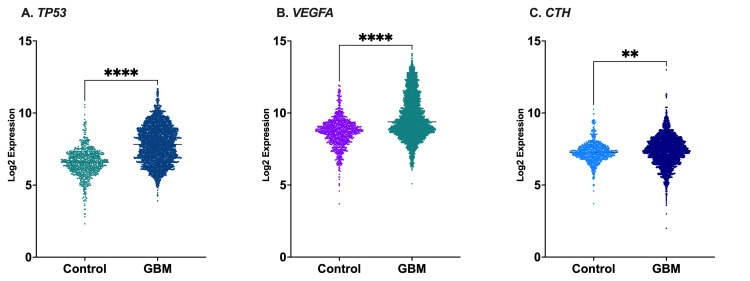
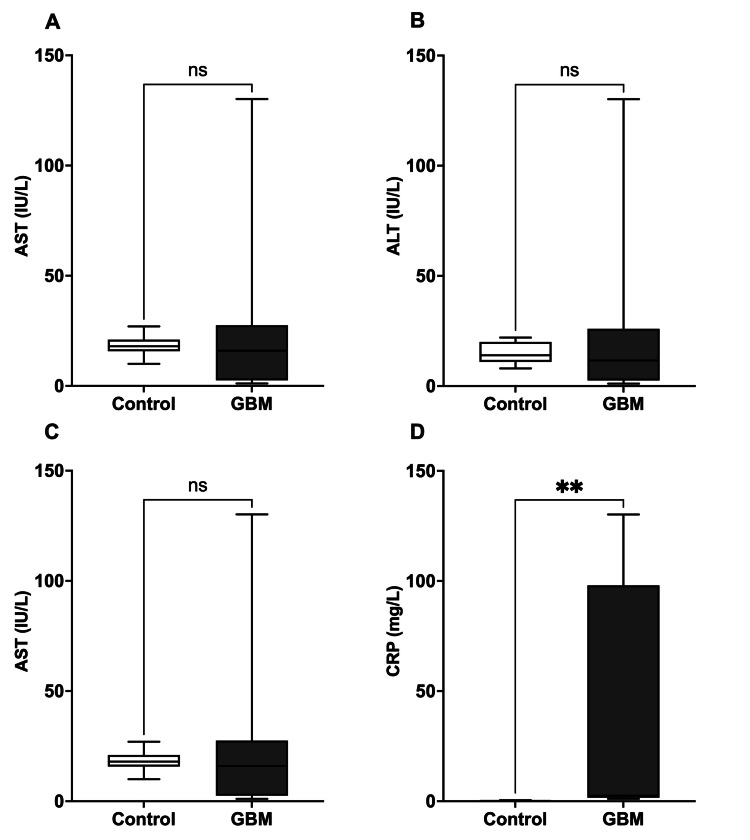
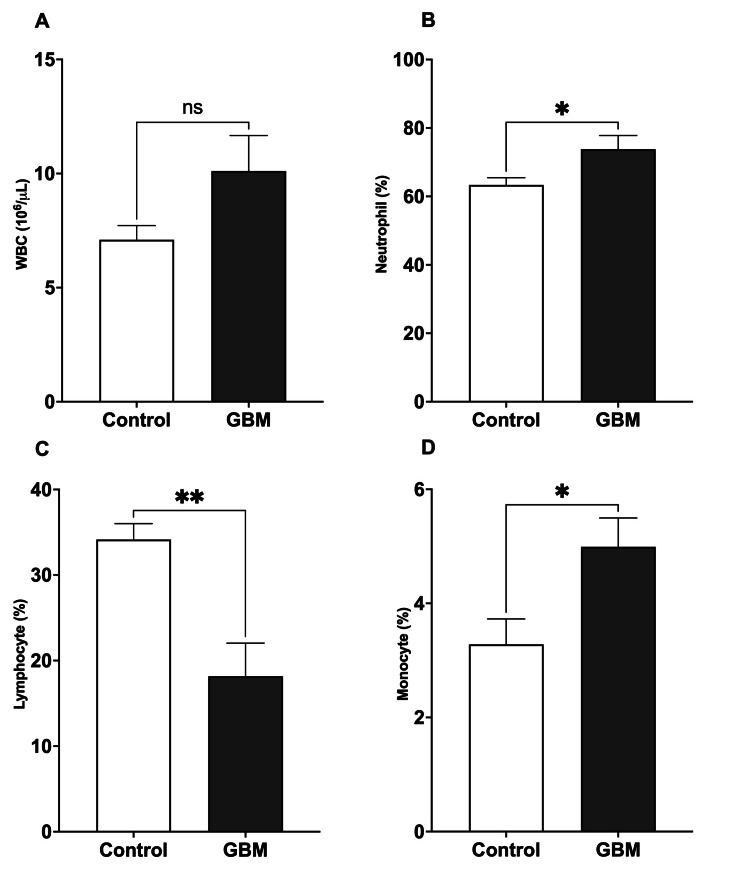
Background Brain cancer, particularly glioblastoma (GBM), is a global health problem. Despite therapy advances, GBM patients have a poor prognosis. The progression and etiology of GBM may be linked to gene polymorphisms in the , , and genes, among others. However, the genetic variations and their interaction in GBM are not fully understood. This study examines the effects of mutations in the , , and genes on GBM. Methodology Tissue and blood samples were obtained for hematological, biochemical, and genetic analysis from 18 patients diagnosed with GBM as well as 28 healthy individuals. Standard methods were adopted to perform hematological and biochemical analyses, whereas mutational landscape and expression profiles were obtained from publicly accessible databases. Tissue samples were processed for genomic DNA extraction, and genotype determination was carried out through conventional polymerase chain reaction (PCR) and Sanger sequencing. Results The study involved 18 patients with grade IV GBM before treatment and 28 healthy individuals. The patients consisted of 11 men (61%) and seven females (39%), while healthy individuals included 14 (50%) males and 14 (50%) females. Sixty-seven percent of patients were under 50, 17% between 51 and 60, and 17% over 61, compared to healthy individuals who were 61% under 50, 7% between 51 and 60, and 32% over 60. GBM patients showed higher neutrophil and monocyte counts (median 81% (63.9, 83.5) and 4.2% (3.8-7.3)), respectively, and lower lymphocyte counts (median 13.4% (8.8, 28.40)) compared to controls. The median values of aspartate transaminase (AST), alanine transaminase (ALT), and alkaline phosphatase (ALP) showed no significant differences between the control and GBM groups. GBM patients had significantly higher median CRP levels of 2.55 (1.6, 98) than controls. Analysis of databases revealed a high prevalence of mutations in , with splice region variants, missense variants, and intron variants being the most common. and also displayed mutations, primarily missense and intron variants. Gene expression analysis showed significantly higher levels of and in GBM patients compared to controls. expression also exhibited a slight increase in GBM patients. Sanger sequencing identified three mutations in the gene, including a novel mutation (11915C>A) not previously reported in external databases. Additionally, novel mutations were found in the (841G>GA, 919T>TG) and (28398A>AC, 28399A>AT) genes. Conclusions This study highlights the immune dysregulation, inflammation, and genetic variations in GBM. The findings emphasize the potential importance of the , and genes as targets for therapies and diagnostic biomarkers of GBM. Further study is necessary to comprehend these genetic variations' functional implications and their use in personalized GBM treatment.
背景 脑癌,尤其是胶质母细胞瘤(GBM),是一个全球性的健康问题。尽管治疗取得了进展,但GBM患者的预后仍然很差。GBM的进展和病因可能与多个基因的多态性有关,包括 、 和 基因等。然而,GBM中的基因变异及其相互作用尚未完全了解。本研究探讨了 、 和 基因中的突变对GBM的影响。
方法 从18例诊断为GBM的患者以及28名健康个体中获取组织和血液样本,进行血液学、生化和基因分析。采用标准方法进行血液学和生化分析,而突变图谱和表达谱则从公开可用的数据库中获取。对组织样本进行处理以提取基因组DNA,并通过常规聚合酶链反应(PCR)和桑格测序进行基因型测定。
结果 本研究纳入了18例治疗前的IV级GBM患者和28名健康个体。患者包括11名男性(61%)和7名女性(39%),而健康个体包括14名男性(50%)和14名女性(50%)。67%的患者年龄在50岁以下,17%在51至60岁之间,17%在61岁以上,相比之下,健康个体中61%在50岁以下,7%在51至60岁之间,32%在60岁以上。与对照组相比,GBM患者的中性粒细胞和单核细胞计数分别较高(中位数分别为81%(63.9,83.5)和4.2%(3.8 - 7.3)),淋巴细胞计数较低(中位数为13.4%(8.8,28.40))。天冬氨酸转氨酶(AST)、丙氨酸转氨酶(ALT)和碱性磷酸酶(ALP)的中位数在对照组和GBM组之间无显著差异。GBM患者的C反应蛋白(CRP)中位数水平显著高于对照组,为2.55(1.6,98)。对数据库的分析显示, 基因中突变的发生率很高,剪接区域变异、错义变异和内含子变异最为常见。 和 也显示出突变,主要是错义变异和内含子变异。基因表达分析显示,与对照组相比,GBM患者中 和 的水平显著更高。 在GBM患者中也略有升高。桑格测序在 基因中鉴定出三个突变,包括一个外部数据库中先前未报道的新突变(11915C>A)。此外,在 (841G>GA,919T>TG)和 (28398A>AC,28399A>AT)基因中发现了新突变。
结论 本研究突出了GBM中的免疫失调、炎症和基因变异。这些发现强调了 和 基因作为GBM治疗靶点和诊断生物标志物的潜在重要性。有必要进一步研究以了解这些基因变异的功能意义及其在GBM个性化治疗中的应用。