Sakatani Miki, Kubota Kaiyu, Haga Satoshi, Miwa Masafumi
Institute of Livestock and Grassland Science, National Agriculture and Food Research Organization (NARO), Tochigi 329-2793, Japan.
Present: Core Technology Research Headquarters, NARO, Ibaraki 305-8517, Japan.
J Reprod Dev. 2024 Oct 1;70(5):272-278. doi: 10.1262/jrd.2024-012. Epub 2024 Jul 10.
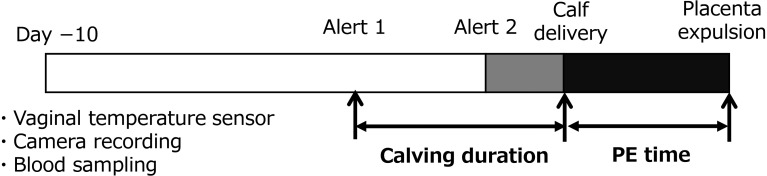
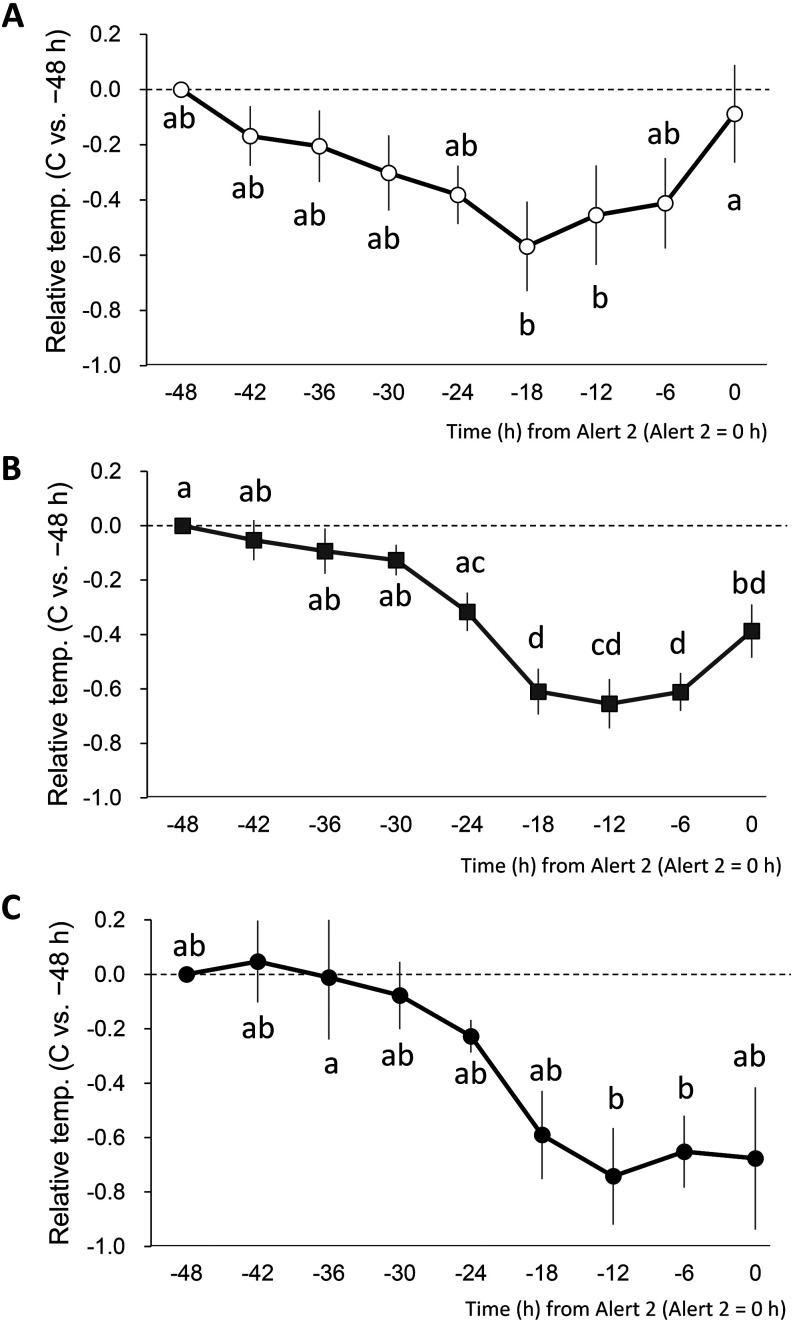
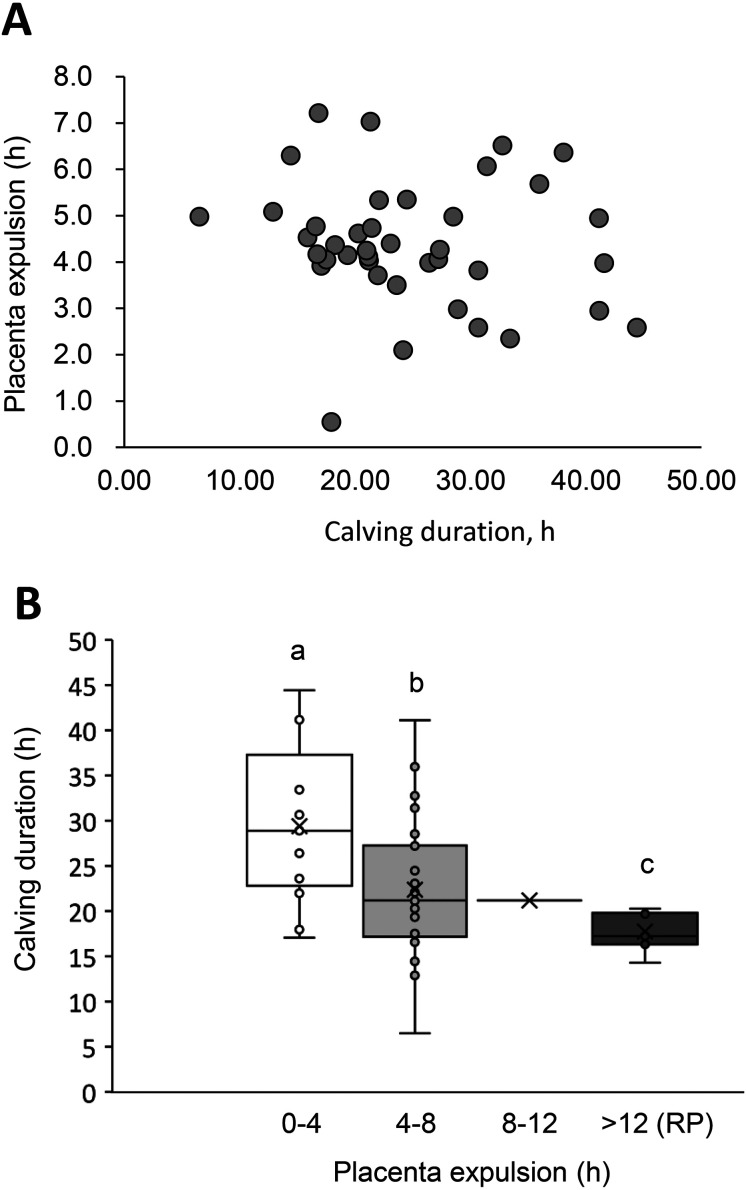
Retained placenta (RP) adversely affects postpartum productivity and reproduction in dairy cattle. Thus, methods to predict the occurrence of RP before calving would be desirable. Herein, we assessed whether vaginal temperature measurements (which have already been applied to detect calving) could be used to predict the occurrence of RP in cattle. A vaginal temperature recording device was inserted into the vagina of 49 pregnant Holstein-Friesian heifers (n = 16) and cows (n = 33); this device recorded the vaginal temperature every 5 min until the device dropped out at calving. Serum was collected 10 days before the expected calving date. The time points of calving and placental expulsion were identified via video recordings. We further calculated calving duration (temperature decrease to calving) and placenta expulsion time (PE time = calving to placenta expulsion). The PE times were divided into four categories (0-4 h, 4-8 h, 8-12 h, and RP at >12 h), while subsequent analysis revealed that an extension of the PE time dependent on the shortening of the calving duration (P < 0.05). The vaginal temperature patterns also differed in a PE time-dependent manner, and cows with RP did not show any re-elevation of vaginal temperature. Serum analyses indicated an energy deficiency in RP cattle. These results suggest that RP may be detected early as a specific change in the vaginal temperature associated with reproductive hormone secretion.
胎盘滞留(RP)对奶牛产后的生产性能和繁殖能力有不利影响。因此,需要在产犊前预测RP发生的方法。在此,我们评估了已用于检测产犊的阴道温度测量是否可用于预测奶牛RP的发生。将阴道温度记录装置插入49头怀孕的荷斯坦-弗里生小母牛(n = 16)和奶牛(n = 33)的阴道内;该装置每5分钟记录一次阴道温度,直至产犊时装置脱落。在预计产犊日期前10天采集血清。通过视频记录确定产犊和胎盘排出的时间点。我们进一步计算了产犊持续时间(温度下降至产犊的时间)和胎盘排出时间(PE时间=产犊至胎盘排出的时间)。PE时间分为四类(0 - 4小时、4 - 8小时、8 - 12小时和>12小时的RP),随后的分析表明,PE时间的延长取决于产犊持续时间的缩短(P < 0.05)。阴道温度模式也因PE时间而异,患有RP的奶牛阴道温度没有再次升高。血清分析表明RP奶牛存在能量缺乏。这些结果表明,RP可能作为与生殖激素分泌相关联的阴道温度的特定变化而被早期检测到。