Dienel Ari, Hong Sung Ha, Zeineddine Hussein A, Thomas Sithara, Shafeeque C M, Jose Dania A, Torres Kiara, Guzman Jose, Dunn Andrew, P Kumar T, Rao Gadiparthi N, Blackburn Spiros L, McBride Devin W
The Vivian L. Smith, The University of Texas Health Science Center at Houston.
The University of Texas at Austin.
Res Sq. 2024 Jun 12:rs.3.rs-4468292. doi: 10.21203/rs.3.rs-4468292/v1.
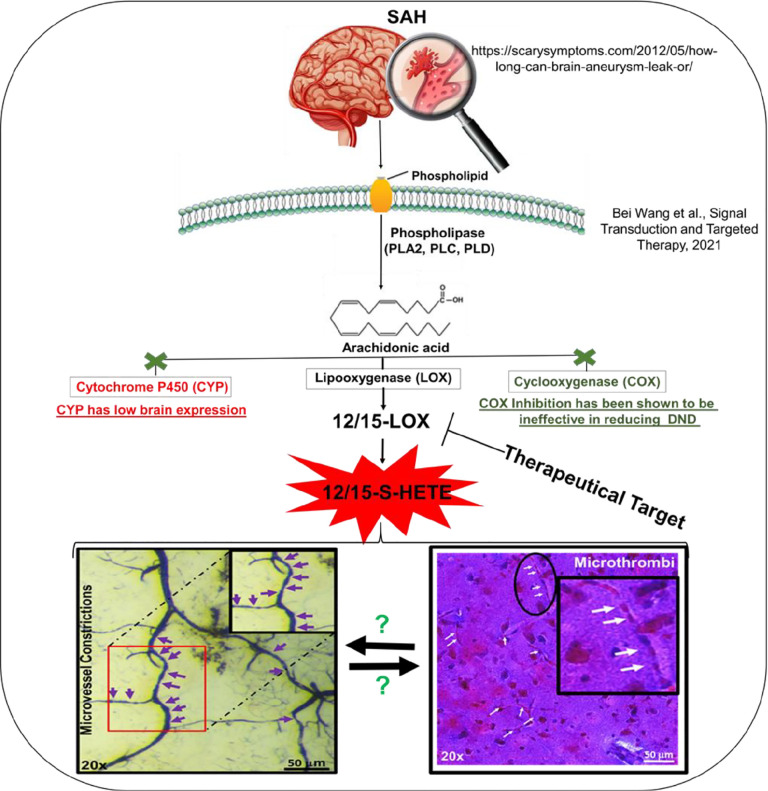
Impaired cerebral circulation, induced by blood vessel constrictions and microthrombi, leads to delayed cerebral ischemia after subarachnoid hemorrhage (SAH). 12/15-Lipooxygenase (12/15-LOX) overexpression has been implicated in worsening early brain injury outcomes following SAH. However, it is unknown if 12/15-LOX is important in delayed pathophysiological events after SAH. Since 12/15-LOX produces metabolites that induce inflammation and vasoconstriction, we hypothesized that 12/15-LOX leads to microvessel constriction and microthrombi formation after SAH, and thus 12/15-LOX is an important target to prevent delayed cerebral ischemia.
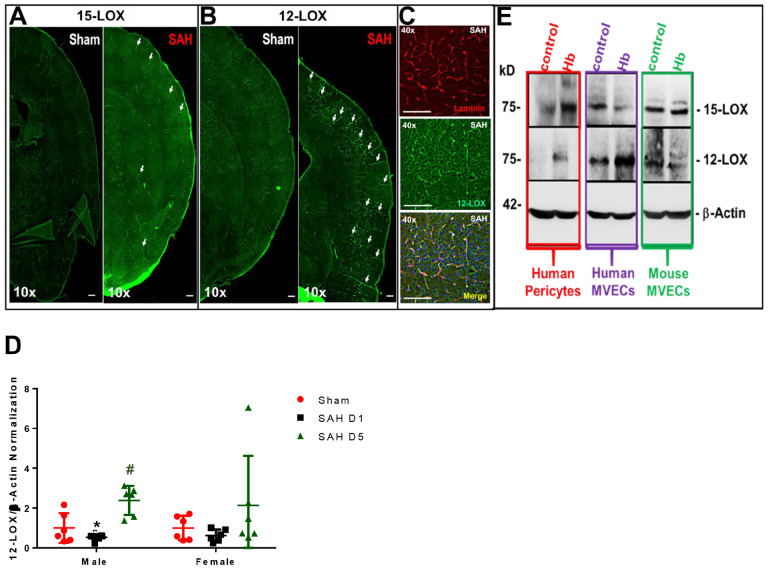
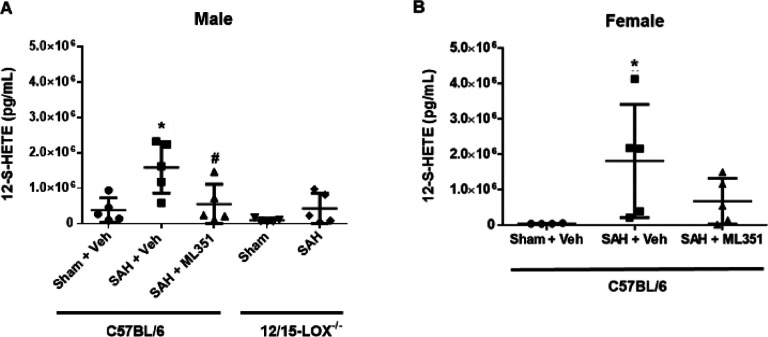
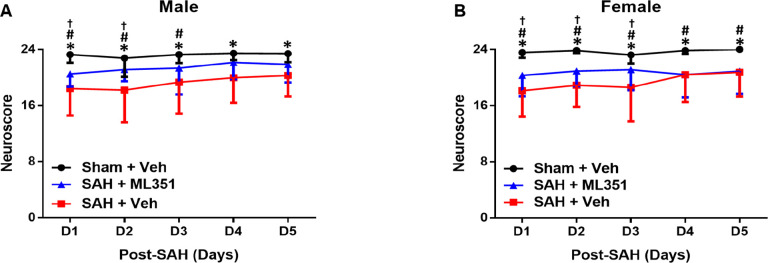
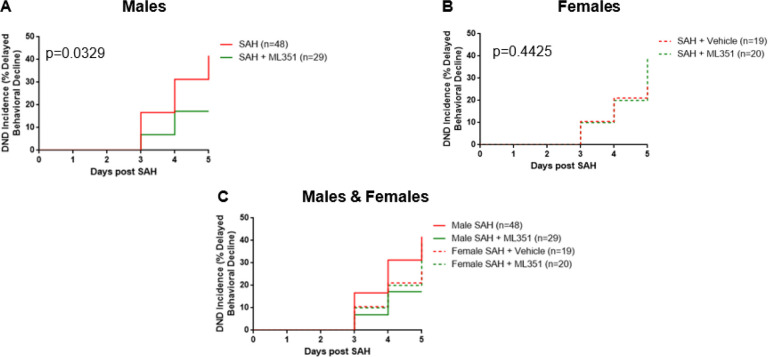
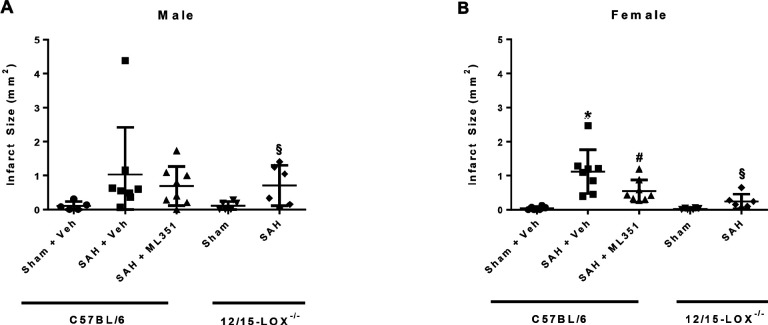
SAH was induced in C57BL/6 and 12/15-LOX mice of both sexes by endovascular perforation. Expression of 12/15-LOX was assessed in brain tissue slices and . C57BL/6 mice were administered either ML351 (12/15-LOX inhibitor) or vehicle. Mice were evaluated for daily neuroscore and euthanized on day five to assess cerebral 12/15-LOX expression, vessel constrictions, platelet activation, microthrombi, neurodegeneration, infarction, cortical perfusion, and for development of delayed deficits. Finally, the effect of 12/15-LOX inhibition on platelet activation was assessed in SAH patient samples using a platelet spreading assay.
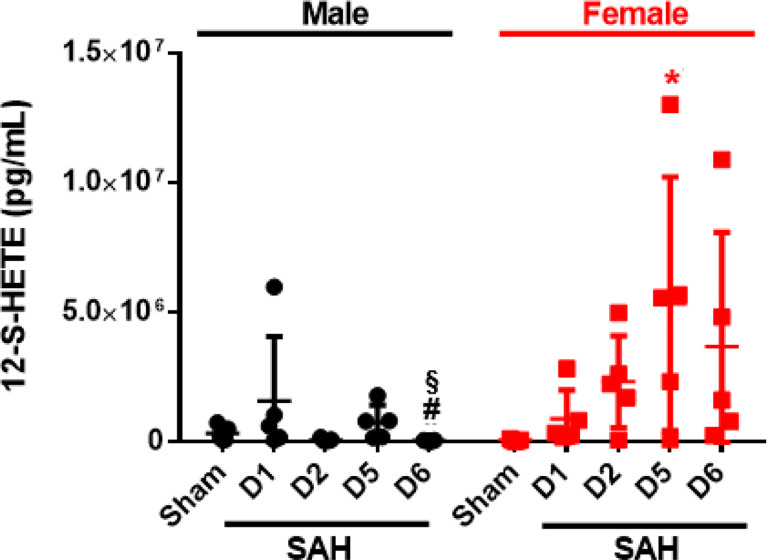
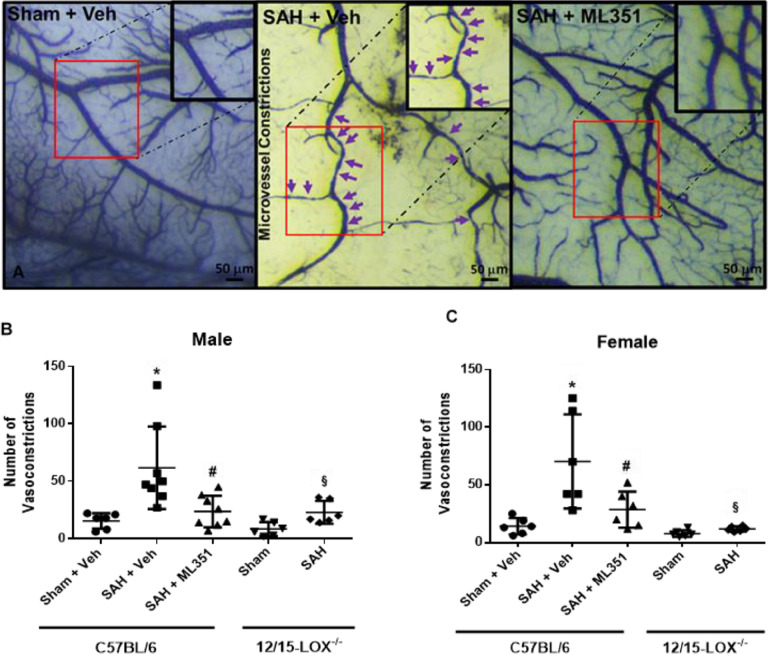
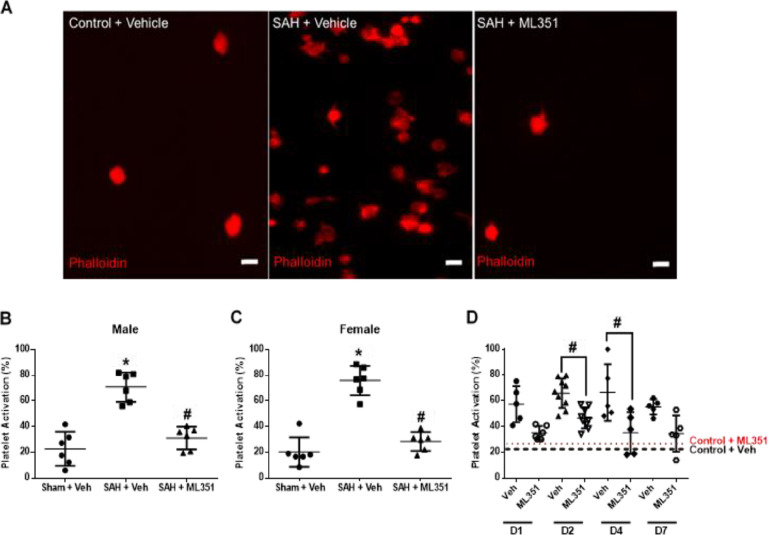
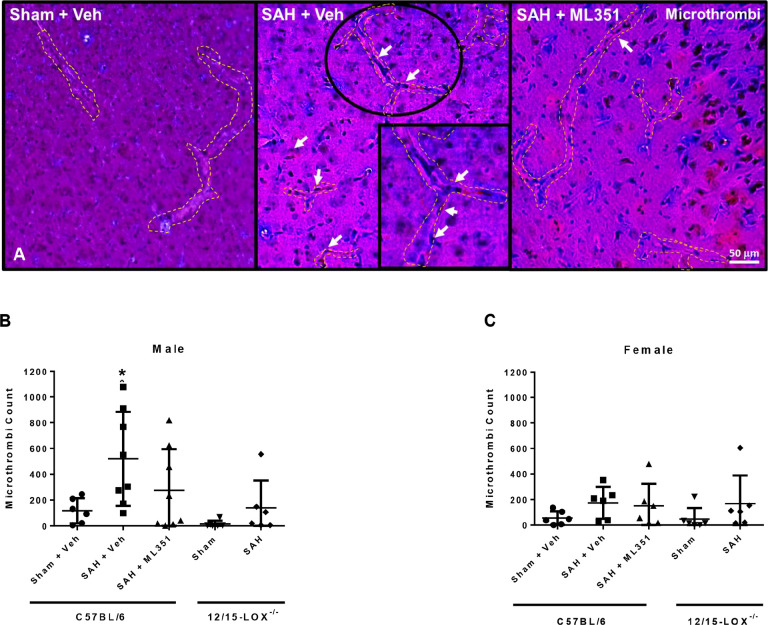
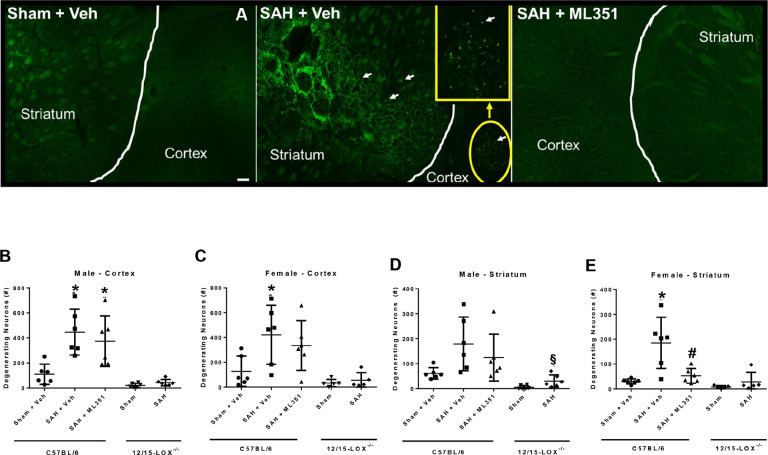
In SAH mice, 12/15-LOX was upregulated in brain vascular cells and there was an increase in 12-S-HETE. Inhibition of 12/15-LOX improved brain perfusion on days 4-5 and attenuated delayed pathophysiological events, including microvessel constrictions, microthrombi, neuronal degeneration, and infarction. Additionally, 12/15-LOX inhibition reduced platelet activation in human and mouse blood samples.
Cerebrovascular 12/15-LOX overexpression plays a major role in brain dysfunction after SAH by triggering microvessel constrictions and microthrombi formation, which reduces brain perfusion. Inhibiting 12/15-LOX may be a therapeutic target to improve outcomes after SAH.
血管收缩和微血栓形成所导致的脑循环受损会引发蛛网膜下腔出血(SAH)后的迟发性脑缺血。12/15-脂氧合酶(12/15-LOX)的过表达与SAH后早期脑损伤结局的恶化有关。然而,尚不清楚12/15-LOX在SAH后的迟发性病理生理事件中是否重要。由于12/15-LOX产生的代谢产物可诱导炎症和血管收缩,我们推测12/15-LOX会导致SAH后微血管收缩和微血栓形成,因此12/15-LOX是预防迟发性脑缺血的重要靶点。
通过血管内穿刺在雌雄C57BL/6小鼠和12/15-LOX小鼠中诱导SAH。在脑组织切片中评估12/15-LOX的表达。给C57BL/6小鼠施用ML351(12/15-LOX抑制剂)或赋形剂。每天对小鼠进行神经评分评估,并在第5天实施安乐死以评估脑12/15-LOX表达、血管收缩、血小板活化、微血栓、神经变性、梗死、皮质灌注以及迟发性神经功能缺损的发生情况。最后,使用血小板铺展试验评估12/15-LOX抑制对SAH患者样本中血小板活化的影响。
在SAH小鼠中,脑血管细胞中12/15-LOX上调,12-S-HETE增加。抑制12/15-LOX可改善第4至5天的脑灌注,并减轻迟发性病理生理事件,包括微血管收缩、微血栓、神经元变性和梗死。此外,抑制12/15-LOX可降低人和小鼠血液样本中的血小板活化。
脑血管12/15-LOX过表达通过引发微血管收缩和微血栓形成,进而减少脑灌注,在SAH后的脑功能障碍中起主要作用。抑制12/15-LOX可能是改善SAH后结局的治疗靶点。