Funahara Madoka, Honda Hiromi, Nakamichi Atsuko
School of Oral Health Sciences, Faculty of Dentistry, Kyushu Dental University, Kitakyushu, JPN.
Cureus. 2024 May 28;16(5):e61277. doi: 10.7759/cureus.61277. eCollection 2024 May.
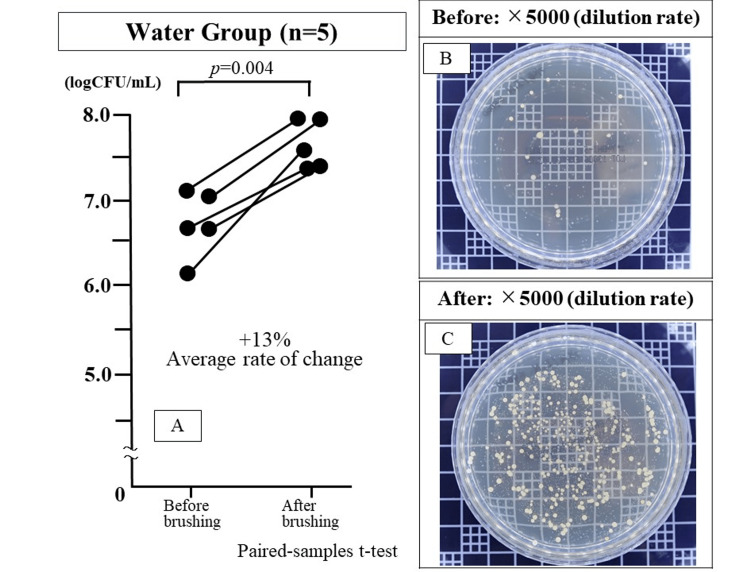
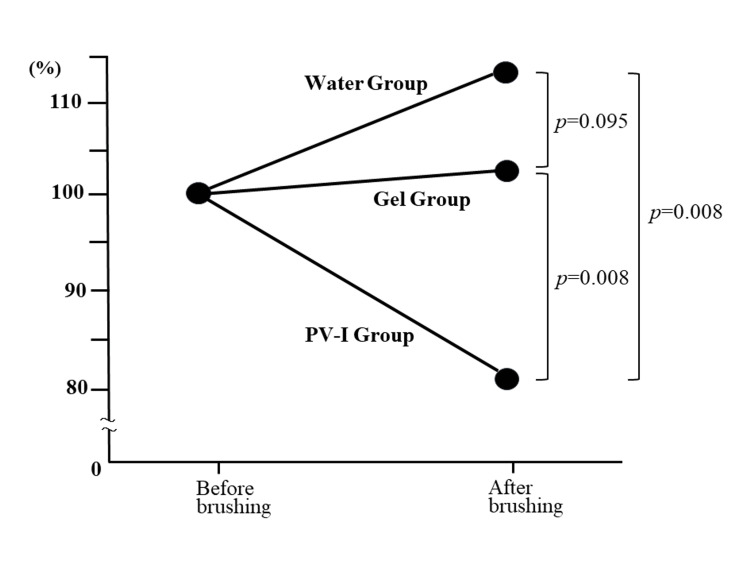
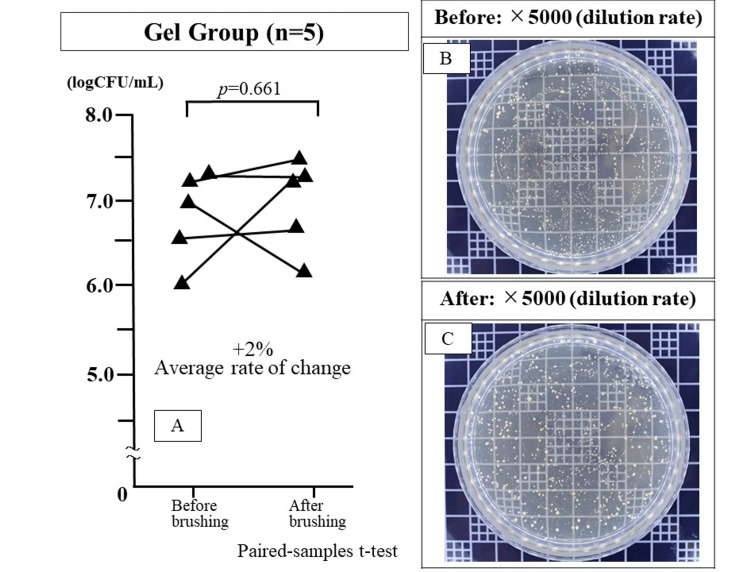
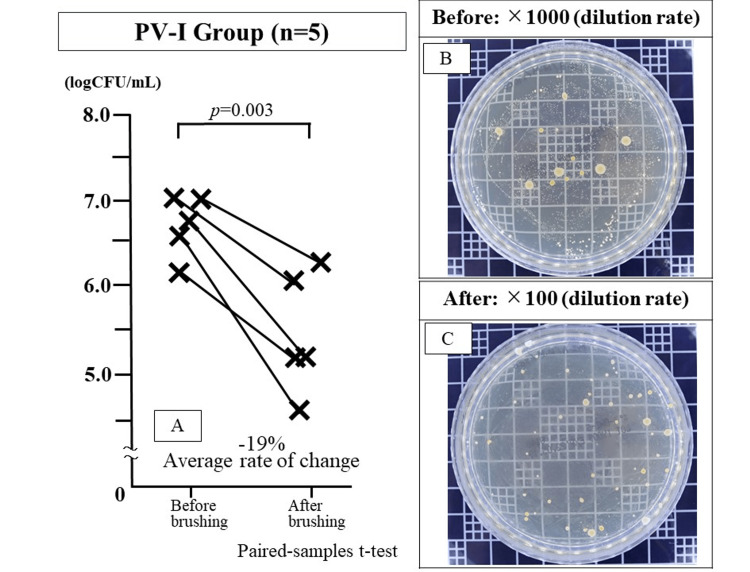
Brushing older adults or intubated patients who are unable to rinse can transmit bacteria from dental plaque into the oral cavity and increase the risk of aspiration pneumonia. Therefore, this study examined brushing methods to prevent the spread of bacteria in the oral cavity. Methods:Three types of brushing methods were performed on five volunteers by dental hygienists (water group: brushing with toothbrush bristles soaked in water; gel group: brushing with a moisturizing gel placed on the toothbrush; PV-I group: brushing with toothbrush bristles dipped in povidone-iodine). Neither group spat out the saliva or gargled during brushing but brushed while wiping the water/gel/PV-I solution with a sponge brush. The same five volunteers served as subjects for the three methods. Saliva was collected before and after brushing, and the number of colonies was determined using bacterial culture. Results:The water group demonstrated a significantly increased number of bacteria in the saliva owing to the spread of bacteria from the dental plaque. The gel group prevented the spread of the bacteria. The PV-I group showed a significant decrease in the number of bacteria in the saliva after brushing.
Brushing with toothbrush bristles dipped in a povidone-iodine solution is recommended for intubated or older adult patients who cannot gargle.
给无法漱口的老年人或插管患者刷牙会将牙菌斑中的细菌传播到口腔中,增加吸入性肺炎的风险。因此,本研究探讨了预防口腔细菌传播的刷牙方法。方法:牙科保健员对五名志愿者进行三种刷牙方法(水组:用浸泡在水中的牙刷刷毛刷牙;凝胶组:用涂在牙刷上的保湿凝胶刷牙;聚维酮碘组:用蘸有聚维酮碘的牙刷刷毛刷牙)。刷牙过程中,所有组均不吐口水或漱口,而是边用海绵刷擦拭水/凝胶/聚维酮碘溶液边刷牙。这五名志愿者作为这三种方法的受试者。刷牙前后收集唾液,通过细菌培养确定菌落数量。结果:由于牙菌斑中的细菌传播,水组唾液中的细菌数量显著增加。凝胶组可防止细菌传播。聚维酮碘组刷牙后唾液中的细菌数量显著减少。结论:对于无法漱口的插管患者或老年患者,建议使用蘸有聚维酮碘溶液的牙刷刷毛刷牙。