
土著人民参与公民科学,使用 BMWP 评估墨西哥干旱半干旱生物圈保护区河流的水质。
Indigenous people doing citizen science to assess water quality using the BMWP in rivers of an arid semi-arid biosphere reserve in Mexico.
机构信息
Instituto Politécnico Nacional, Escuela Nacional de Ciencias Biológicas, Laboratorio de Evaluación de la Salud de los Ecosistemas Acuáticos, Prolongación de Carpio y Plan de Ayala s/n, Col. Santo Tomás, Miguel Hidalgo, C.P. 11340, Mexico City, Mexico.
Instituto Politécnico Nacional, Coordinación Politécnica para la Sustentabilidad, Av. Instituto Politécnico Nacional. Esq. Wilfrido Massieu, Col. San Pedro Zacatenco, Gustavo A. Madero, C.P. 07738, Mexico City, Mexico.
出版信息
Sci Rep. 2024 Jul 2;14(1):15090. doi: 10.1038/s41598-024-65903-7.
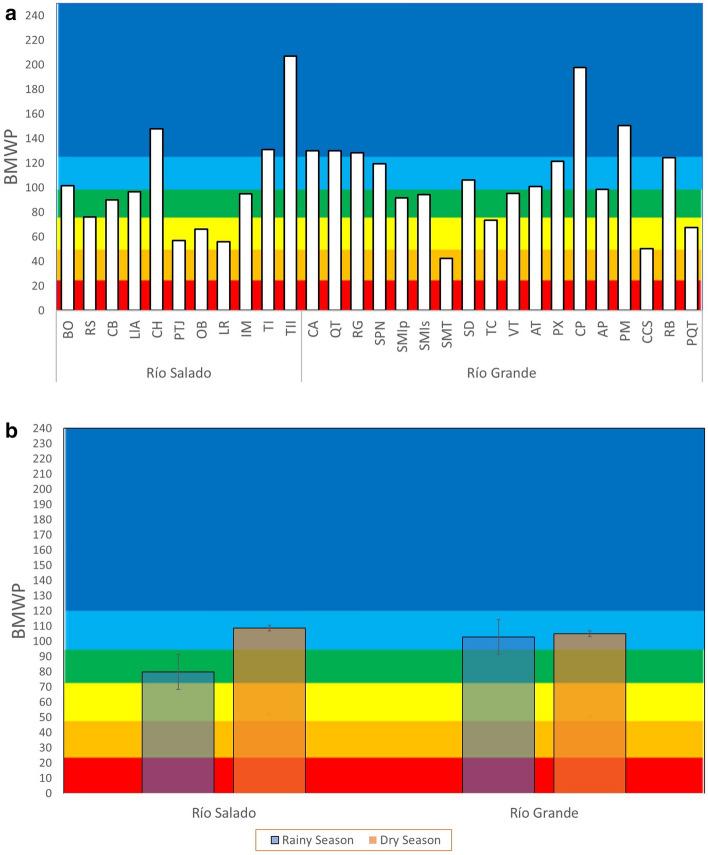
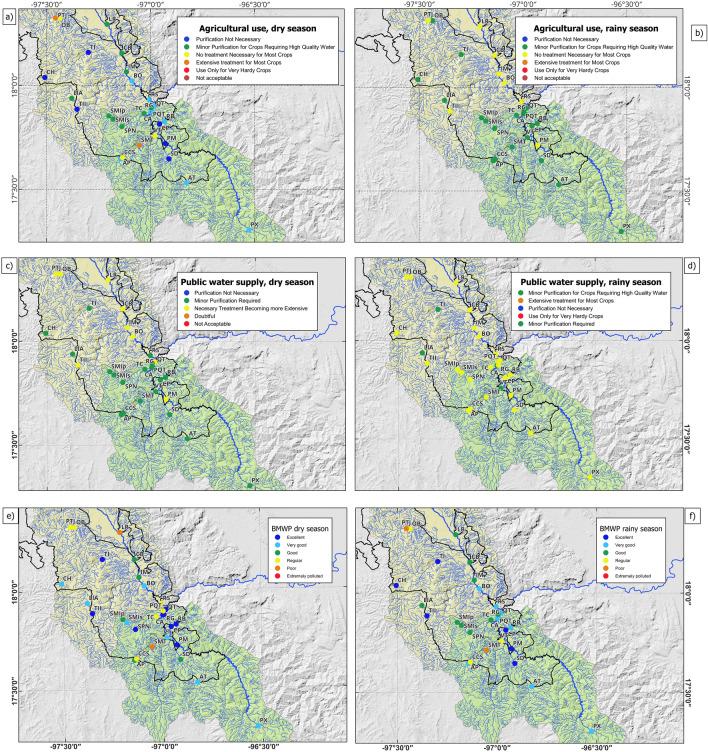
Arid and semi-arid areas are among the most threatened ecosystems on the planet. The Tehuacán-Cuicatlán Biosphere Reserve (TCBR), in southeastern Mexico, is an arid and semi-arid area with high biological diversity and human settlements of eight ethnic groups. Two rivers drain the reserve, Río Grande (RG) and Río Salado (RS), which are not subject to water quality monitoring by government agencies; however, measures of water quality of these rivers are needed to focus conservation actions on this resource. This work aimed to test the effectiveness of participatory water quality monitoring with the participation of three actors: Reserve management leaders, local communities, and academics, to monitoring water quality in the rivers of the TCBR. Ninety-two residents were trained to carry out water quality biomonitoring using the Biological Monitoring Working Party (BMWP) index calibrated for the reserve. The BMWP uses macroinvertebrate families to display numerical and categorical water quality scores. Additionally, the Water Quality Index (WQI) was assessed and the Normalized Difference Vegetation Index (NDVI) of the riparian zones was estimated in each study site. The mean WQI scores were 69.24 for RS (no treatment necessary for most crops and necessary treatment for public water supply) and 75.16 for RG (minor purification for crops requiring high-quality water and necessary treatment for public water supply). The BMWP showed five water quality categories (Excellent, Very Good, Good, Fair, and Poor), showing higher water quality scores in the upper portion of the basins and capable of discriminating study sites with lower scores close to human settlements. At one study site, data from participatory monitoring impelled actions taken to address a pollution source and influenced policy focus, reaching the maximum level of participatory-based monitoring. This led to avoid the discharge of wastewater into the river to conserve and protect the water resource. WQI is closely related to BMWP; however, the latter was far more sensitive to detecting areas affected by domestic water discharges. The NDVI presented low values for the TCBR, being lower in RS (the driest area). Although the NDVI showed a weak relationship with BMWP values, areas with higher NDVI values generally achieved higher BMWP values. The results of this study highlight the high sensitivity of the BMWP to detect several water quality conditions in the rivers running through the TCBR when compared to WQI. In addition, the usefulness of biomonitoring using the BMWP index was evident, as well as the importance of the participation of local inhabitants contributing to the knowledge of water quality in biosphere reserves and carrying out timely measures that allow the rivers in these reserves to be maintained in good condition.
干旱和半干旱地区是地球上受威胁最严重的生态系统之一。特瓦坎-夸特兰生物圈保护区(TCBR)位于墨西哥东南部,是一个干旱和半干旱地区,拥有高度的生物多样性和八个族群的人类住区。两条河流流经该保护区,即格兰德河(RG)和萨尔加多河(RS),但政府机构并未对这两条河的水质进行监测;然而,需要对这些河流的水质进行测量,以便将保护行动集中在这一资源上。这项工作旨在测试参与式水质监测的有效性,参与方有三个:保护区管理负责人、当地社区和学术界,监测 TCBR 河流的水质。对 92 名居民进行了培训,使用为该保护区校准的生物监测工作小组(BMWP)指数进行水质生物监测。BMWP 使用大型无脊椎动物家族来显示数值和分类水质分数。此外,还评估了水质指数(WQI)并估计了每个研究地点的河岸带归一化差异植被指数(NDVI)。RS 的平均 WQI 得分为 69.24(大多数作物不需要处理,公共供水需要处理),RG 的平均 WQI 得分为 75.16(作物需要高质量水的轻度净化,公共供水需要处理)。BMWp 显示了五个水质类别(优秀、很好、良好、一般和差),在流域上游部分显示出更高的水质分数,并能够区分接近人类住区的得分较低的研究地点。在一个研究地点,参与式监测的数据促使采取行动解决污染源,并影响政策重点,达到了基于参与的监测的最高水平。这导致避免将废水排入河流,以保护和保护水资源。WQI 与 BMWP 密切相关;然而,后者对检测受家庭用水排放影响的区域更为敏感。NDVI 对 TCBR 的数值较低,在 RS(最干燥的区域)较低。尽管 NDVI 与 BMWP 值呈弱相关,但 NDVI 值较高的区域通常 BMWP 值也较高。这项研究的结果突出了 BMWP 在与 WQI 相比检测流经 TCBR 的河流的多种水质条件方面的高度敏感性。此外,使用 BMWP 指数进行生物监测的有效性以及当地居民参与生物圈保护区水质知识并及时采取措施,使这些保护区的河流保持良好状态的重要性显而易见。






 Zotero 插件