Eye (Lond). 2024 Aug;38(11):2083-2101. doi: 10.1038/s41433-024-03106-0. Epub 2024 Jul 4.
Uncorrected refractive error (URE) is a readily treatable cause of visual impairment (VI). This study provides updated estimates of global and regional vision loss due to URE, presenting temporal change for VISION 2020 METHODS: Data from population-based eye disease surveys from 1980-2018 were collected. Hierarchical models estimated prevalence (95% uncertainty intervals [UI]) of blindness (presenting visual acuity (VA) < 3/60) and moderate-to-severe vision impairment (MSVI; 3/60 ≤ presenting VA < 6/18) caused by URE, stratified by age, sex, region, and year. Near VI prevalence from uncorrected presbyopia was defined as presenting near VA < N6/N8 at 40 cm when best-corrected distance (VA ≥ 6/12).
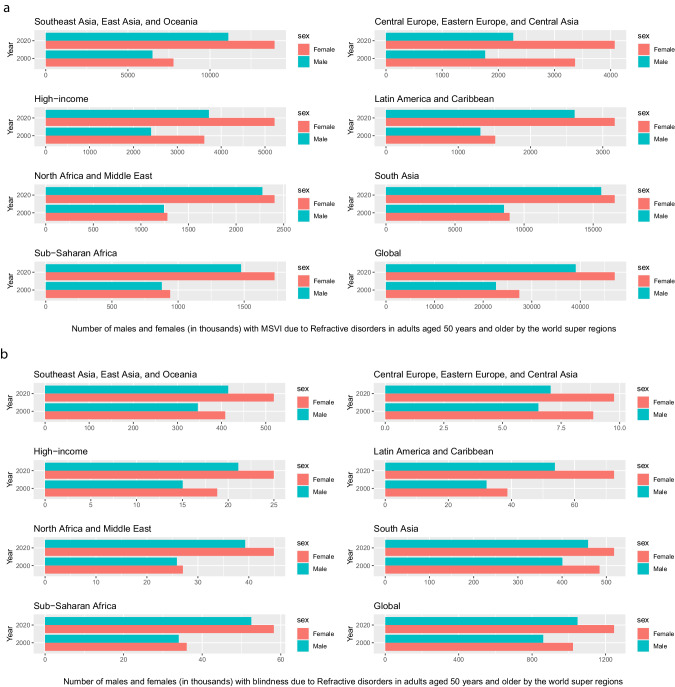
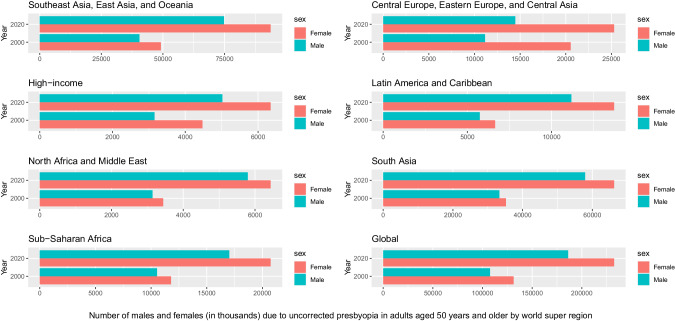
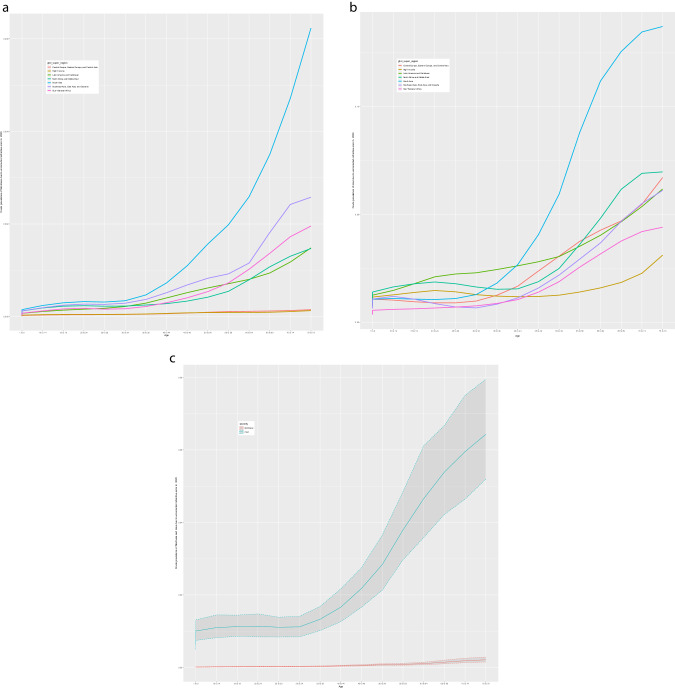
In 2020, 3.7 million people (95%UI 3.10-4.29) were blind and 157 million (140-176) had MSVI due to URE, a 21.8% increase in blindness and 72.0% increase in MSVI since 2000. Age-standardised prevalence of URE blindness and MSVI decreased by 30.5% (30.7-30.3) and 2.4% (2.6-2.2) respectively during this time. In 2020, South Asia GBD super-region had the highest 50+ years age-standardised URE blindness (0.33% (0.26-0.40%)) and MSVI (10.3% (8.82-12.10%)) rates. The age-standardized ratio of women to men for URE blindness was 1.05:1.00 in 2020 and 1.03:1.00 in 2000. An estimated 419 million (295-562) people 50+ had near VI from uncorrected presbyopia, a +75.3% (74.6-76.0) increase from 2000 CONCLUSIONS: The number of cases of VI from URE substantively grew, even as age-standardised prevalence fell, since 2000, with a continued disproportionate burden by region and sex. Global population ageing will increase this burden, highlighting urgent need for novel approaches to refractive service delivery.
未矫正屈光不正(URE)是导致视力损害(VI)的一个易于治疗的原因。本研究提供了全球和区域因 URE 导致视力丧失的最新估计值,展示了 VISION 2020 期间的时间变化。
收集了 1980 年至 2018 年基于人群的眼病调查数据。分层模型估计了由 URE 引起的失明(表现为视力<3/60)和中重度视力障碍(MSVI;3/60≤表现为 VA<6/18)的患病率(95%置信区间[UI]),按年龄、性别、区域和年份进行分层。未矫正远视引起的近视力障碍患病率定义为当最佳矫正距离(VA≥6/12)时,40cm 处的近视力<N6/N8。
2020 年,有 370 万人(95%UI 3.10-4.29)失明,1.57 亿人(140-176)因 URE 而患有 MSVI,自 2000 年以来,失明人数增加了 21.8%,MSVI 增加了 72.0%。在此期间,URE 失明和 MSVI 的年龄标准化患病率分别下降了 30.5%(30.7-30.3)和 2.4%(2.6-2.2)。2020 年,南亚 GBD 超级区域 50 岁以上人群的 URE 失明(0.33%(0.26-0.40%))和 MSVI(10.3%(8.82-12.10%))的年龄标准化率最高。2020 年,URE 失明的女性与男性的年龄标准化比值为 1.05:1.00,而 2000 年为 1.03:1.00。估计有 4.19 亿(2.95-5.62 亿)50 岁以上的人患有未矫正远视引起的近视力障碍,与 2000 年相比增加了 75.3%(74.6-76.0)。
自 2000 年以来,即使年龄标准化患病率下降,URE 引起的 VI 病例数量仍大幅增加,区域和性别之间的负担仍然不成比例。全球人口老龄化将增加这一负担,突显了对屈光服务提供方式进行创新的迫切需要。