Wang Yifan, Zhang Lei, Wang Chenggong, Lin Min, Zheng Li, Guo Xiuyan
Mental Health Education Center, Zhengzhou University, Zhengzhou, People's Republic of China.
School of Psychology and Cognitive Science, East China Normal University, Shanghai, People's Republic of China.
Psychol Res Behav Manag. 2024 Jul 2;17:2557-2571. doi: 10.2147/PRBM.S462184. eCollection 2024.
People are generally characterized by a self-serving bias which describes the tendency to ascribe positive outcomes or success to internal or personal causes (self-enhancement motivation) and ascribe negative outcomes or failure to external or situational causes (self-protection motivation). It has been found that the individuals with internet gaming disorder (IGD) who have low self-esteem and high depression exhibit an attenuated self-serving bias. However, the relationships among self-esteem, depression and self-serving bias are not clearly identified.
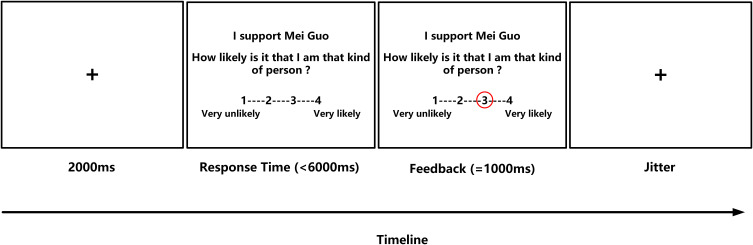
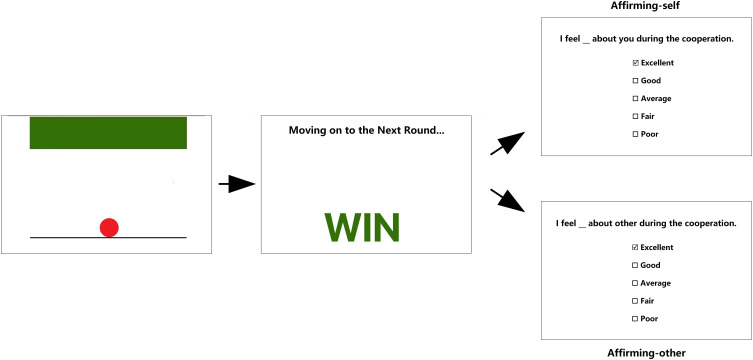
A sample of 138 IGD participants completed self-esteem and depression scales and a causal attribution task (Study 1) to examine the relationships among self-esteem, depression and self-serving bias (both self-enhancement and self-protection). In follow-up Study 2, 28 IGD participants were recruited to undertake self-affirmation intervention which can affirm one's sense of global self-view and bolster self-esteem to explore whether self-affirmation would trigger a reduction of depression and a raise of self-serving bias.
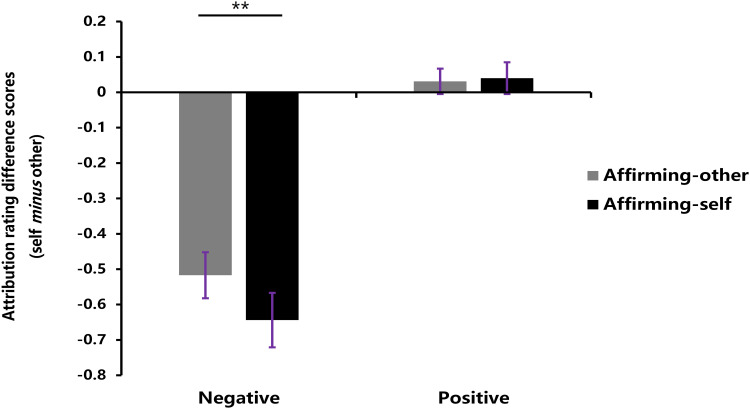
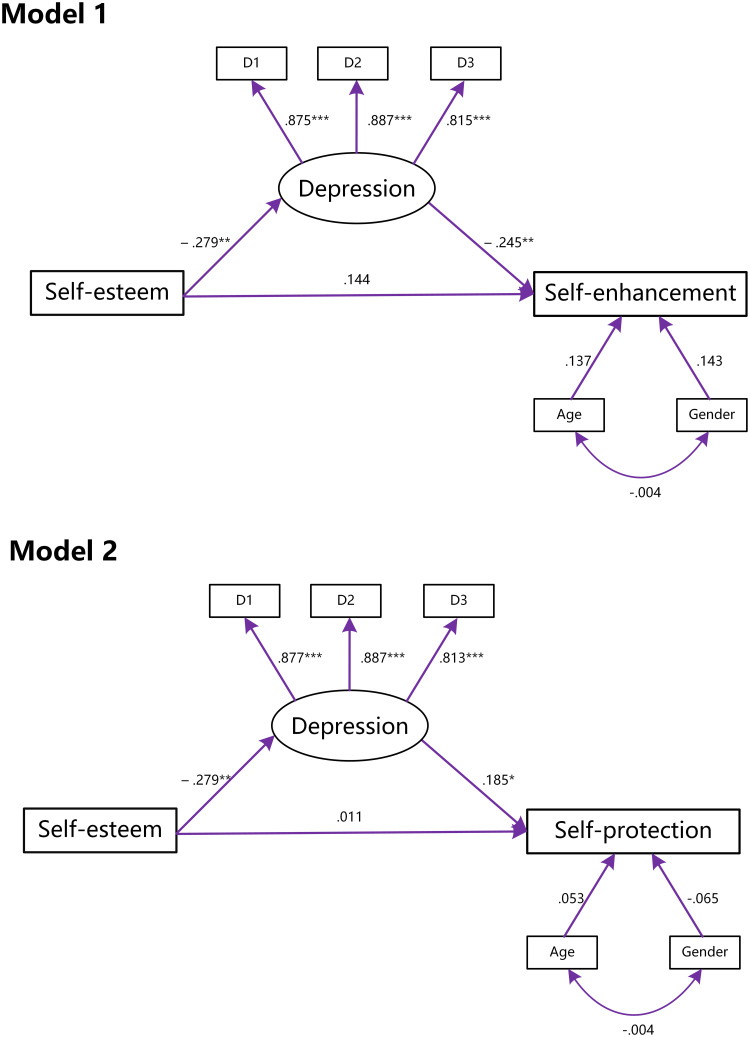
The results of path analysis in Study 1 showed that the self-serving bias was predicted by self-esteem and depression, and the depression played a mediating role between self-esteem and self-serving bias. The results of Study 2 showed that the IGD participants reported higher self-esteem, lower depression and engaged in more self-protection motivation after affirming-self manipulation as compared with affirming-other manipulation.
These findings suggest that self-esteem predicts self-serving bias through depression and self-affirmation could trigger an increase of self-esteem, further decrease depression and improve self-serving bias for the individuals with IGD. The present article clearly identified the relationships among these factors and provided a new approach to promote positive self-concept in individuals with IGD. Future research is warranted to explore the lasting benefits of self-affirmation on domains of education, relationships and gaming withdrawal for the individuals with IGD among different populations.
人们通常具有自我服务偏差,即倾向于将积极结果或成功归因于内部或个人原因(自我提升动机),而将消极结果或失败归因于外部或情境原因(自我保护动机)。研究发现,自尊心低且抑郁程度高的网络游戏障碍(IGD)个体表现出减弱的自我服务偏差。然而,自尊、抑郁和自我服务偏差之间的关系尚未明确确定。
138名IGD参与者的样本完成了自尊和抑郁量表以及因果归因任务(研究1),以检验自尊、抑郁和自我服务偏差(包括自我提升和自我保护)之间的关系。在后续的研究2中,招募了28名IGD参与者进行自我肯定干预,这种干预可以肯定一个人的整体自我观并增强自尊,以探讨自我肯定是否会引发抑郁的减轻和自我服务偏差的提高。
研究1的路径分析结果表明,自我服务偏差由自尊和抑郁预测,抑郁在自尊和自我服务偏差之间起中介作用。研究2的结果表明,与肯定他人的操作相比,IGD参与者在进行自我肯定操作后报告了更高的自尊、更低的抑郁,并表现出更多的自我保护动机。
这些发现表明,自尊通过抑郁预测自我服务偏差,自我肯定可以引发自尊的增加,进一步减轻抑郁,并改善IGD个体的自我服务偏差。本文明确了这些因素之间的关系,并为促进IGD个体的积极自我概念提供了一种新方法。未来的研究有必要探索自我肯定在不同人群中对IGD个体在教育、人际关系和游戏戒断方面的持久益处。