Yamamoto Kosei, Mizutani Katsuhiro, Akiyama Takenori, Nogawa Hirotsugu, Toda Masahiro
Department of Neurosurgery, Keio University, School of Medicine, Shinjuku, Japan.
Surg Neurol Int. 2024 Jun 7;15:188. doi: 10.25259/SNI_214_2024. eCollection 2024.
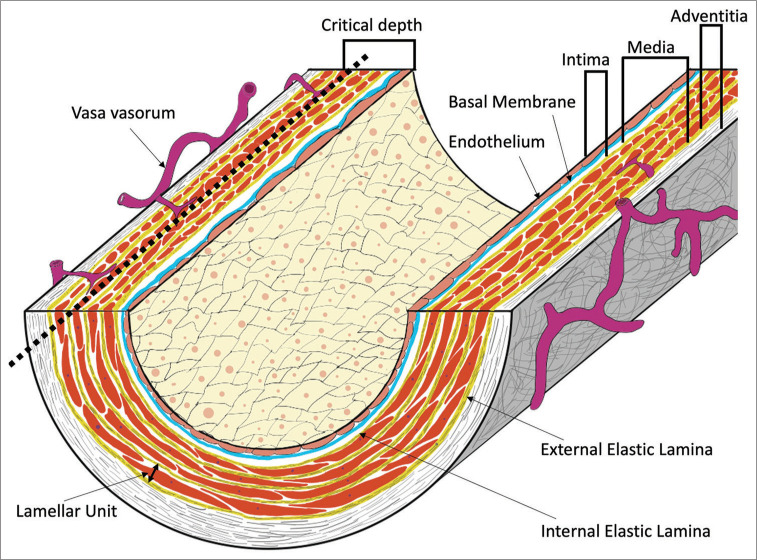
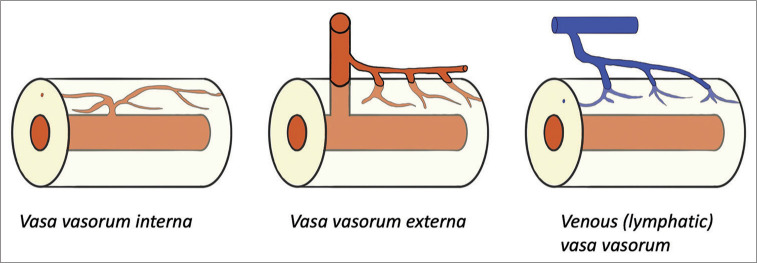
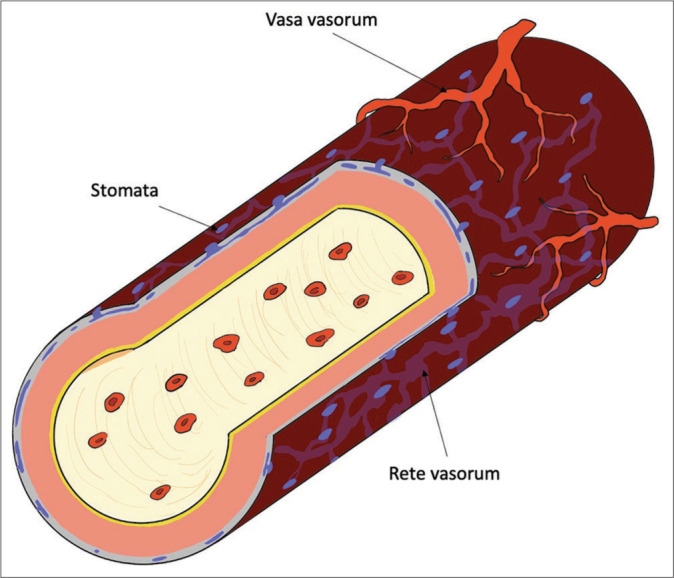
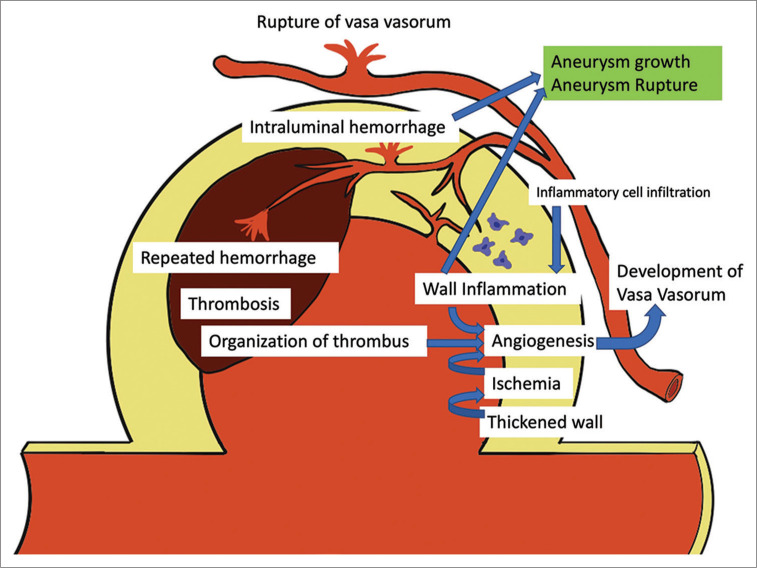
Vasa vasorum (VVs) is a Latin word representing vessels of vessels. VVs are usually found on the adventitia of the parent vessel and infrequently reach the media and intima, depending on the size and type of the parent vessels and physiological and pathological conditions. The VVs include arteries, capillaries, veins, and lymphatic vessels, involving the oxygenation and nourishment of the vessel's wall to sustain its healthy state. Accumulated studies have revealed that VVs are involved in various intracranial lesions, including atherosclerotic diseases, aneurysms, and shunt diseases. The current review aims to review and integrate past and recent findings and knowledge on VVs and to facilitate our understanding of VVs and intracranial pathology involving VVs.
A literature review was carried out with a focus on the role of VVs by searching the Pubmed database.
We identified 71 articles that discuss the role of VVs. We discussed the anatomical structure, physiological significance, and pathological significance of the VV.
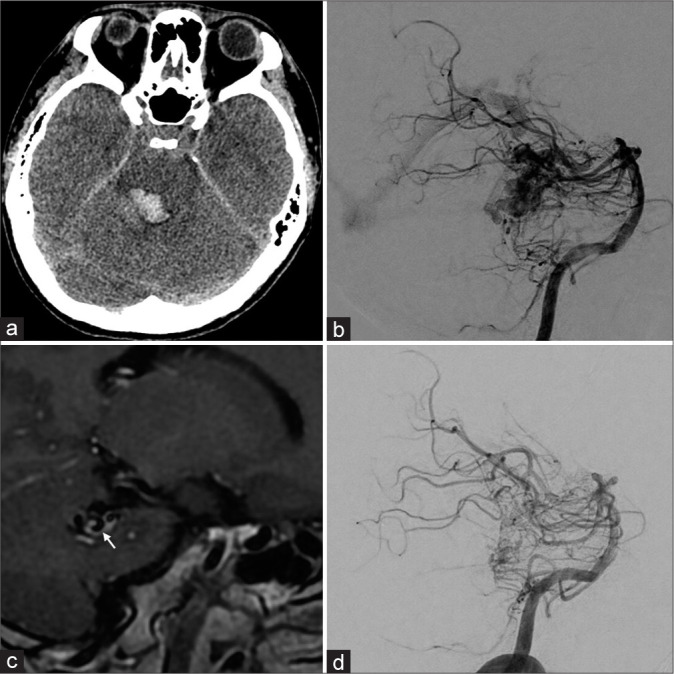
VV is not only involved in the nutrition and metabolism of the vascular wall but is also deeply involved in the pathogenesis of inflammation, ischemia, and thrombosis of the vascular wall. In addition, in the central nervous system, intracranial vascular wall nutrient particularities and VVs are closely related to the pathogenesis of cerebral aneurysms, subarachnoid hemorrhage, arteriovenous shunt disease, atherosclerotic lesions, and other conditions.
血管滋养血管(VVs)是一个拉丁语词汇,代表“血管的血管”。血管滋养血管通常位于母血管的外膜,根据母血管的大小和类型以及生理和病理状况,很少会延伸至中膜和内膜。血管滋养血管包括动脉、毛细血管、静脉和淋巴管,参与血管壁的氧合和营养供应,以维持其健康状态。越来越多的研究表明,血管滋养血管参与多种颅内病变,包括动脉粥样硬化疾病、动脉瘤和分流疾病。本综述旨在回顾和整合过去及近期关于血管滋养血管的研究结果和知识,以促进我们对血管滋养血管以及涉及血管滋养血管的颅内病理学的理解。
通过检索PubMed数据库,重点围绕血管滋养血管的作用进行文献综述。
我们筛选出71篇讨论血管滋养血管作用的文章。我们探讨了血管滋养血管的解剖结构、生理意义和病理意义。
血管滋养血管不仅参与血管壁的营养和代谢,还深度参与血管壁炎症、缺血和血栓形成的发病机制。此外,在中枢神经系统中,颅内血管壁营养的特殊性以及血管滋养血管与脑动脉瘤、蛛网膜下腔出血、动静脉分流疾病、动脉粥样硬化病变等疾病的发病机制密切相关。