Department of Obstetrics and Gynecology, Renmin Hospital of Wuhan University, Wuhan, China.
Reproductive Medicine Center, Renmin Hospital of Wuhan University, Wuhan, China.
Reprod Biol Endocrinol. 2024 Jul 8;22(1):76. doi: 10.1186/s12958-024-01253-3.
The low live birth rate and difficult decision-making of the in vitro fertilization (IVF) treatment regimen bring great trouble to patients and clinicians. Based on the retrospective clinical data of patients undergoing the IVF cycle, this study aims to establish classification models for predicting live birth outcome (LBO) with machine learning methods.
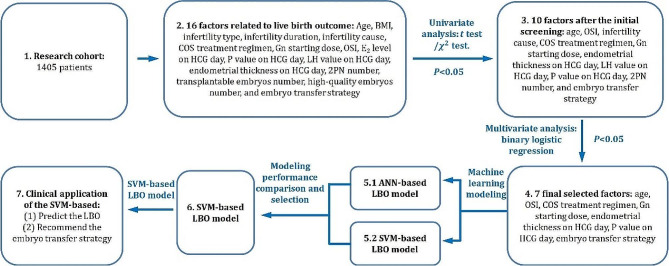
The historical data of a total of 1405 patients undergoing IVF cycle were first collected and then analyzed by univariate and multivariate analysis. The statistically significant factors were identified and taken as input to build the artificial neural network (ANN) model and supporting vector machine (SVM) model for predicting the LBO. By comparing the model performance, the one with better results was selected as the final prediction model and applied in real clinical applications.
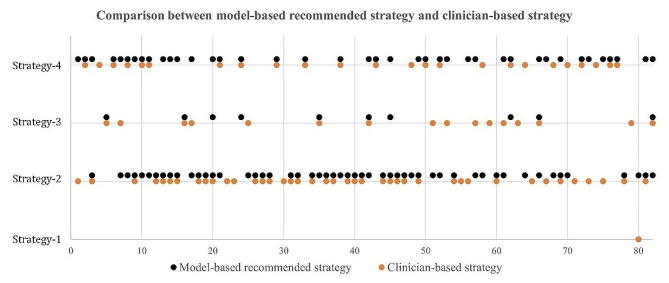
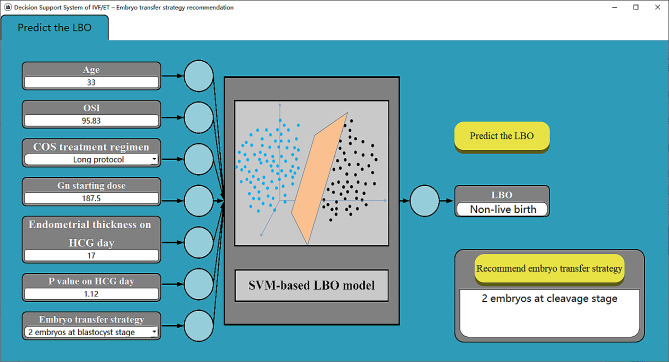
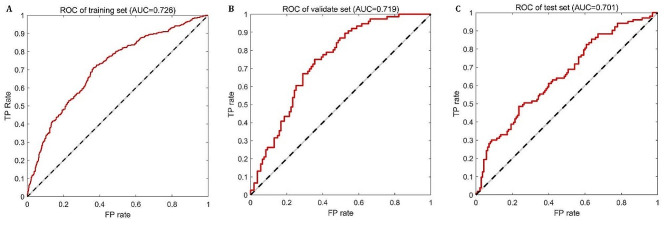
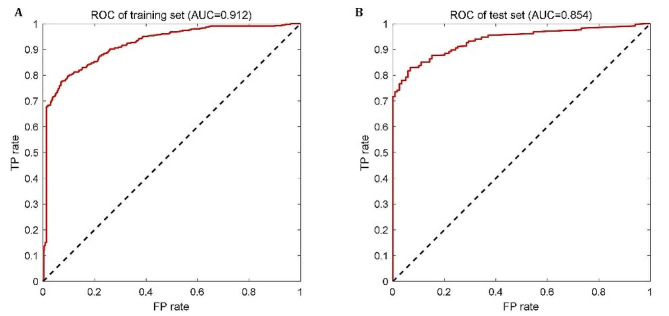
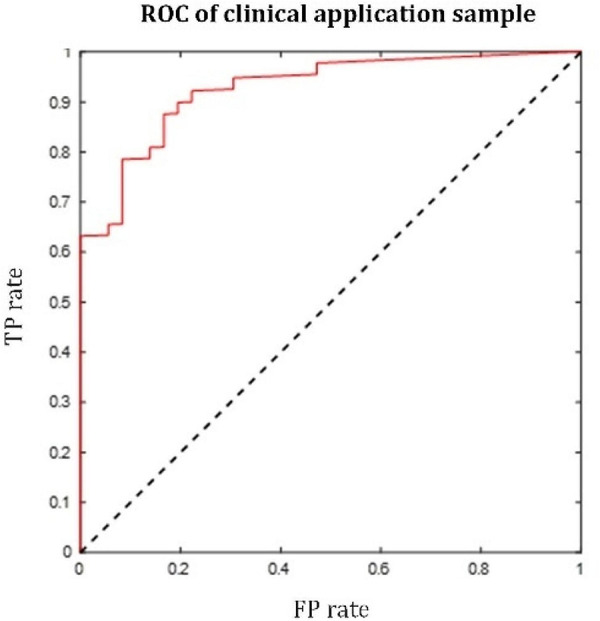
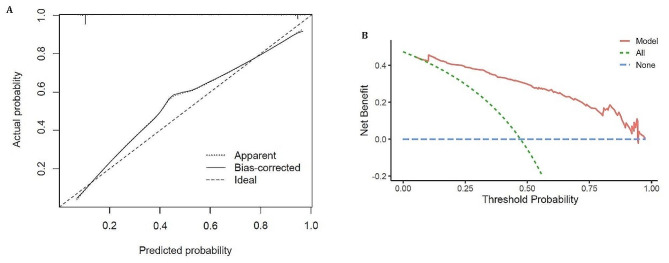
Univariate and multivariate analysis shows that 7 factors were closely related to the LBO (with P < 0.05): Age, ovarian sensitivity index (OSI), controlled ovarian stimulation (COS) treatment regimen, Gn starting dose, endometrial thickness on human chorionic gonadotrophin (HCG) day, Progesterone (P) value on HCG day, and embryo transfer strategy. By taking the 7 factors as input, the ANN-based and SVM-based LBO models were established, yielding good prediction performance. Compared with the ANN model, the SVM model performs much better and was selected as the final model for the LBO prediction. In real clinical applications, the proposed ANN-based LBO model can predict the LBO with good performance and recommend the embryo transfer strategy of potential good LBO.
The proposed model involving all essential IVF treatment factors can accurately predict LBO. It can provide objective and scientific assistance to clinicians for customizing the IVF treatment strategy like the embryo transfer strategy.
体外受精(IVF)治疗方案的低活产率和艰难决策给患者和临床医生带来了极大的困扰。基于接受 IVF 周期的患者的回顾性临床数据,本研究旨在使用机器学习方法建立预测活产结局(LBO)的分类模型。
首先收集了总共 1405 名接受 IVF 周期的患者的历史数据,然后进行单变量和多变量分析。确定有统计学意义的因素,并将其作为输入,构建用于预测 LBO 的人工神经网络(ANN)模型和支持向量机(SVM)模型。通过比较模型性能,选择效果更好的模型作为最终预测模型,并应用于实际临床应用中。
单变量和多变量分析表明,7 个因素与 LBO 密切相关(P<0.05):年龄、卵巢敏感指数(OSI)、控制性卵巢刺激(COS)治疗方案、Gn 起始剂量、HCG 日子宫内膜厚度、HCG 日孕酮(P)值和胚胎移植策略。通过将 7 个因素作为输入,建立了基于 ANN 和 SVM 的 LBO 模型,具有良好的预测性能。与 ANN 模型相比,SVM 模型表现更好,被选为 LBO 预测的最终模型。在实际临床应用中,提出的基于 ANN 的 LBO 模型可以很好地预测 LBO,并推荐具有良好 LBO 潜力的胚胎移植策略。
该模型包含了所有基本的 IVF 治疗因素,可以准确预测 LBO。它可以为临床医生提供客观、科学的辅助,帮助他们制定个性化的 IVF 治疗策略,如胚胎移植策略。