Xiang Changjun, Yao Shunyu, Wang Ruoyu, Zhang Lihan
Department of Chemistry, Fudan University, Shanghai 200433, China.
Key Laboratory of Precise Synthesis of Functional Molecules of Zhejiang Province, Department of Chemistry, School of Science and Research Center for Industries of the Future, Westlake University, Hangzhou 310030, China.
Beilstein J Org Chem. 2024 Jul 2;20:1476-1485. doi: 10.3762/bjoc.20.131. eCollection 2024.
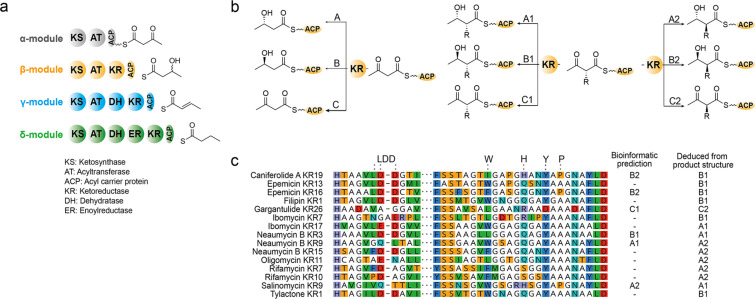
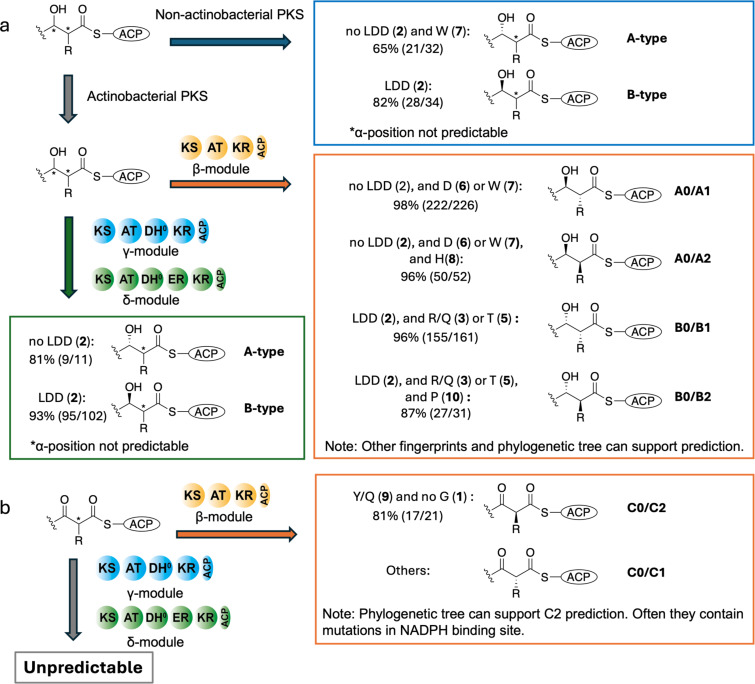
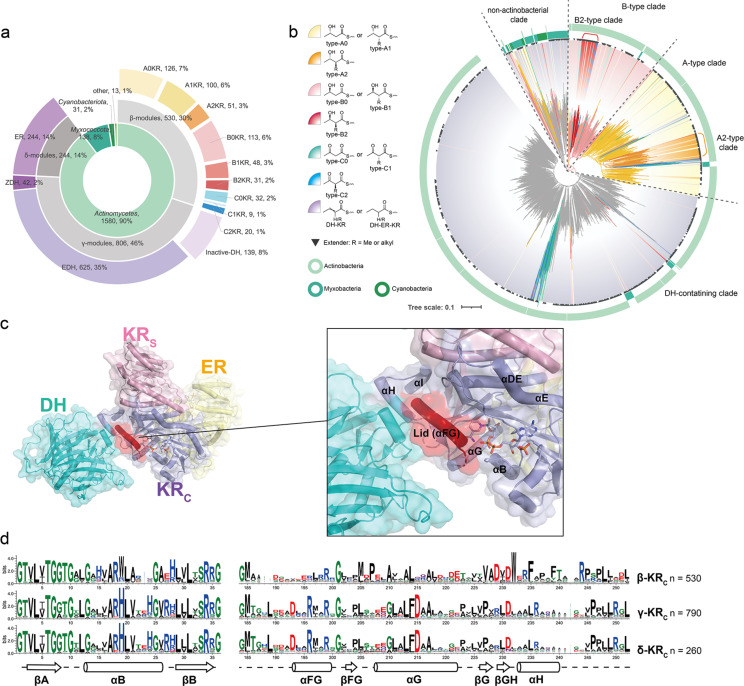
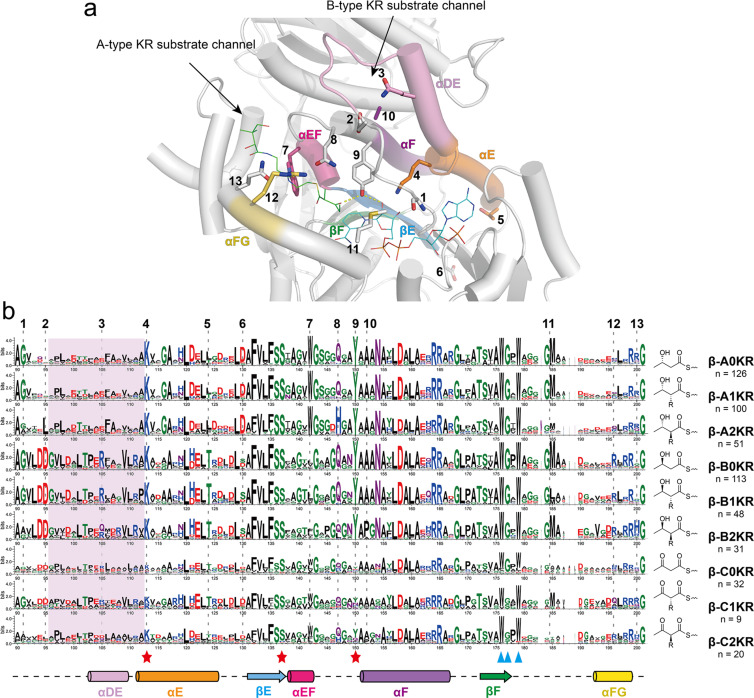
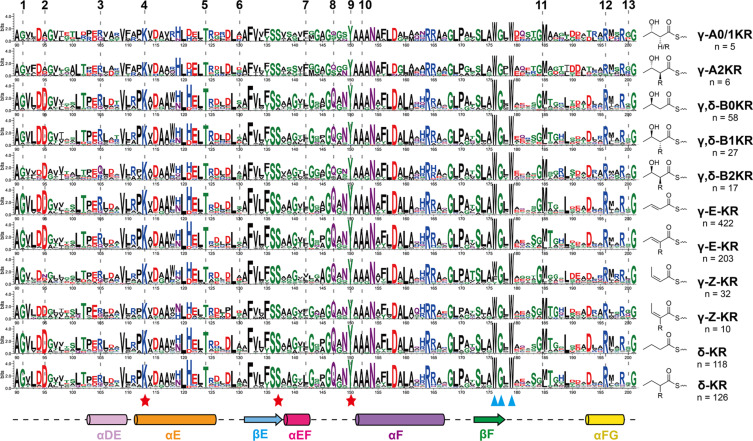
Polyketides are a major class of natural products, including bioactive medicines such as erythromycin and rapamycin. They are often rich in stereocenters biosynthesized by the ketoreductase (KR) domain within the polyketide synthase (PKS) assembly line. Previous studies have identified conserved motifs in KR sequences that enable the bioinformatic prediction of product stereochemistry. However, the reliability and applicability of these prediction methods have not been thoroughly assessed. In this study, we conducted a comprehensive bioinformatic analysis of 1,762 KR sequences from -AT PKSs to reevaluate the residues involved in conferring stereoselectivity. Our findings indicate that the previously identified fingerprint motifs remain valid for KRs in β-modules from actinobacteria, but their reliability diminishes for KRs from other module types or taxonomic origins. Additionally, we have identified several new motifs that exhibit a strong correlation with the stereochemical outcomes of KRs. These updated fingerprint motifs for stereochemical prediction not only enhance our understanding of the enzymatic mechanisms governing stereocontrol but also facilitate accurate stereochemical prediction and genome mining of polyketides derived from modular -AT PKSs.
聚酮化合物是一类主要的天然产物,包括红霉素和雷帕霉素等生物活性药物。它们通常富含由聚酮合酶(PKS)装配线中的酮还原酶(KR)结构域生物合成的立体中心。先前的研究已经在KR序列中鉴定出保守基序,这些基序能够对产物立体化学进行生物信息学预测。然而,这些预测方法的可靠性和适用性尚未得到充分评估。在本研究中,我们对来自I型PKS的1762个KR序列进行了全面的生物信息学分析,以重新评估赋予立体选择性的残基。我们的研究结果表明,先前鉴定的指纹基序对于放线菌β-模块中的KR仍然有效,但对于来自其他模块类型或分类学来源的KR,其可靠性会降低。此外,我们还鉴定出了几个与KR的立体化学结果具有强相关性的新基序。这些用于立体化学预测的更新指纹基序不仅增强了我们对控制立体化学的酶促机制的理解,还促进了对源自模块化I型PKS的聚酮化合物的准确立体化学预测和基因组挖掘。