Cremin Michael, Ramirez Valerie T, Sanchez Kristina, Tay Emmy, Murray Kaitlin, Brust-Mascher Ingrid, Reardon Colin
UC Davis, School of Veterinary Medicine, Anatomy, Physiology & Cell Biology.
University of California, School of Veterinary Medicine, Anatomy, Physiology & Cell Biology.
bioRxiv. 2024 Jun 27:2024.06.24.599421. doi: 10.1101/2024.06.24.599421.
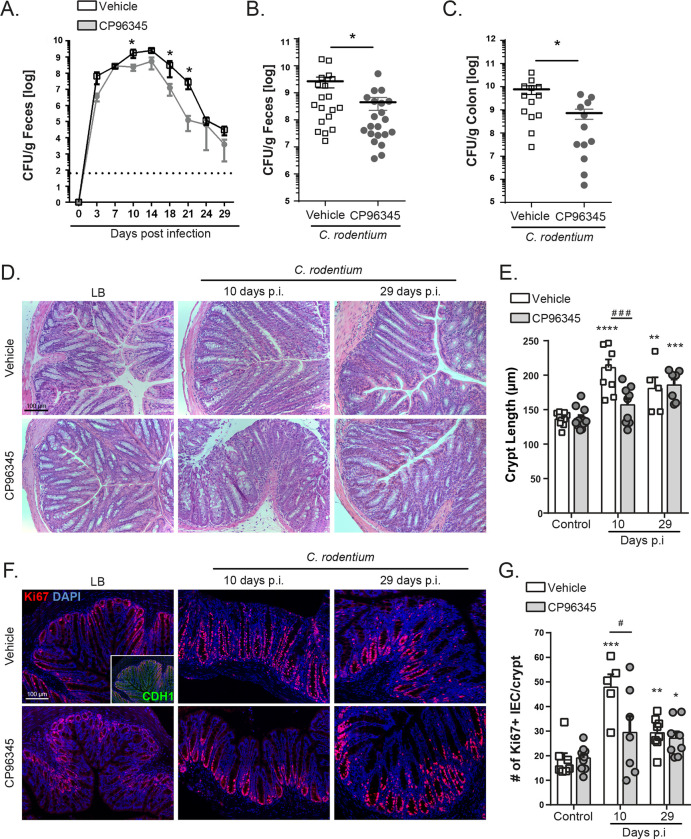
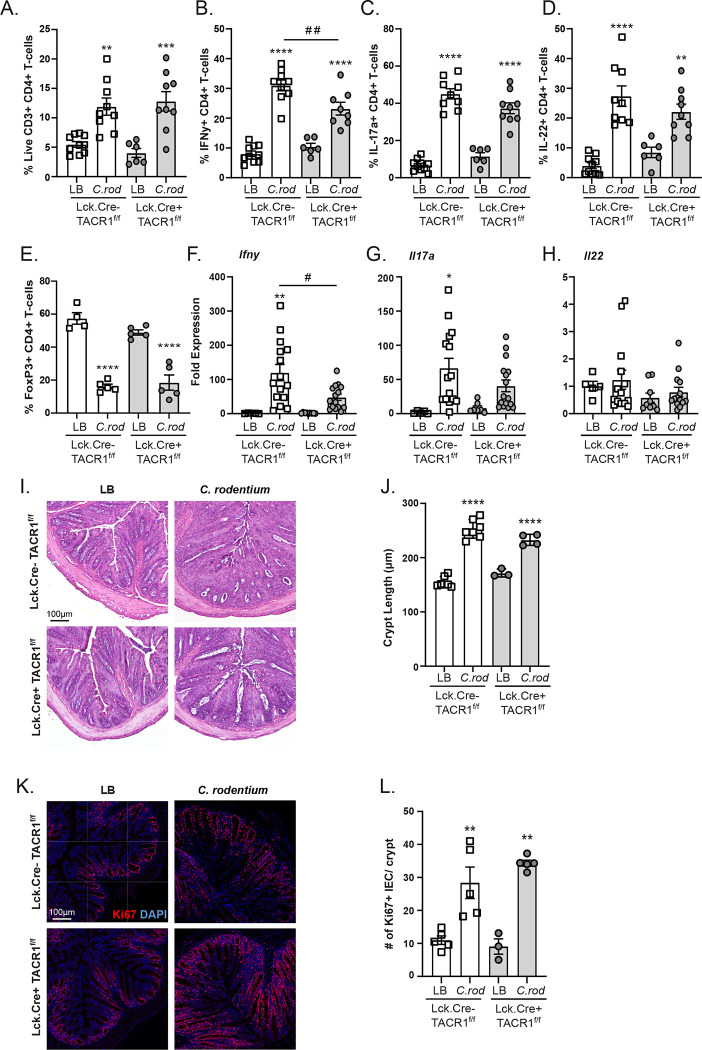
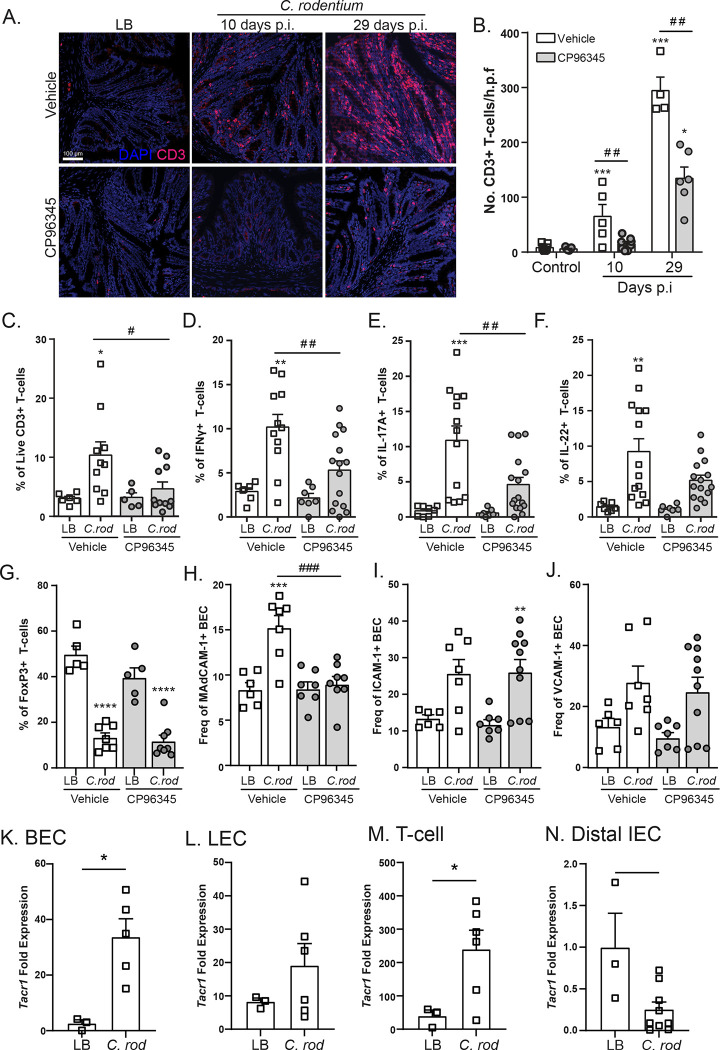
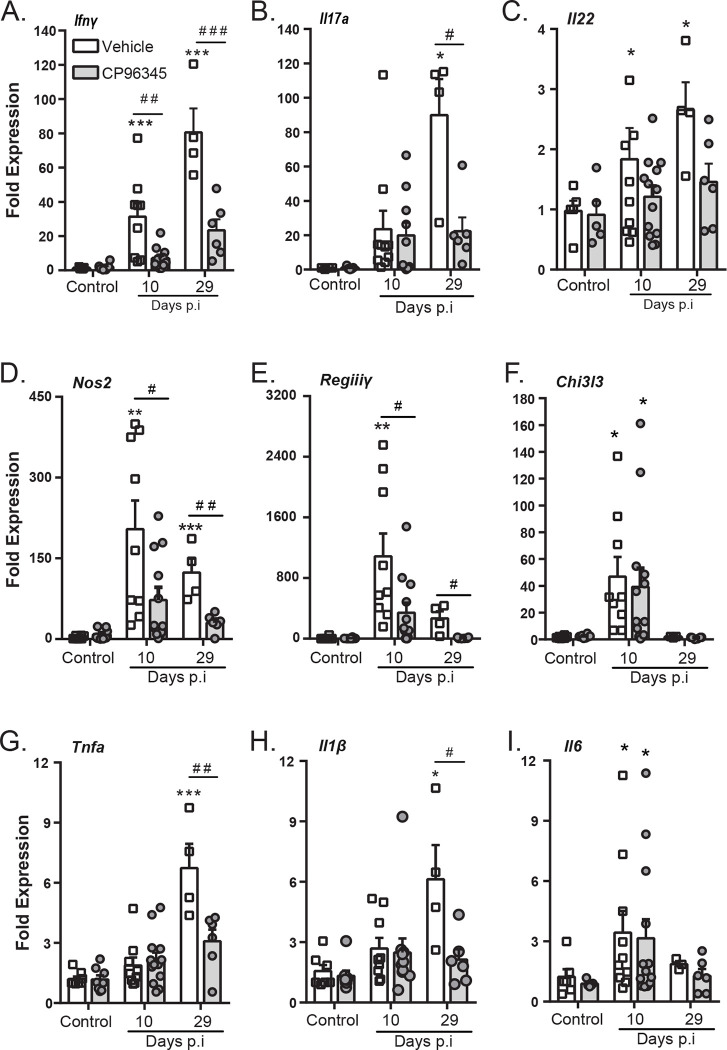
Immune responses in the intestine are intricately balanced to prevent pathogen entry without inducing immunopathology. The nervous system is well-established to interface with the immune system to fine-tune immunity in various organ systems including the gastrointestinal tract. Specialized sensory neurons can detect bacteria, bacterial products, and the resulting inflammation, to coordinate the immune response in the gastrointestinal tract. These sensory neurons release peptide neurotransmitters such as Substance P (SP), to induce both neuronal signaling and localized responses in non-neuronal cells. With this in mind, we assessed the immunoregulatory roles of SP receptor signaling during enteric bacterial infection with the non-invasive pathogen . Pharmacological antagonism of the SP receptor significantly reduced bacterial burden and prevented colonic crypt hyperplasia. Mice with SP receptor signaling blockade had significantly reduced inflammation and recruitment of T-cells in the colon. Reduced colonic T-cell recruitment is due to reduced expression of adhesion molecules on colonic endothelial cells in SP receptor antagonist-treated mice. Using SP receptor T-cell conditional knockout mice, we further confirmed SP receptor signaling enhanced select aspects of T-cell responses. Our data demonstrates that SP receptor signaling can significantly reduce inflammation and prevent host-maladaptive responses without impinging upon host protection.
肠道中的免疫反应处于复杂的平衡状态,以防止病原体进入,同时不引发免疫病理反应。神经系统与免疫系统相互作用,在包括胃肠道在内的各种器官系统中微调免疫功能,这一点已得到充分证实。专门的感觉神经元能够检测细菌、细菌产物以及由此引发的炎症,以协调胃肠道中的免疫反应。这些感觉神经元会释放诸如P物质(SP)之类的肽类神经递质,从而在非神经元细胞中诱导神经元信号传导和局部反应。考虑到这一点,我们评估了SP受体信号传导在非侵袭性病原体引起的肠道细菌感染过程中的免疫调节作用。对SP受体进行药理学拮抗可显著降低细菌载量,并预防结肠隐窝增生。阻断SP受体信号传导的小鼠结肠中的炎症和T细胞募集明显减少。结肠T细胞募集减少是由于经SP受体拮抗剂处理的小鼠结肠内皮细胞上黏附分子的表达降低所致。使用SP受体T细胞条件性敲除小鼠,我们进一步证实了SP受体信号传导增强了T细胞反应的某些方面。我们的数据表明,SP受体信号传导可显著减轻炎症并防止宿主适应性不良反应,同时不影响宿主的保护作用。