Department of Pathology, Case Western Reserve University, Cleveland, OH 44106.
Ministry of Education Key Laboratory for Membraneless Organelles and Cellular Dynamics, Hefei National Research Center for Physical Sciences at the Microscale, Division of Life Sciences and Medicine, University of Science and Technology of China, Hefei, Anhui 230027, China.
Proc Natl Acad Sci U S A. 2024 Jul 16;121(29):e2400883121. doi: 10.1073/pnas.2400883121. Epub 2024 Jul 9.
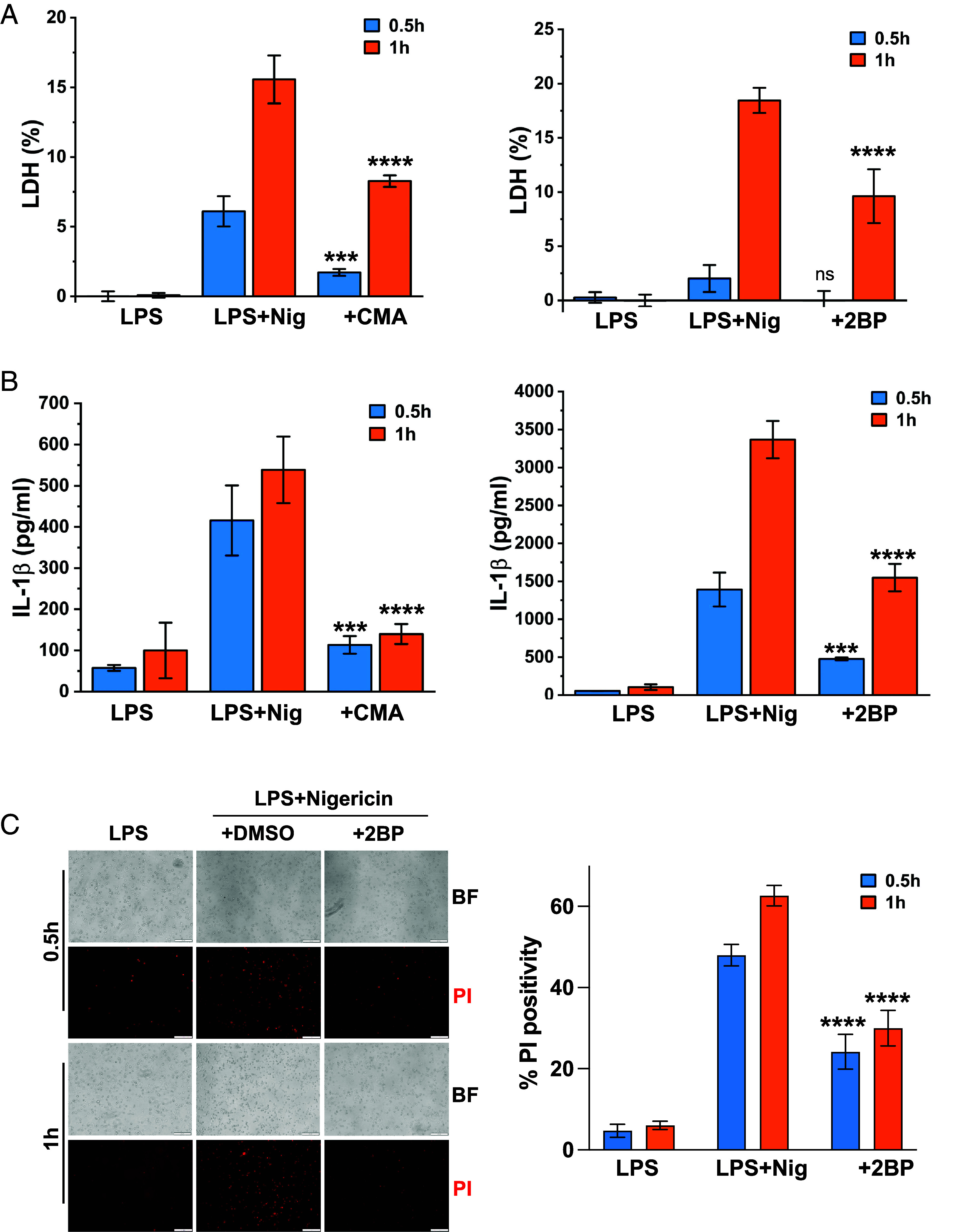
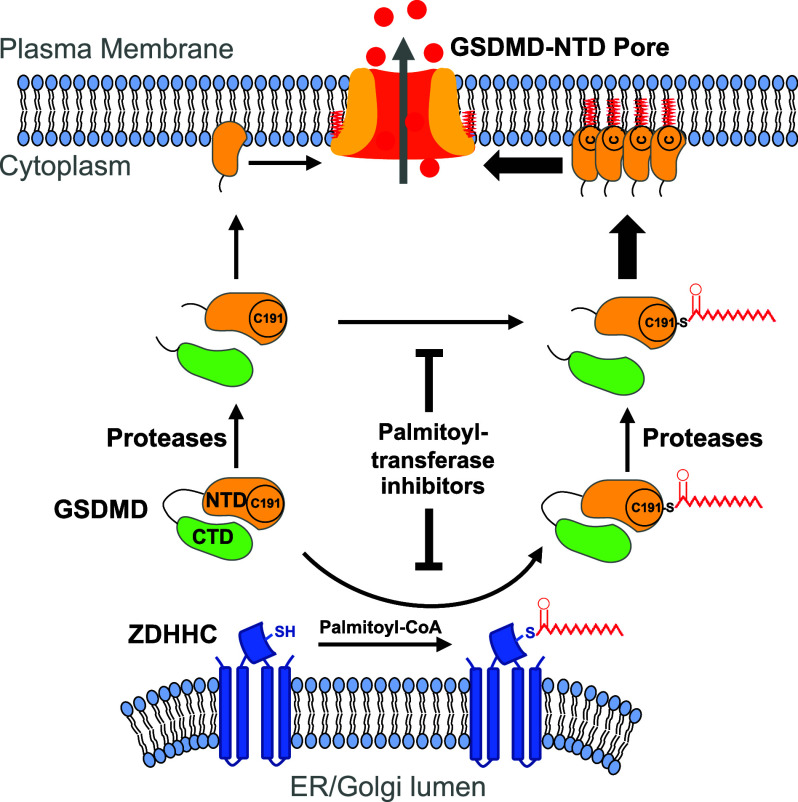
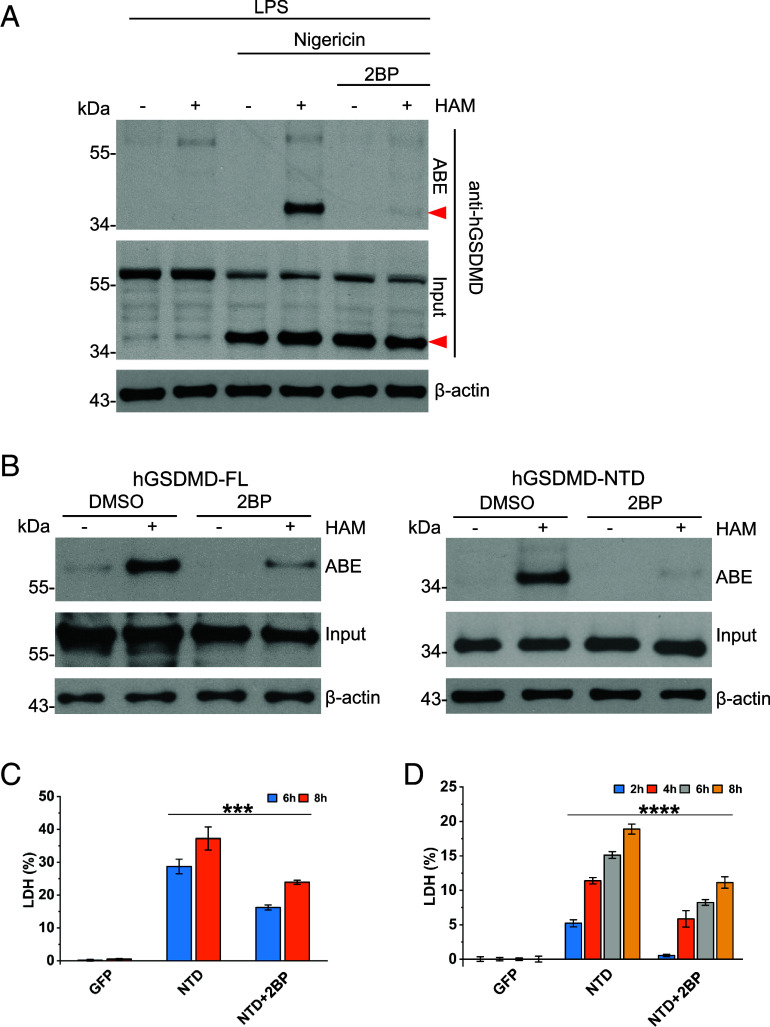
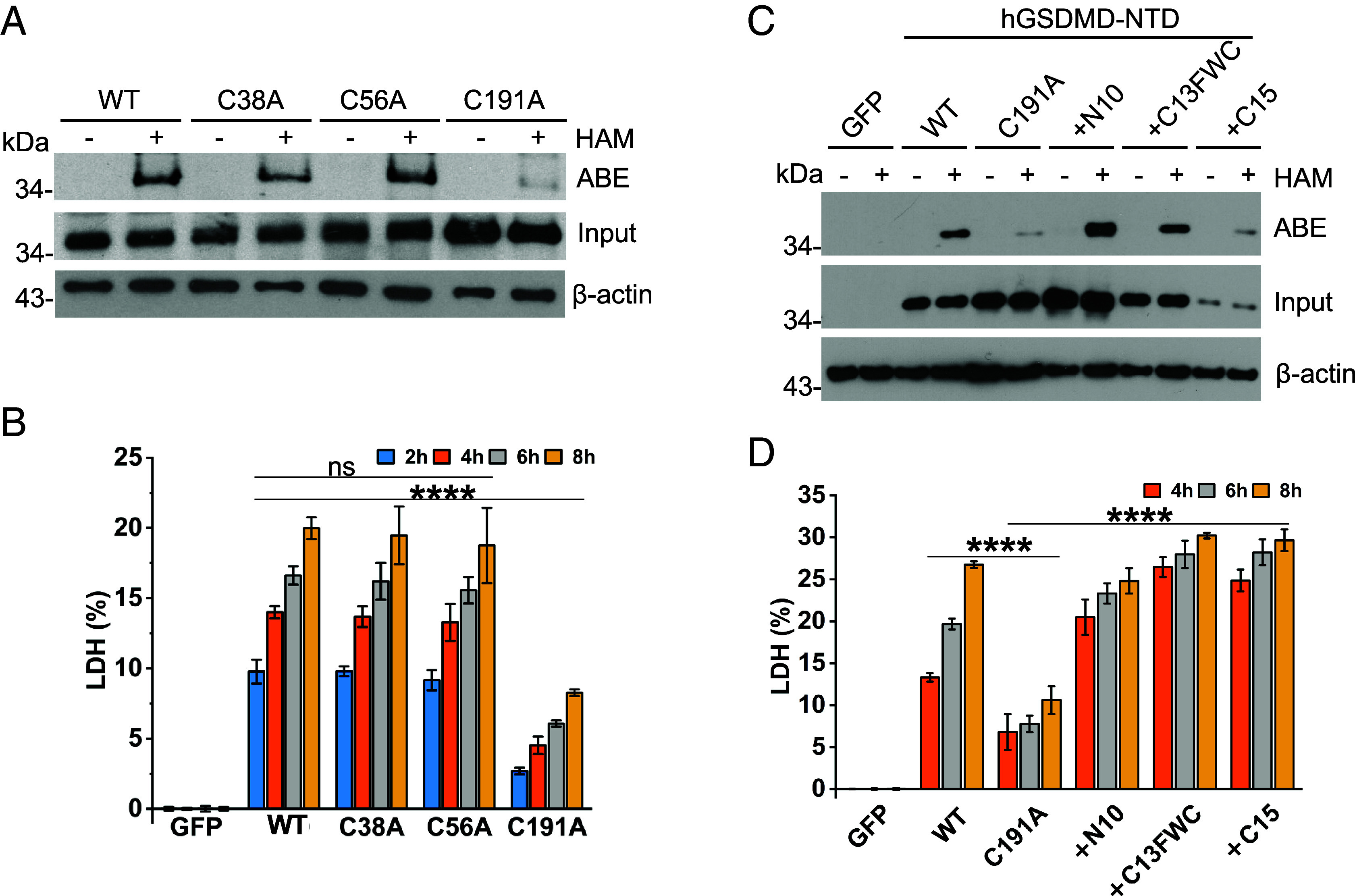
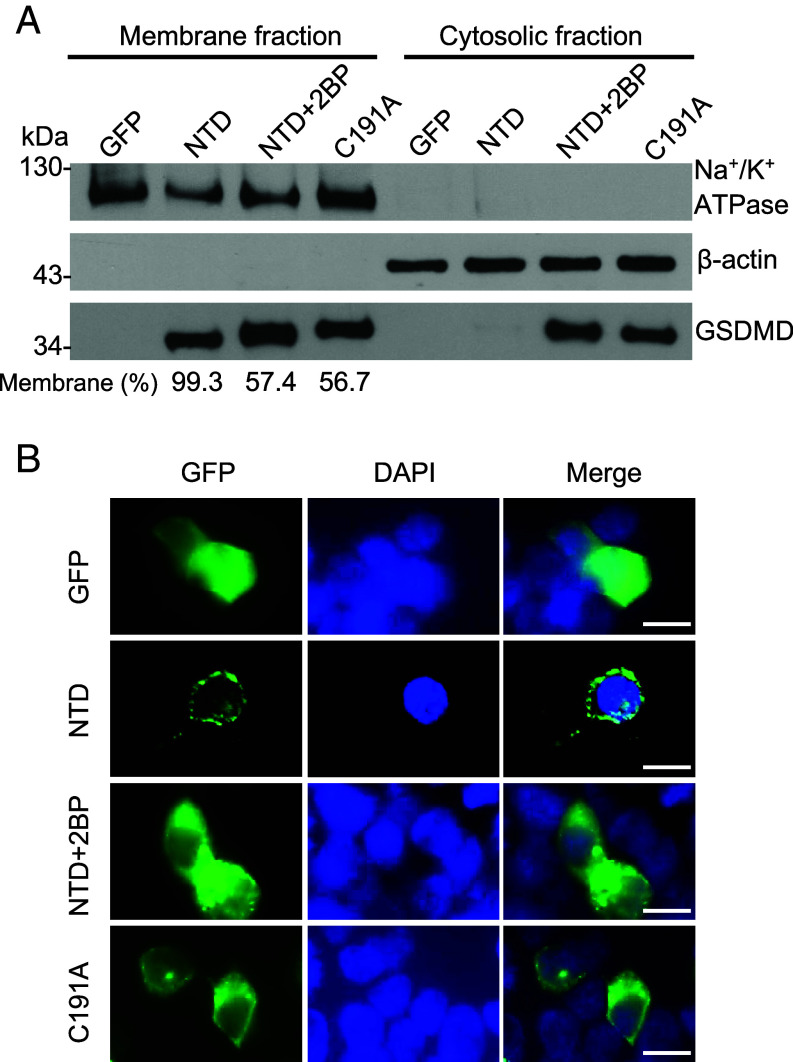
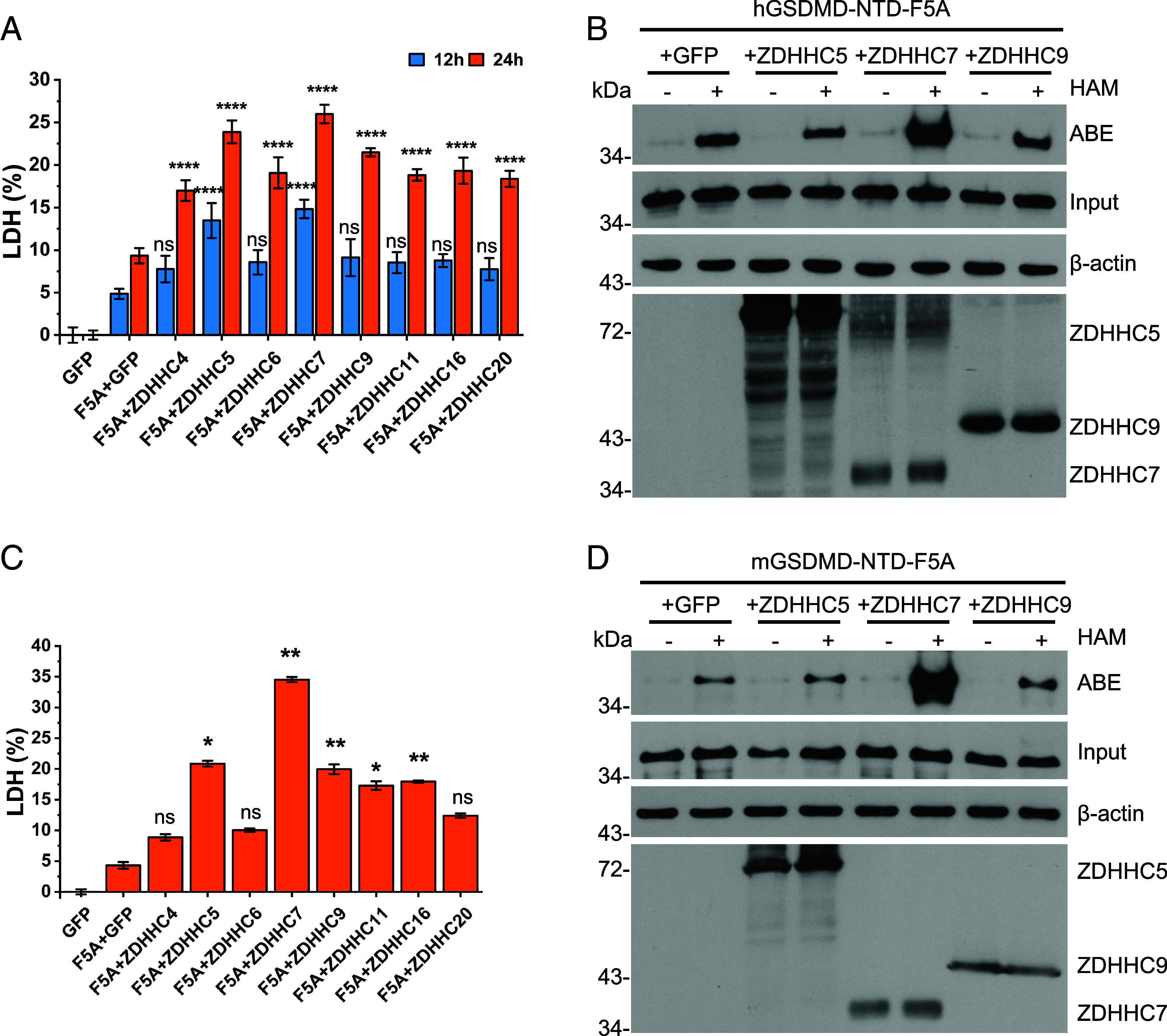
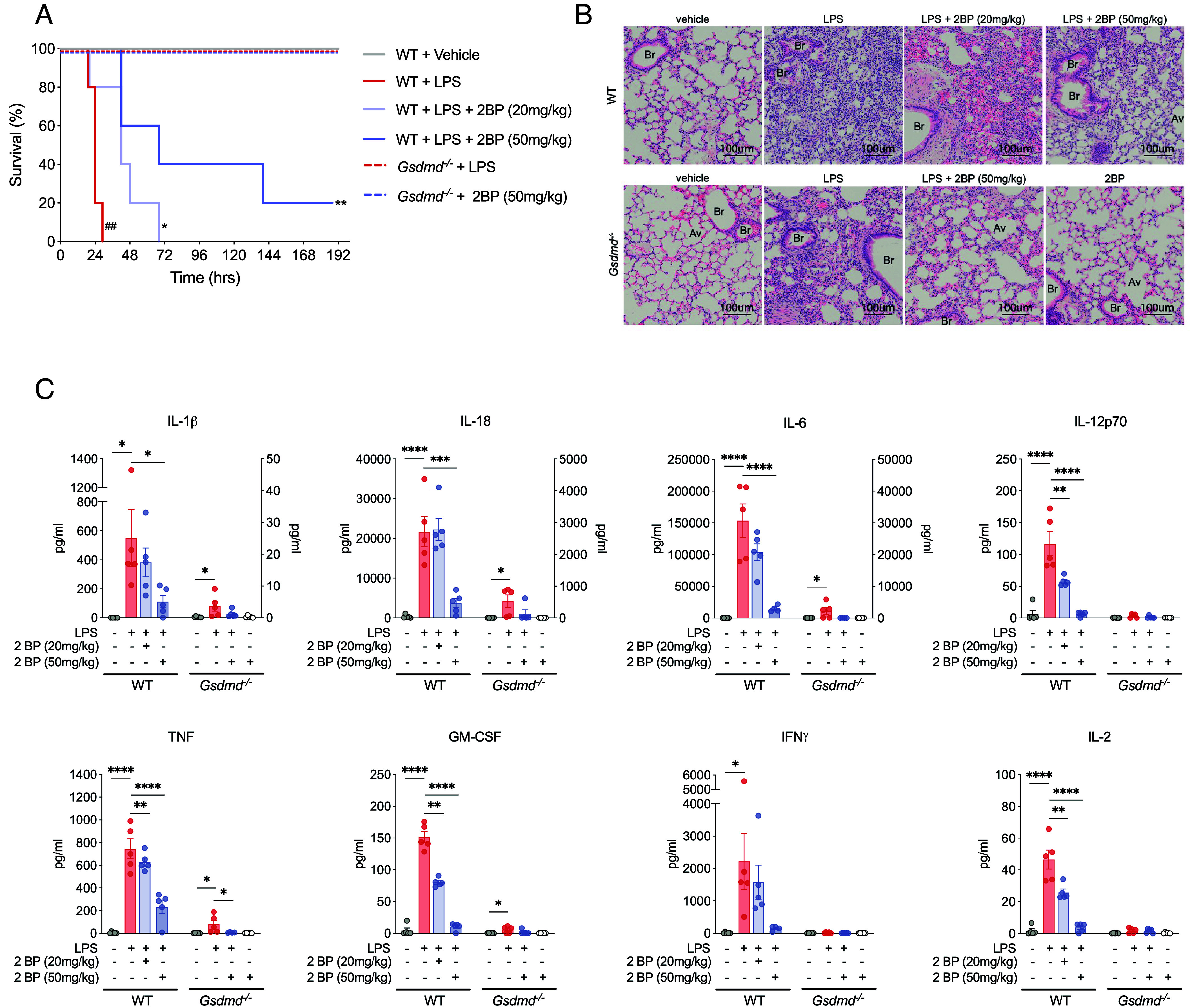
Gasdermin D (GSDMD)-mediated pyroptotic cell death drives inflammatory cytokine release and downstream immune responses upon inflammasome activation, which play important roles in host defense and inflammatory disorders. Upon activation by proteases, the GSDMD N-terminal domain (NTD) undergoes oligomerization and membrane translocation in the presence of lipids to assemble pores. Despite intensive studies, the molecular events underlying the transition of GSDMD from an autoinhibited soluble form to an oligomeric pore form inserted into the membrane remain incompletely understood. Previous work characterized -palmitoylation for gasdermins from bacteria, fungi, invertebrates, as well as mammalian gasdermin E (GSDME). Here, we report that a conserved residue Cys191 in human GSDMD was -palmitoylated, which promoted GSDMD-mediated pyroptosis and cytokine release. Mutation of Cys191 or treatment with palmitoyltransferase inhibitors cyano-myracrylamide (CMA) or 2-bromopalmitate (2BP) suppressed GSDMD palmitoylation, its localization to the membrane and dampened pyroptosis or IL-1β secretion. Furthermore, -dependent inflammatory responses were alleviated by inhibition of palmitoylation in vivo. By contrast, coexpression of GSDMD with palmitoyltransferases enhanced pyroptotic cell death, while introduction of exogenous palmitoylation sequences fully restored pyroptotic activities to the C191A mutant, suggesting that palmitoylation-mediated membrane localization may be distinct from other molecular events such as GSDMD conformational change during pore assembly. Collectively, our study suggests that -palmitoylation may be a shared regulatory mechanism for GSDMD and other gasdermins, which points to potential avenues for therapeutically targeting -palmitoylation of gasdermins in inflammatory disorders.
Gasdermin D (GSDMD)-介导热激细胞死亡驱动炎症细胞因子的释放和下游免疫反应,这在宿主防御和炎症性疾病中发挥重要作用。在被蛋白酶激活后,GSDMD 的 N 端结构域(NTD)在脂质存在的情况下寡聚化并易位到膜上以组装孔。尽管进行了深入研究,但 GSDMD 从自动抑制的可溶性形式到插入膜中的寡聚孔形式的转变的分子事件仍不完全清楚。以前的工作对细菌、真菌、无脊椎动物以及哺乳动物的 GSDME 的 gasdermins 的 -棕榈酰化进行了描述。在这里,我们报告人 GSDMD 中的保守残基半胱氨酸 191 被 -棕榈酰化,这促进了 GSDMD 介导的细胞焦亡和细胞因子释放。Cys191 突变或用棕榈酰转移酶抑制剂氰基-myracrylamide (CMA) 或 2-溴棕榈酸 (2BP) 处理抑制了 GSDMD 的棕榈酰化、其向膜的定位,并减弱了细胞焦亡或 IL-1β 的分泌。此外,体内抑制棕榈酰化可减轻 -依赖性炎症反应。相比之下,GSDMD 与棕榈酰转移酶的共表达增强了细胞焦亡性细胞死亡,而外源性棕榈酰化序列完全恢复了 C191A 突变体的细胞焦亡活性,表明棕榈酰化介导的膜定位可能与其他分子事件(如孔组装过程中的 GSDMD 构象变化)不同。总之,我们的研究表明,-棕榈酰化可能是 GSDMD 和其他 gasdermins 的一种共同调节机制,这为炎症性疾病中靶向 gasdermins 的 -棕榈酰化提供了潜在途径。