Taylor Lauren L, Hong Arthur S, Hahm Kristine, Kim Dohyeong, Smith-Morris Carolyn, Zaha Vlad G
UT Southwestern Medical Center, Dallas, Texas, USA.
UT Southwestern Harold C. Simmons Comprehensive Cancer Center, Dallas, Texas, USA.
JACC CardioOncol. 2024 May 7;6(3):363-380. doi: 10.1016/j.jaccao.2024.03.010. eCollection 2024 Jun.
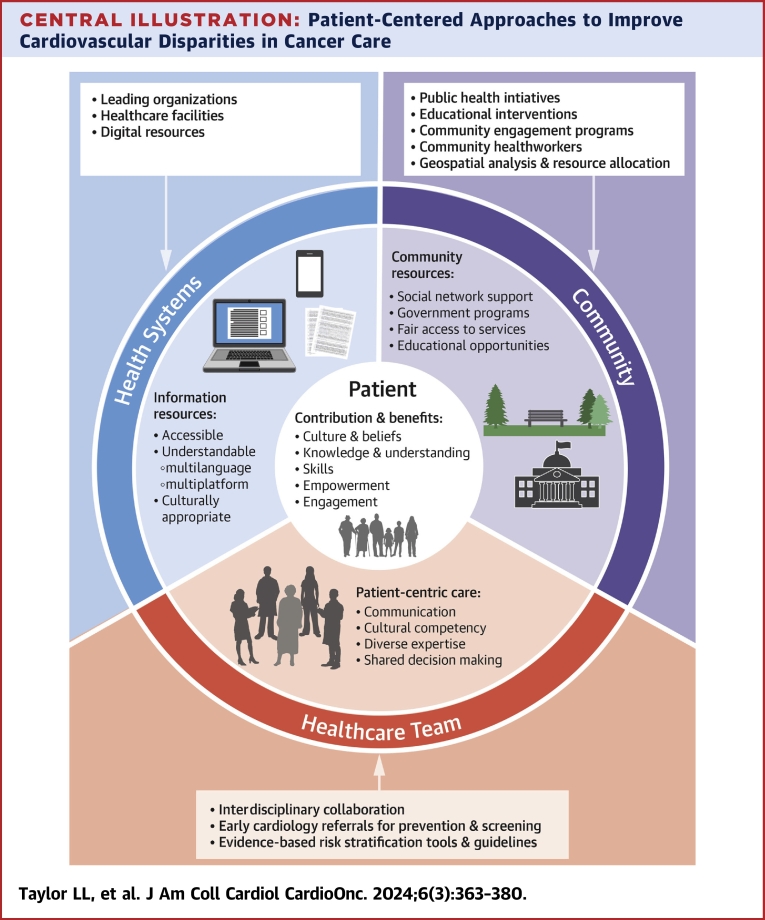
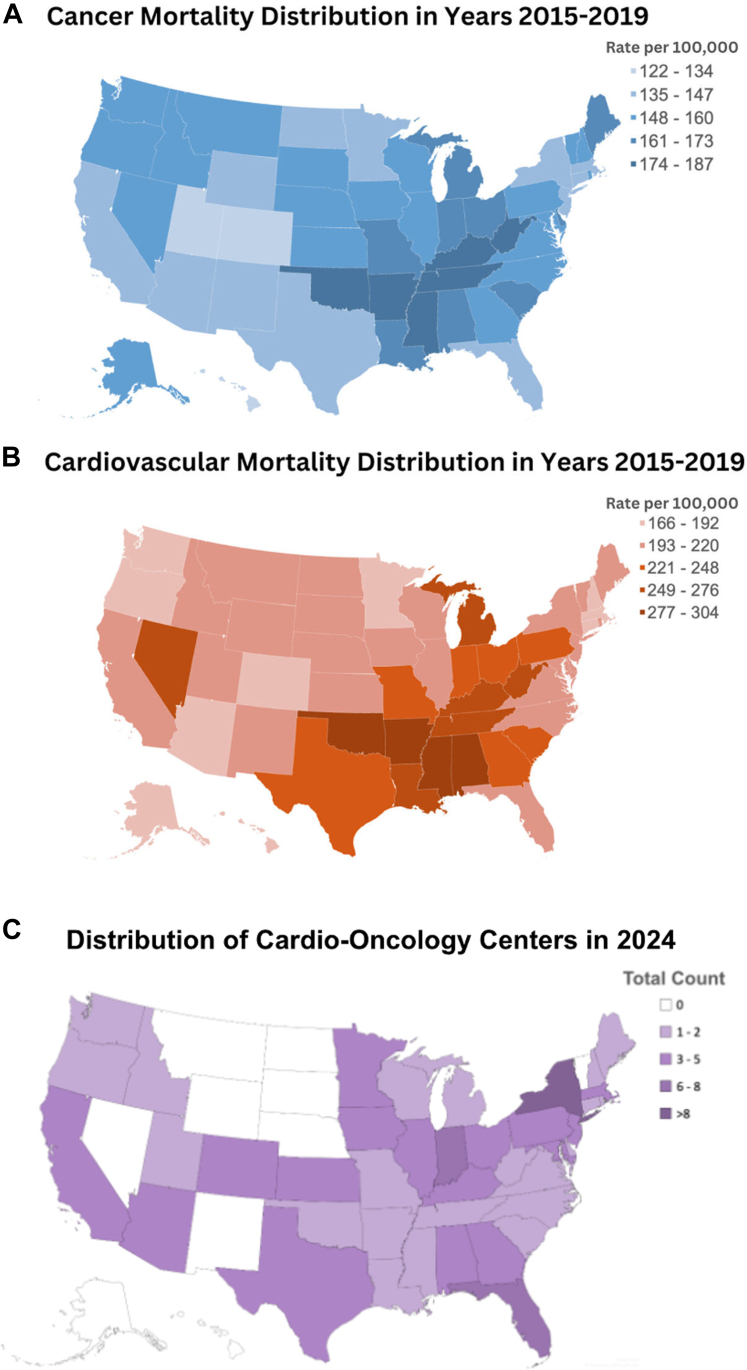
Cardiovascular and cancer outcomes intersect within the realm of cardio-oncology survivorship care, marked by disparities across ethnic, racial, social, and geographical landscapes. Although the clinical community is increasingly aware of this complex issue, effective solutions are trailing. To attain substantial public health impact, examinations of cancer types and cardiovascular risk mitigation require complementary approaches that elicit the patient's perspective, scale it to a population level, and focus on actionable population health interventions. Adopting such a multidisciplinary approach will deepen our understanding of patient awareness, motivation, health literacy, and community resources for addressing the unique challenges of cardio-oncology. Geospatial analysis aids in identifying key communities in need within both granular and broader contexts. In this review, we delineate a pathway that navigates barriers from individual to community levels. Data gleaned from these perspectives are critical in informing interventions that empower individuals within diverse communities and improve cardio-oncology survivorship.
心血管疾病与癌症的结局在心脏肿瘤学幸存者护理领域相互交织,其特点是在种族、民族、社会和地理层面存在差异。尽管临床界越来越意识到这个复杂问题,但有效的解决方案却滞后。为了产生重大的公共卫生影响,对癌症类型和心血管风险缓解的研究需要采用互补方法,这些方法要能引出患者的观点,将其扩大到人群层面,并关注可采取行动的人群健康干预措施。采用这种多学科方法将加深我们对患者认知、动机、健康素养以及应对心脏肿瘤学独特挑战的社区资源的理解。地理空间分析有助于在微观和宏观背景下识别有需求的关键社区。在本综述中,我们描绘了一条跨越从个体到社区层面障碍的路径。从这些角度收集的数据对于为干预措施提供信息至关重要,这些干预措施能增强不同社区中个体的能力并改善心脏肿瘤学幸存者的状况。