Department of Environmental Health Sciences, Mailman School of Public Health, Columbia University, New York, New York 10032, United States.
Department of Environmental Health Sciences, Yale School of Public Health, New Haven, Connecticut 06520, United States.
Environ Sci Technol. 2024 Jul 23;58(29):12784-12822. doi: 10.1021/acs.est.4c01156. Epub 2024 Jul 10.
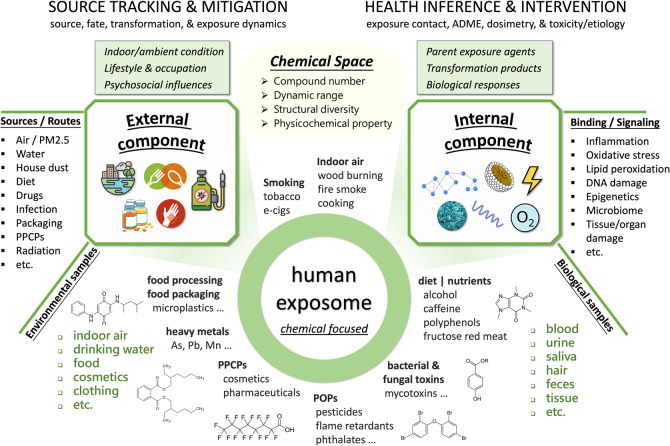
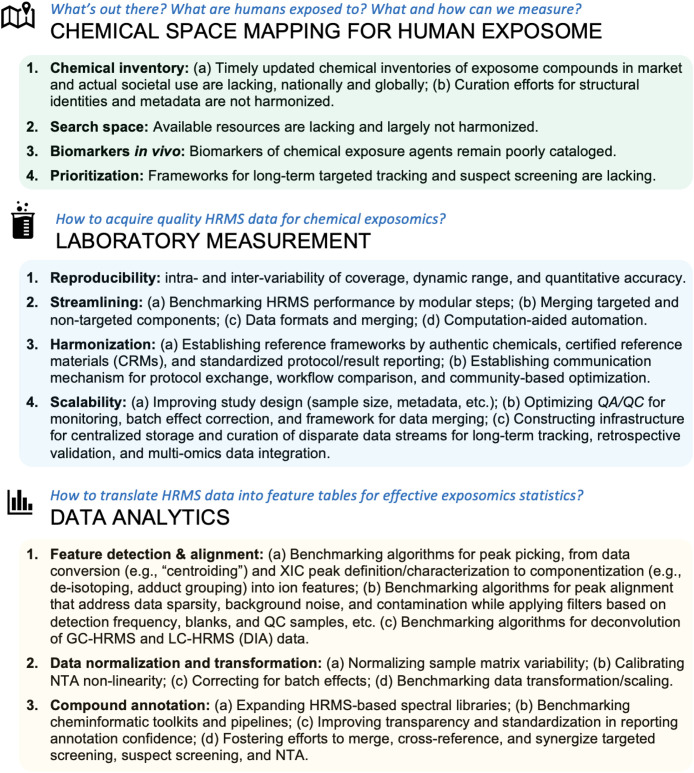
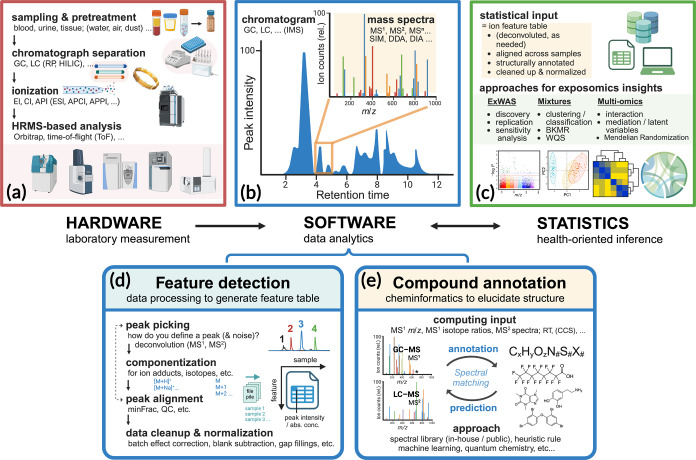
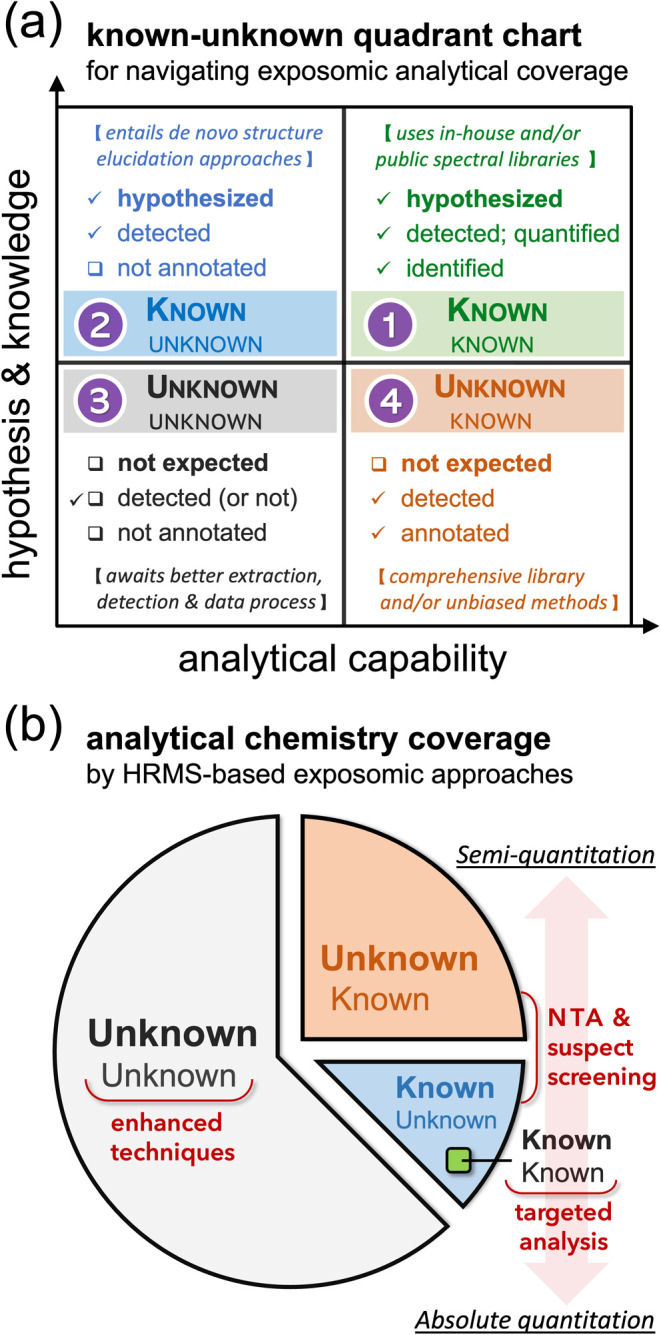
In the modern "omics" era, measurement of the human exposome is a critical missing link between genetic drivers and disease outcomes. High-resolution mass spectrometry (HRMS), routinely used in proteomics and metabolomics, has emerged as a leading technology to broadly profile chemical exposure agents and related biomolecules for accurate mass measurement, high sensitivity, rapid data acquisition, and increased resolution of chemical space. Non-targeted approaches are increasingly accessible, supporting a shift from conventional hypothesis-driven, quantitation-centric targeted analyses toward data-driven, hypothesis-generating chemical exposome-wide profiling. However, HRMS-based exposomics encounters unique challenges. New analytical and computational infrastructures are needed to expand the analysis coverage through streamlined, scalable, and harmonized workflows and data pipelines that permit longitudinal chemical exposome tracking, retrospective validation, and multi-omics integration for meaningful health-oriented inferences. In this article, we survey the literature on state-of-the-art HRMS-based technologies, review current analytical workflows and informatic pipelines, and provide an up-to-date reference on exposomic approaches for chemists, toxicologists, epidemiologists, care providers, and stakeholders in health sciences and medicine. We propose efforts to benchmark fit-for-purpose platforms for expanding coverage of chemical space, including gas/liquid chromatography-HRMS (GC-HRMS and LC-HRMS), and discuss opportunities, challenges, and strategies to advance the burgeoning field of the exposome.
在现代“组学”时代,人类暴露组学的测量是遗传驱动因素与疾病结果之间缺失的关键环节。高分辨率质谱(HRMS)已成为广泛分析化学暴露剂和相关生物分子的主要技术,可进行准确质量测量、高灵敏度、快速数据采集和增加化学空间分辨率。非靶向方法越来越容易获得,支持从传统的假设驱动、定量为中心的靶向分析向数据驱动、生成假设的化学暴露组学全谱分析转变。然而,基于 HRMS 的暴露组学面临独特的挑战。需要新的分析和计算基础设施,通过简化、可扩展和协调的工作流程和数据管道,扩大分析覆盖范围,从而实现化学暴露组学的纵向跟踪、回溯验证和多组学整合,以便进行有意义的面向健康的推断。在本文中,我们调查了基于 HRMS 的最新技术文献,回顾了当前的分析工作流程和信息学管道,并为化学家、毒理学家、流行病学家、护理提供者以及健康科学和医学领域的利益相关者提供了暴露组学方法的最新参考。我们提出了努力为扩展化学空间覆盖范围的平台进行基准测试的建议,包括气相/液相色谱-高分辨率质谱(GC-HRMS 和 LC-HRMS),并讨论了推进新兴的暴露组学领域的机遇、挑战和策略。