Division of Hematology, Mayo Clinic, Rochester, MN.
Department of Quantitative Health Sciences, Mayo Clinic, Rochester, MN.
Blood Adv. 2024 Aug 27;8(16):4414-4422. doi: 10.1182/bloodadvances.2024012838.
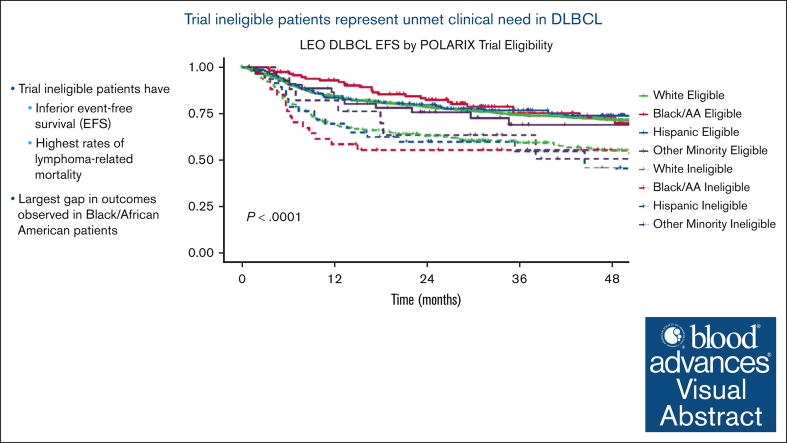
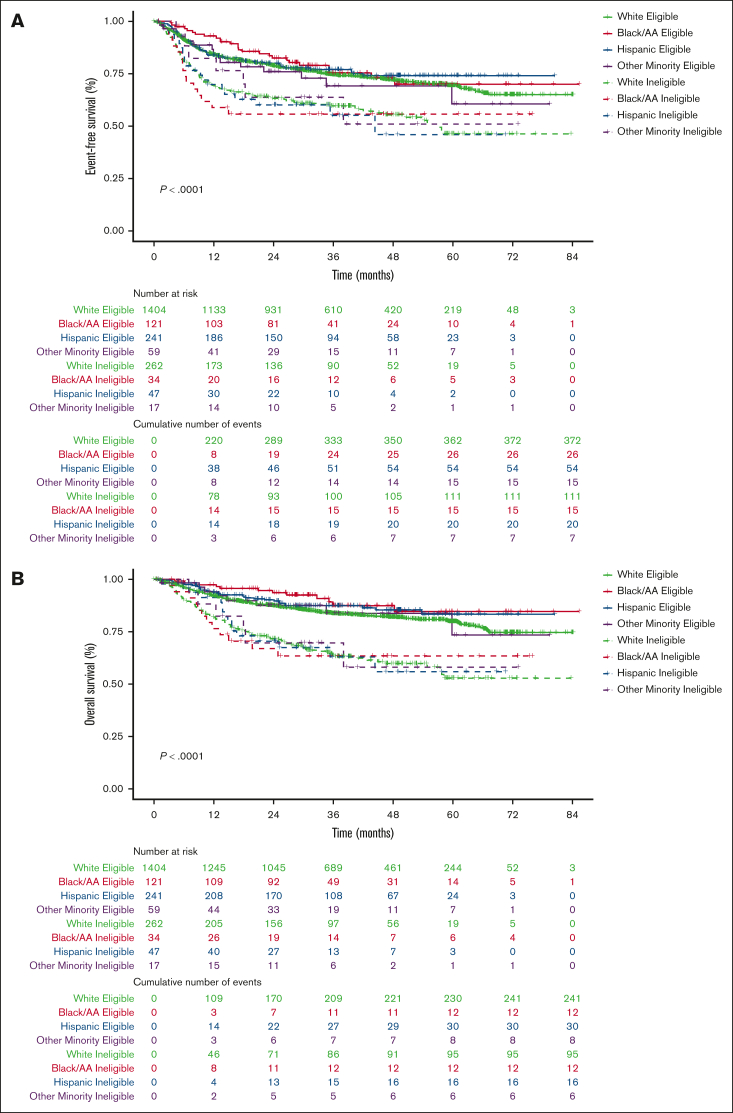
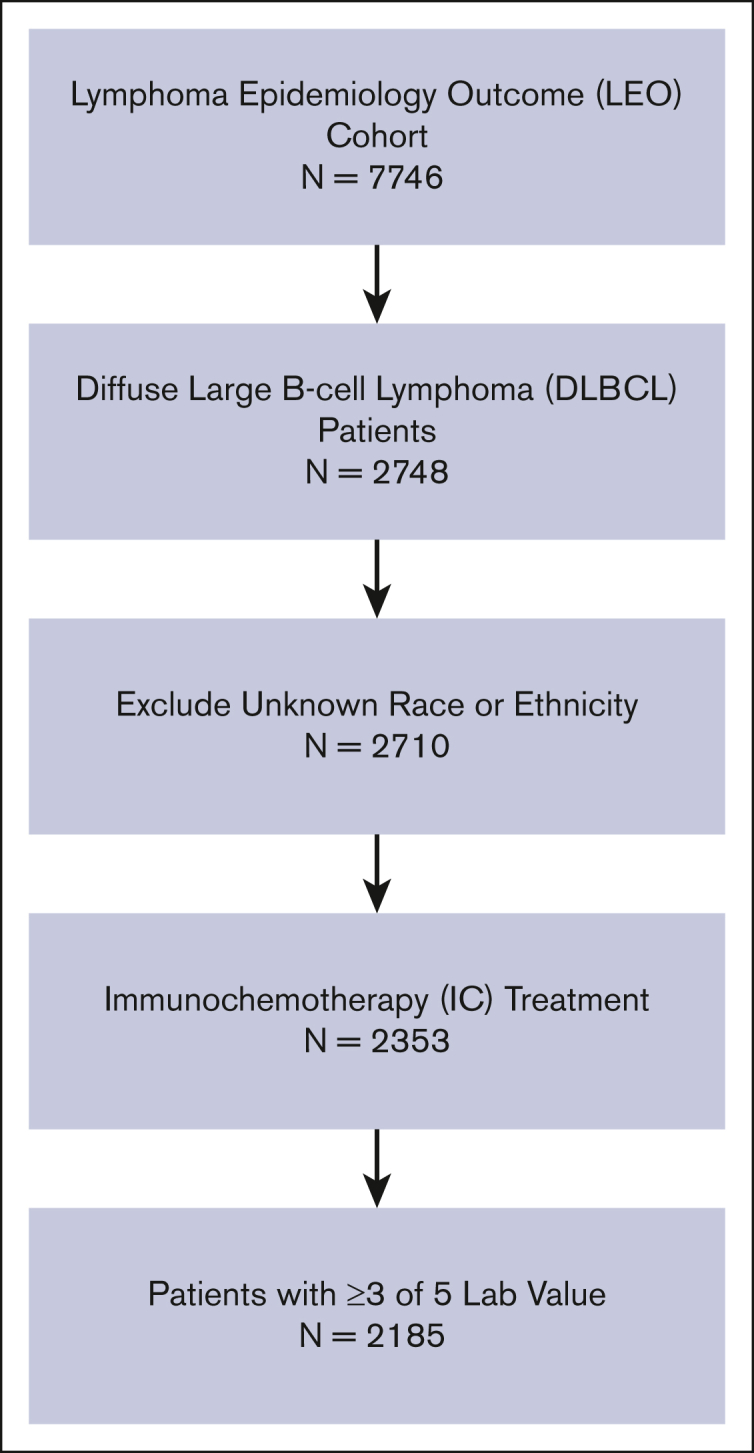
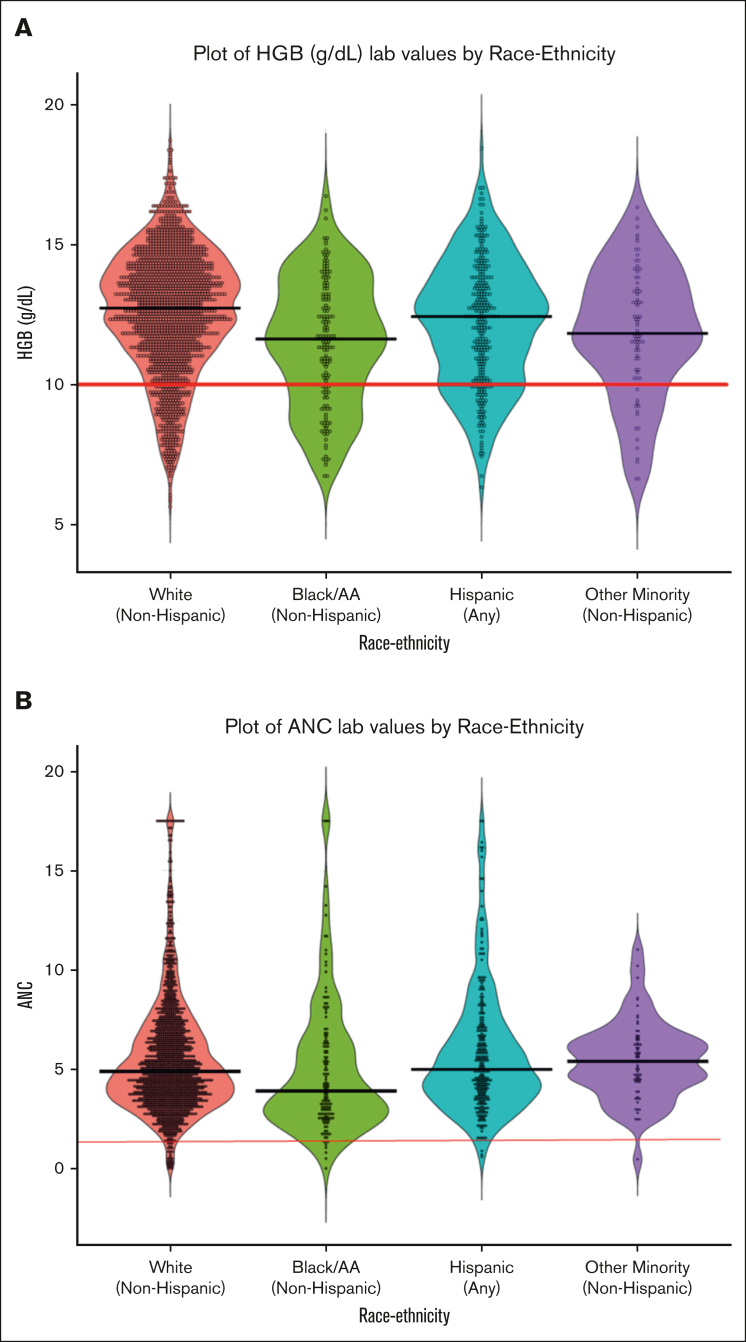
Underrepresentation of racial and ethnic subgroups in cancer clinical trials remains a persistent challenge. Restrictive clinical trial eligibility criteria have been shown to exacerbate this problem. We previously identified that up to 24% of patients treated with standard immunochemotherapy would have been excluded from recent first-line trials in diffuse large B-cell lymphoma (DLBCL) based on 5 laboratory-based criteria. These ineligible patients had worse clinical outcomes and increased deaths related to lymphoma progression, suggesting the potential exclusion of patients who could have benefited most from the novel therapies being evaluated. Using data from the prospectively enrolled Lymphoma Epidemiology Outcomes cohort study, with demographics broadly similar to the US patients diagnosed with lymphoma, we evaluated the impact of laboratory eligibility criteria from recent first-line DLBCL trials across various racial and ethnic backgrounds. There were significant differences in the baseline laboratory values by race/ethnicity with Black/African American (AA) patients having the lowest mean hemoglobin and highest creatinine clearance. Based on recent clinical trial eligibility criteria, AA and Hispanic patients had higher rates of laboratory-based ineligibility than non-Hispanic White patients. The largest gap in the clinical outcomes between eligible and noneligible patients was noted within AA patients with an overall survival hazard ratio based on POLARIX clinical trial criteria of 4.09 (95% confidence interval, 1.83-9.14). A thoughtful approach to the utility of each criterion and cutoffs for eligibility needs to be evaluated in the context of its differential impact across various racial/ethnic groups.
癌症临床试验中代表性不足的问题仍然存在,这是一个持续存在的挑战。限制性的临床试验入选标准已被证明会加剧这个问题。我们之前发现,根据 5 项实验室标准,多达 24%的接受标准免疫化疗的患者可能会被最近的弥漫性大 B 细胞淋巴瘤(DLBCL)一线临床试验排除在外。这些不合格的患者临床结局更差,与淋巴瘤进展相关的死亡人数增加,这表明可能会排除最能从正在评估的新型治疗中获益的患者。利用前瞻性入组的淋巴瘤流行病学结局研究的数据,这些数据在人口统计学上与美国诊断为淋巴瘤的患者广泛相似,我们评估了最近的一线 DLBCL 临床试验的实验室入选标准在不同种族和族裔背景下的影响。种族/族裔之间的基线实验室值存在显著差异,黑人/非裔美国人(AA)患者的平均血红蛋白最低,肌酐清除率最高。根据最近的临床试验入选标准,AA 和西班牙裔患者的实验室不合格率高于非西班牙裔白人患者。在符合条件和不符合条件的患者之间,临床结局差异最大的是 AA 患者,根据 POLARIX 临床试验标准,总生存风险比为 4.09(95%置信区间,1.83-9.14)。需要在考虑其对不同种族/族裔群体的不同影响的情况下,对每个标准的实用性和入选标准的截止值进行深思熟虑的评估。