Liu Yujia, Han Xue, Su Yan, Zhou Yiming, Xu Minhui, Xu Jiyan, Ma Zhengliang, Gu Xiaoping, Xia Tianjiao
Department of Anesthesiology, Nanjing Drum Tower Hospital, Affiliated Hospital of Medical School, Nanjing University, Nanjing, Jiangsu Province, China.
Medical School, Nanjing University, Nanjing, Jiangsu Province, China.
Neural Regen Res. 2025 Sep 1;20(9):2727-2736. doi: 10.4103/NRR.NRR-D-23-01233. Epub 2024 Jul 10.
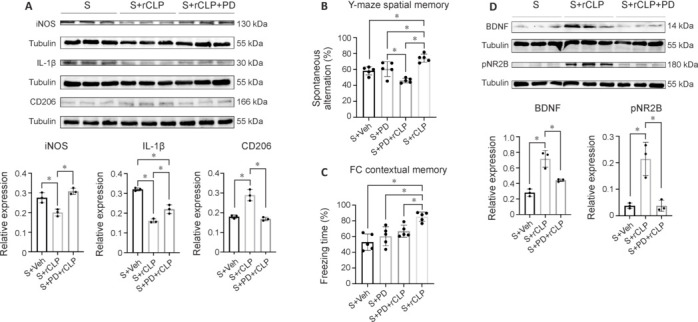
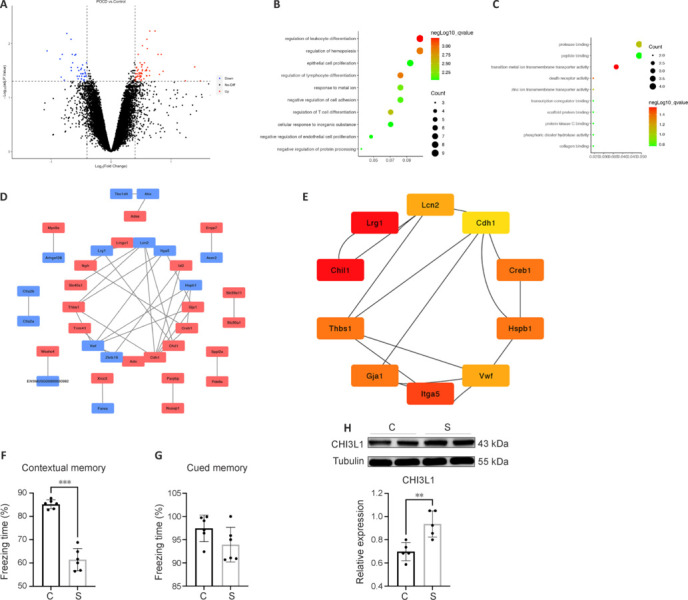
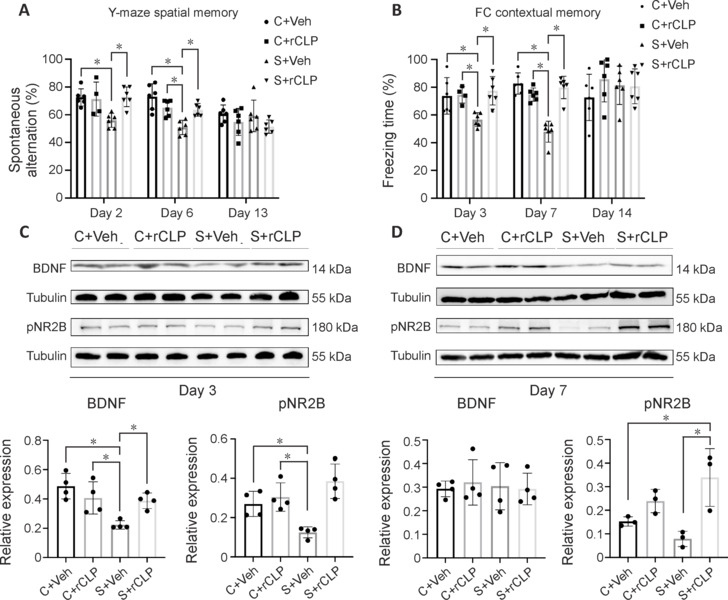
JOURNAL/nrgr/04.03/01300535-202509000-00032/figure1/v/2024-11-05T132919Z/r/image-tiff Postoperative cognitive dysfunction is a severe complication of the central nervous system that occurs after anesthesia and surgery, and has received attention for its high incidence and effect on the quality of life of patients. To date, there are no viable treatment options for postoperative cognitive dysfunction. The identification of postoperative cognitive dysfunction hub genes could provide new research directions and therapeutic targets for future research. To identify the signaling mechanisms contributing to postoperative cognitive dysfunction, we first conducted Gene Ontology and Kyoto Encyclopedia of Genes and Genomes pathway enrichment analyses of the Gene Expression Omnibus GSE95426 dataset, which consists of mRNAs and long non-coding RNAs differentially expressed in mouse hippocampus 3 days after tibial fracture. The dataset was enriched in genes associated with the biological process "regulation of immune cells," of which Chil1 was identified as a hub gene. Therefore, we investigated the contribution of chitinase-3-like protein 1 protein expression changes to postoperative cognitive dysfunction in the mouse model of tibial fracture surgery. Mice were intraperitoneally injected with vehicle or recombinant chitinase-3-like protein 1 24 hours post-surgery, and the injection groups were compared with untreated control mice for learning and memory capacities using the Y-maze and fear conditioning tests. In addition, protein expression levels of proinflammatory factors (interleukin-1β and inducible nitric oxide synthase), M2-type macrophage markers (CD206 and arginase-1), and cognition-related proteins (brain-derived neurotropic factor and phosphorylated NMDA receptor subunit NR2B) were measured in hippocampus by western blotting. Treatment with recombinant chitinase-3-like protein 1 prevented surgery-induced cognitive impairment, downregulated interleukin-1β and nducible nitric oxide synthase expression, and upregulated CD206, arginase-1, pNR2B, and brain-derived neurotropic factor expression compared with vehicle treatment. Intraperitoneal administration of the specific ERK inhibitor PD98059 diminished the effects of recombinant chitinase-3-like protein 1. Collectively, our findings suggest that recombinant chitinase-3-like protein 1 ameliorates surgery-induced cognitive decline by attenuating neuroinflammation via M2 microglial polarization in the hippocampus. Therefore, recombinant chitinase-3-like protein 1 may have therapeutic potential for postoperative cognitive dysfunction.
术后认知功能障碍是麻醉和手术后发生的一种严重的中枢神经系统并发症,因其高发病率及对患者生活质量的影响而受到关注。迄今为止,术后认知功能障碍尚无可行的治疗方案。识别术后认知功能障碍的枢纽基因可为未来研究提供新的研究方向和治疗靶点。为了确定导致术后认知功能障碍的信号传导机制,我们首先对基因表达综合数据库GSE95426数据集进行了基因本体论和京都基因与基因组百科全书通路富集分析,该数据集由胫骨骨折后3天小鼠海马体中差异表达的mRNA和长链非编码RNA组成。该数据集在与“免疫细胞调节”生物过程相关的基因中富集,其中Chil1被鉴定为枢纽基因。因此,我们在胫骨骨折手术小鼠模型中研究了几丁质酶-3样蛋白1蛋白表达变化对术后认知功能障碍的影响。小鼠在手术后24小时腹腔注射溶剂或重组几丁质酶-3样蛋白1,并使用Y迷宫和恐惧条件测试将注射组与未治疗的对照小鼠的学习和记忆能力进行比较。此外,通过蛋白质印迹法测量海马体中促炎因子(白细胞介素-1β和诱导型一氧化氮合酶)、M2型巨噬细胞标志物(CD206和精氨酸酶-1)以及认知相关蛋白(脑源性神经营养因子和磷酸化NMDA受体亚基NR2B)的蛋白表达水平。与溶剂处理相比,重组几丁质酶-3样蛋白1治疗可预防手术诱导的认知障碍,下调白细胞介素-1β和诱导型一氧化氮合酶表达,并上调CD206、精氨酸酶-1、pNR2B和脑源性神经营养因子表达。腹腔注射特异性ERK抑制剂PD98059可减弱重组几丁质酶-3样蛋白1的作用。总体而言,我们的研究结果表明,重组几丁质酶-3样蛋白1通过在海马体中通过M2小胶质细胞极化减轻神经炎症来改善手术诱导的认知衰退。因此,重组几丁质酶-3样蛋白1可能对术后认知功能障碍具有治疗潜力。