
基于血浆生物标志物预测轻度认知障碍患者的纵向认知下降和阿尔茨海默病转化。
Predicting Longitudinal Cognitive Decline and Alzheimer's Conversion in Mild Cognitive Impairment Patients Based on Plasma Biomarkers.
机构信息
Department of Biological Sciences, College of Natural Sciences, Kangwon National University, Chuncheon 24341, Republic of Korea.
Hugenebio Institute, Bio-Innovation Park, Erom, Inc., Chuncheon 24427, Republic of Korea.
出版信息
Cells. 2024 Jun 22;13(13):1085. doi: 10.3390/cells13131085.
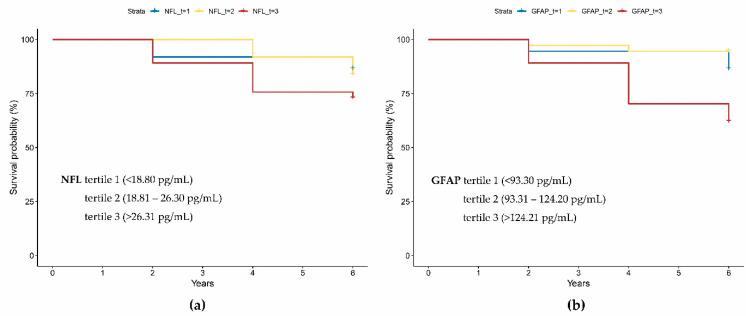
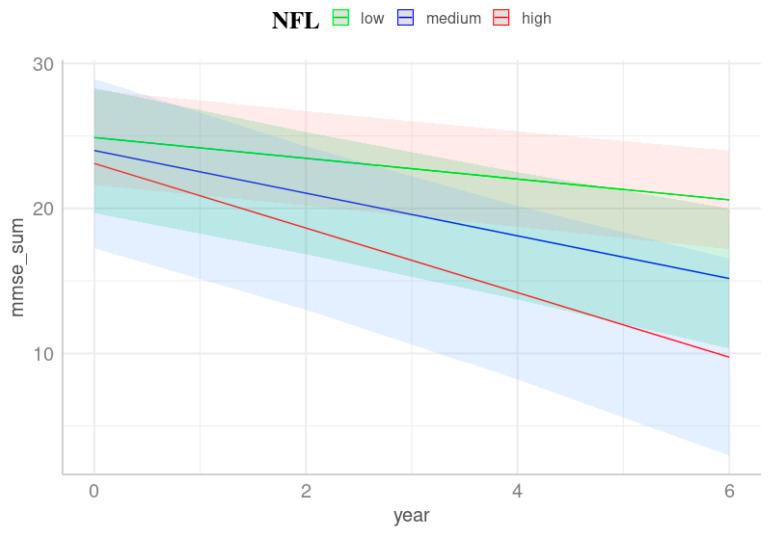
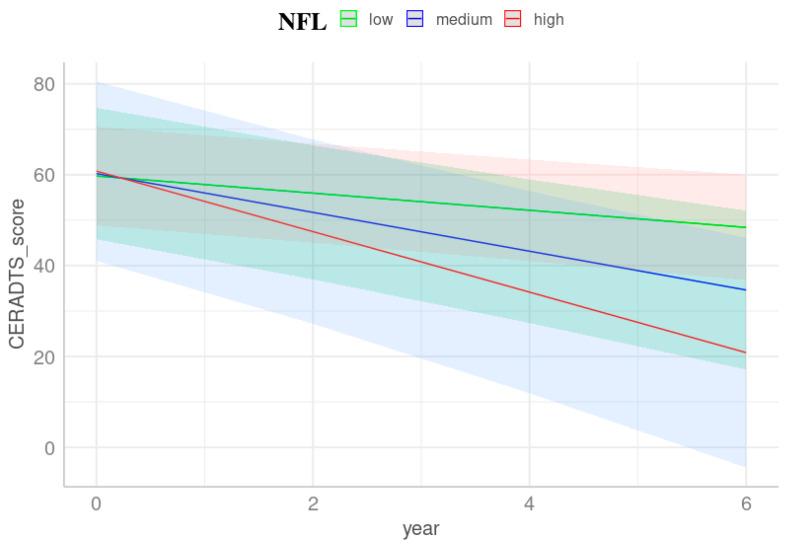
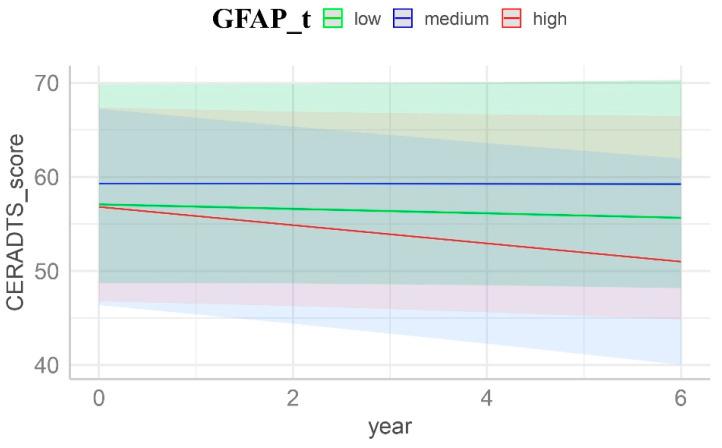
The increasing burden of Alzheimer's disease (AD) emphasizes the need for effective diagnostic and therapeutic strategies. Despite available treatments targeting amyloid beta (Aβ) plaques, disease-modifying therapies remain elusive. Early detection of mild cognitive impairment (MCI) patients at risk for AD conversion is crucial, especially with anti-Aβ therapy. While plasma biomarkers hold promise in differentiating AD from MCI, evidence on predicting cognitive decline is lacking. This study's objectives were to evaluate whether plasma protein biomarkers could predict both cognitive decline in non-demented individuals and the conversion to AD in patients with MCI. This study was conducted as part of the Korean Longitudinal Study on Cognitive Aging and Dementia (KLOSCAD), a prospective, community-based cohort. Participants were based on plasma biomarker availability and clinical diagnosis at baseline. The study included MCI (n = 50), MCI-to-AD (n = 21), and cognitively unimpaired (CU, n = 40) participants. Baseline plasma concentrations of six proteins-total tau (tTau), phosphorylated tau at residue 181 (pTau181), amyloid beta 42 (Aβ42), amyloid beta 40 (Aβ40), neurofilament light chain (NFL), and glial fibrillary acidic protein (GFAP)-along with three derivative ratios (pTau181/tTau, Aβ42/Aβ40, pTau181/Aβ42) were analyzed to predict cognitive decline over a six-year follow-up period. Baseline protein biomarkers were stratified into tertiles (low, intermediate, and high) and analyzed using a linear mixed model (LMM) to predict longitudinal cognitive changes. In addition, Kaplan-Meier analysis was performed to discern whether protein biomarkers could predict AD conversion in the MCI subgroup. This prospective cohort study revealed that plasma NFL may predict longitudinal declines in Mini-Mental State Examination (MMSE) scores. In participants categorized as amyloid positive, the NFL biomarker demonstrated predictive performance for both MMSE and total scores of the Korean version of the Consortium to Establish a Registry for Alzheimer's Disease Assessment Packet (CERAD-TS) longitudinally. Additionally, as a baseline predictor, GFAP exhibited a significant association with cross-sectional cognitive impairment in the CERAD-TS measure, particularly in amyloid positive participants. Kaplan-Meier curve analysis indicated predictive performance of NFL, GFAP, tTau, and Aβ42/Aβ40 on MCI-to-AD conversion. This study suggests that plasma GFAP in non-demented participants may reflect baseline cross-sectional CERAD-TS scores, a measure of global cognitive function. Conversely, plasma NFL may predict longitudinal decline in MMSE and CERAD-TS scores in participants categorized as amyloid positive. Kaplan-Meier curve analysis suggests that NFL, GFAP, tTau, and Aβ42/Aβ40 are potentially robust predictors of future AD conversion.
阿尔茨海默病(AD)负担不断增加,强调了需要有效的诊断和治疗策略。尽管有针对淀粉样β(Aβ)斑块的现有治疗方法,但仍难以实现疾病修饰疗法。早期发现有 AD 转化风险的轻度认知障碍(MCI)患者至关重要,尤其是在使用抗 Aβ 疗法时。虽然血浆生物标志物在区分 AD 与 MCI 方面具有潜力,但缺乏预测认知下降的证据。本研究的目的是评估血浆蛋白生物标志物是否可以预测非痴呆个体的认知下降以及 MCI 患者向 AD 的转化。本研究是作为韩国认知老化和痴呆纵向研究(KLOSCAD)的一部分进行的,这是一项前瞻性的、基于社区的队列研究。参与者是根据基线时的血浆生物标志物可用性和临床诊断确定的。该研究包括 MCI(n=50)、MCI 至 AD(n=21)和认知正常(CU,n=40)参与者。分析了基线时六种蛋白质的血浆浓度-总 tau(tTau)、磷酸化 tau 181 位(pTau181)、淀粉样β 42(Aβ42)、淀粉样β 40(Aβ40)、神经丝轻链(NFL)和神经胶质纤维酸性蛋白(GFAP)-以及三个衍生比值(pTau181/tTau、Aβ42/Aβ40、pTau181/Aβ42),以预测在六年的随访期间认知下降。将基线蛋白生物标志物分为三分位(低、中、高),并使用线性混合模型(LMM)进行分析,以预测纵向认知变化。此外,进行 Kaplan-Meier 分析以确定蛋白生物标志物是否可以预测 MCI 亚组中的 AD 转化。这项前瞻性队列研究表明,血浆 NFL 可能预测 Mini-Mental State Examination(MMSE)评分的纵向下降。在被归类为淀粉样蛋白阳性的参与者中,NFL 生物标志物在纵向显示出对 MMSE 和韩国版 Consortium to Establish a Registry for Alzheimer's Disease Assessment Packet(CERAD-TS)总分的预测性能。此外,作为基线预测因子,GFAP 与 CERAD-TS 测量中的横断面认知障碍显著相关,特别是在淀粉样蛋白阳性参与者中。Kaplan-Meier 曲线分析表明,NFL、GFAP、tTau 和 Aβ42/Aβ40 对 MCI 至 AD 转化具有预测性能。这项研究表明,非痴呆参与者的血浆 GFAP 可能反映了基线的 CERAD-TS 评分,这是一种衡量整体认知功能的指标。相反,血浆 NFL 可能预测淀粉样蛋白阳性参与者的 MMSE 和 CERAD-TS 评分的纵向下降。Kaplan-Meier 曲线分析表明,NFL、GFAP、tTau 和 Aβ42/Aβ40 可能是未来 AD 转化的强大预测因子。
 Zotero 插件