Department of Clinical Nutrition, University General Hospital of Thessaloniki AHEPA, 54636 Thessaloniki, Greece.
Diabetes Center, 1st Propaedeutic Department of Internal Medicine, School of Medicine, University General Hospital of Thessaloniki AHEPA, Aristotle University of Thessaloniki, 54636 Thessaloniki, Greece.
Nutrients. 2024 Jun 29;16(13):2089. doi: 10.3390/nu16132089.
Introduction-Background: Data from experimental trials show that L. (saffron) is considered to improve glycemia, lipid profile, and blood pressure and reduce oxidative stress. So far, clinical trials have been conducted in individuals with metabolic syndrome and Diabetes Mellitus type 2 (DMT-2). The purpose of this study is to assess the effectiveness of saffron in individuals with Diabetes Mellitus type 1 (DMT-1).
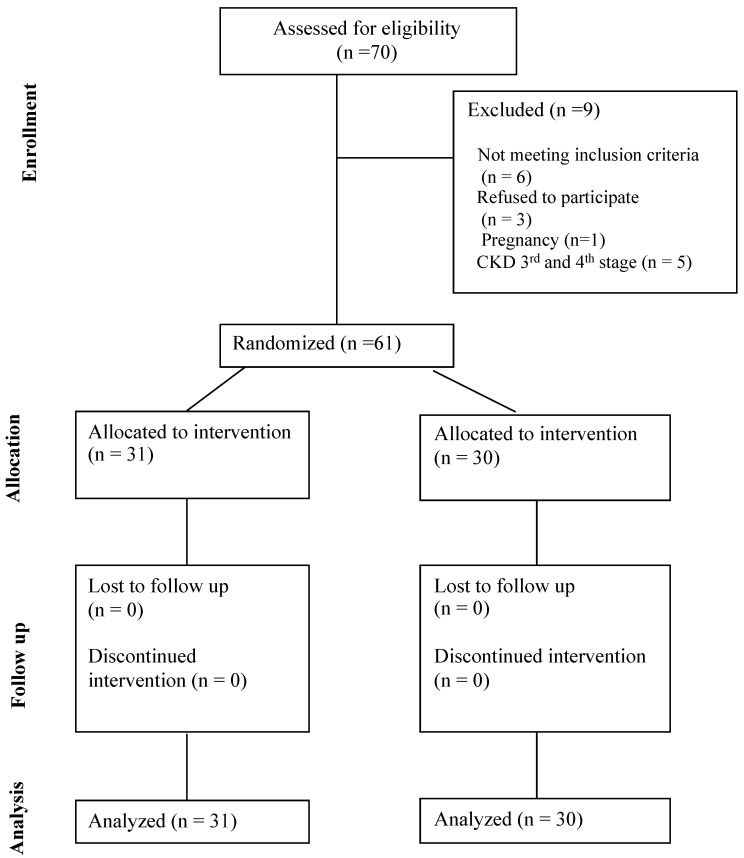
PATIENTS-METHODS: 61 individuals with DMT-1, mean age 48 years old (48.3 ± 14.6), 26 females (42.6%) were randomized to receive a new oral supplement in sachets containing probiotics, prebiotics, magnesium, and L. extract or placebo containing probiotics, prebiotics and magnesium daily for 6 months. Glycemic control was assessed with a continuous glucose monitoring system and laboratory measurement of HbA1c and lipid profile was also examined. Blood pressure at baseline and end of intervention was also measured. Individuals were either on a continuous subcutaneous insulin infusion with an insulin pump or in multiple daily injection regimens. Diabetes distress and satiety were assessed through a questionnaire and body composition was assessed with bioelectrical impedance.
At the end of the intervention, the two groups differed significantly only in serum triglycerides ( = 0.049). After 6 months of treatment, a significant reduction in the active group was observed in glycated hemoglobin ( = 0.046) and serum triglycerides ( = 0.021) compared to baseline. The other primary endpoints (glycemic control, lipid profile, blood pressure) did not differ within the groups from baseline to end of intervention, and there was no significant difference between the two groups. Diabetes distress score improved significantly only in the active group ( = 0.044), suggesting an overall improvement in diabetes disease burden in these individuals but that was not significant enough between the two groups.
A probiotic supplement with saffron extract improves serum triglycerides in well-controlled people with DMT-1 and may potentially be a valuable adjunct for enhancing glycemic control.
评估藏红花补充剂对 1 型糖尿病(DMT-1)个体的有效性。
61 名 DMT-1 患者,平均年龄 48 岁(48.3±14.6),26 名女性(42.6%),随机接受每日新的口服补充剂,包含益生菌、益生元、镁和藏红花提取物或安慰剂,包含益生菌、益生元和镁,持续 6 个月。使用连续血糖监测系统评估血糖控制,实验室检测 HbA1c 和血脂谱,并测量干预前后的血压。个体接受胰岛素泵持续皮下胰岛素输注或多次每日注射方案。通过问卷评估糖尿病困扰和饱腹感,使用生物电阻抗评估身体成分。
干预结束时,两组仅在血清三酰甘油方面有显著差异(=0.049)。治疗 6 个月后,与基线相比,活性组的糖化血红蛋白(=0.046)和血清三酰甘油(=0.021)显著降低。其他主要终点(血糖控制、血脂谱、血压)在组内从基线到干预结束时没有差异,两组之间也没有显著差异。仅在活性组中,糖尿病困扰评分显著改善(=0.044),这表明这些个体的糖尿病疾病负担总体得到改善,但两组之间没有显著差异。
含有藏红花提取物的益生菌补充剂可改善血糖控制良好的 1 型糖尿病患者的血清三酰甘油水平,可能是增强血糖控制的有价值的辅助治疗方法。