Department of Biomedical Science and Engineering, Konkuk University, Seoul 05029, Republic of Korea.
Int J Mol Sci. 2024 Jun 27;25(13):7065. doi: 10.3390/ijms25137065.
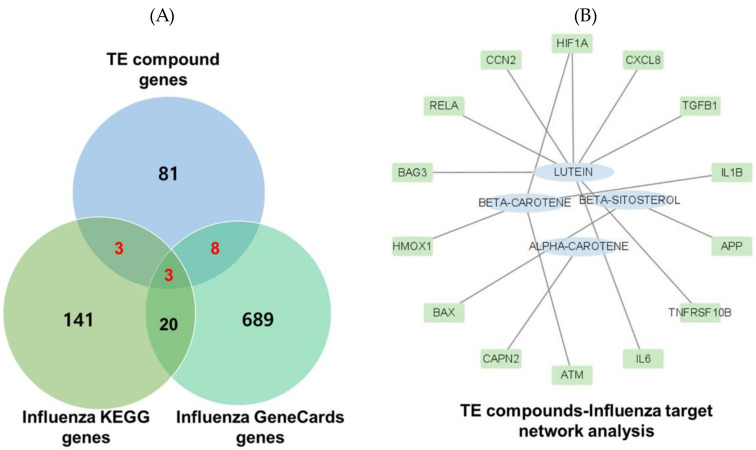
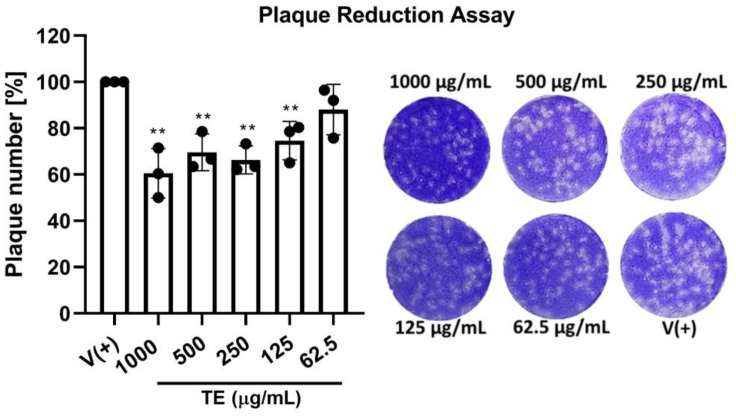
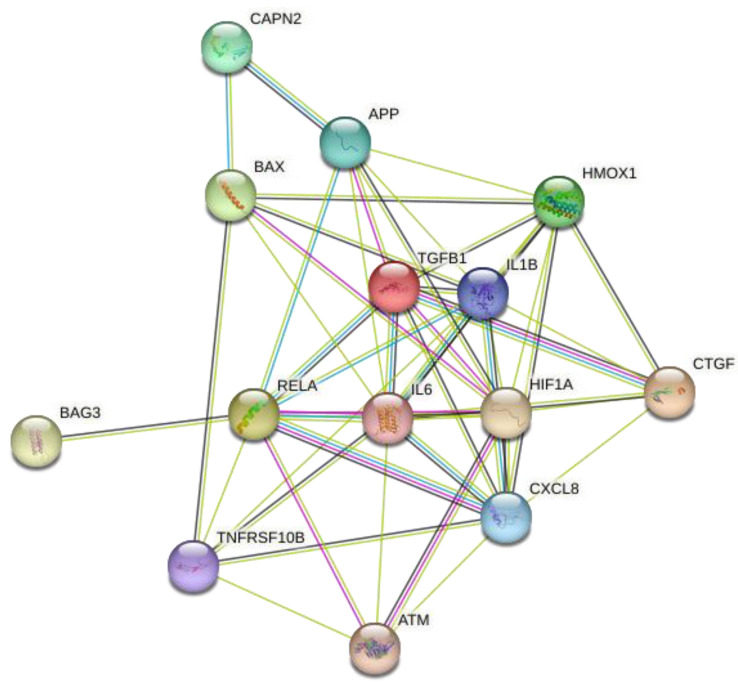
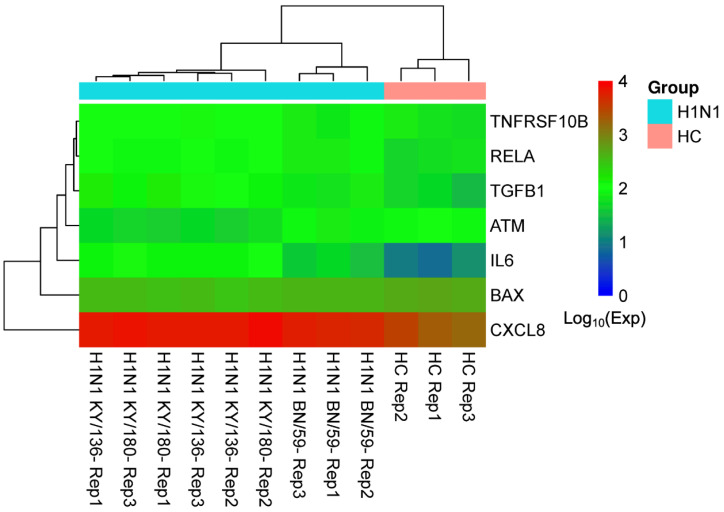
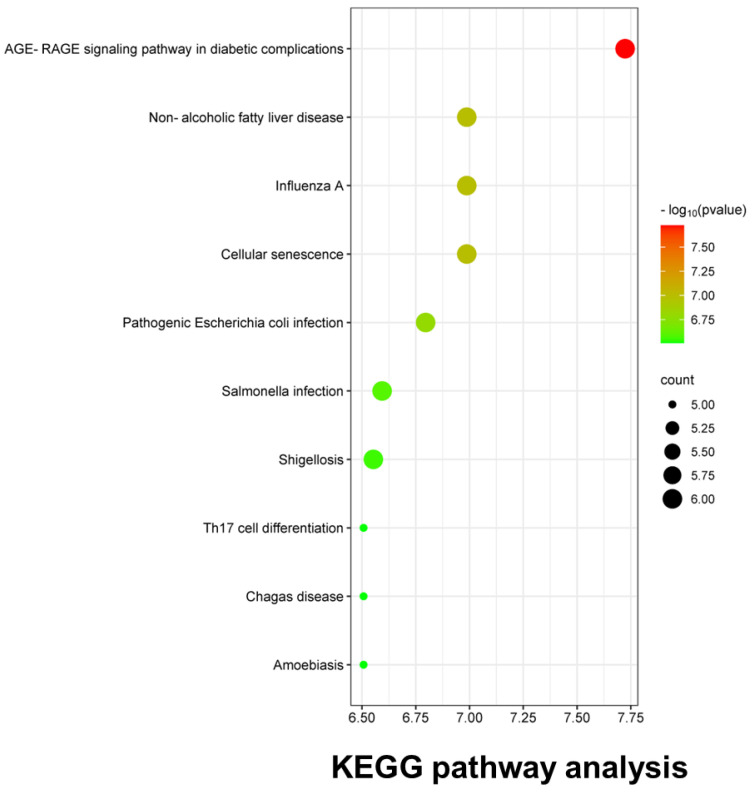
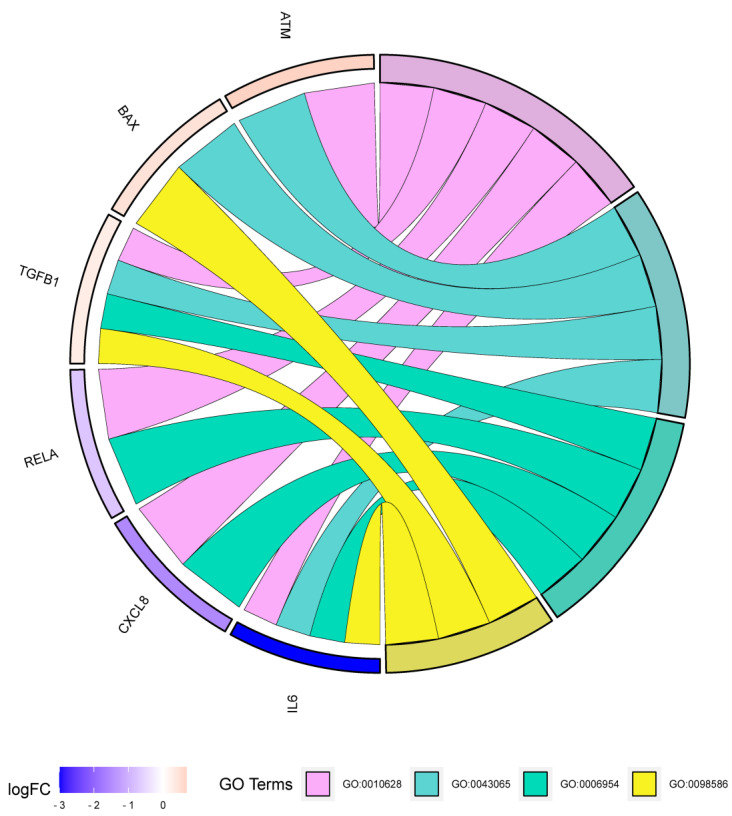
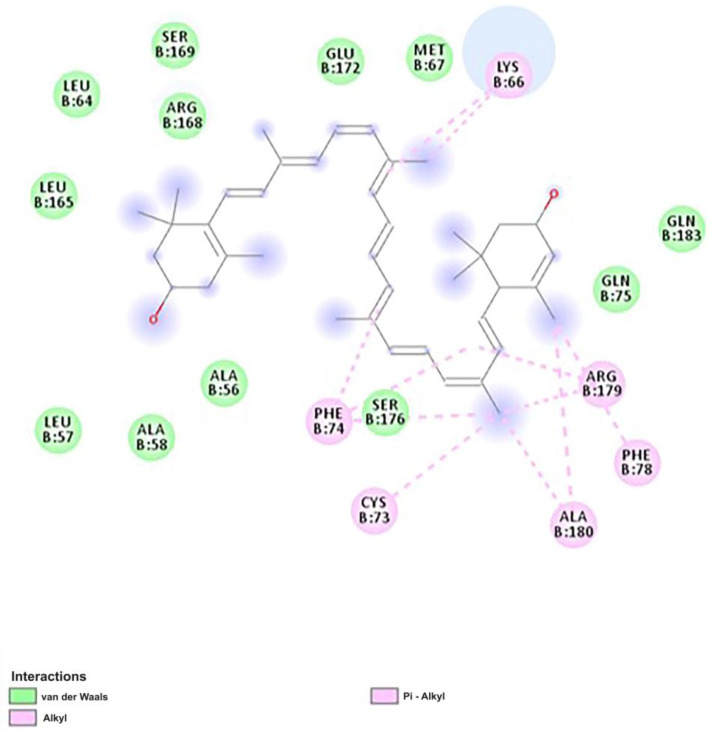
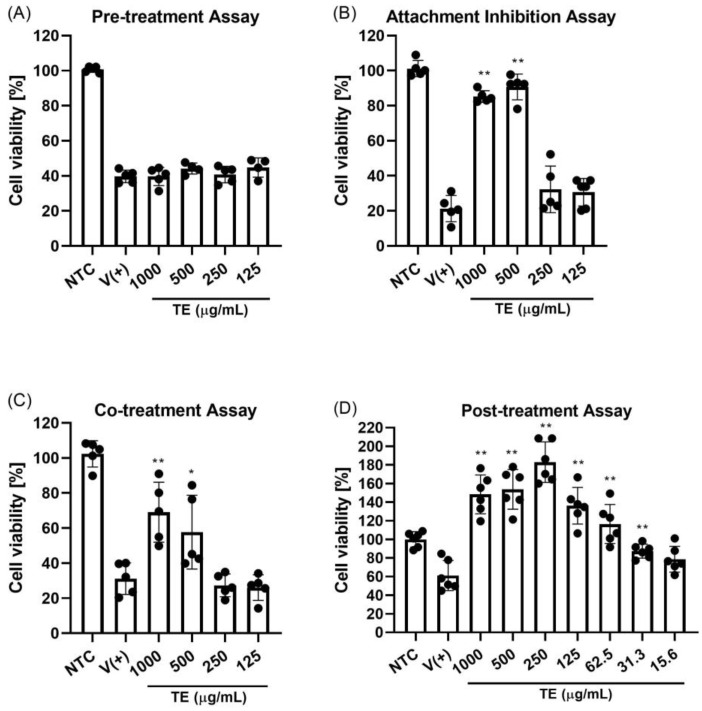
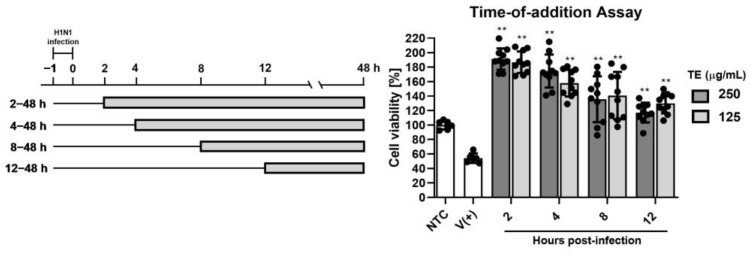
Linn. (TE) is traditionally used to treat cardiovascular, renal, and gastrointestinal diseases. In this study, we investigated the active compounds and targets of TE extract that may exert antiviral effects against influenza A. Active compounds and targets of TE extract were identified using the Traditional Chinese Medicine Systems Pharmacology database (TCSMP). The influenza A-related gene set was screened using GeneCards and the Kyoto Encyclopedia of Genes and Genomes (KEGG). A protein-protein interaction (PPI) network was built to establish the hub targets. Pathway and target studies were conducted using Gene Expression Omnibus (GEO). The interactions between active compounds and potential targets were assessed by molecular docking. An in vitro study was performed using antiviral and plaque reduction assays. From the compound and target search, we identified 6 active compounds and 95 potential targets. We retrieved 887 influenza-associated target genes and determined 14 intersecting core targets between TE and influenza. After constructing a compound-target network, we discovered lutein and beta-carotene to be the key compounds. Next, PPI network analysis identified the top three hub genes associated with influenza (IL-6, HIF1A, and IL-1β). Similarly, GEO analysis revealed IL-6, TGFB1, and CXCL8 to be the top three target genes. In our docking study, we identified that lutein and IL-6 had the strongest bindings. Our in vitro experimental results revealed that the TE extract exhibited therapeutic rather than prophylactic effects on influenza disease. We identified lutein as a main active compound in TE extract, and IL-6 as an important target associated with influenza, by using data mining and bioinformatics. Our in vitro findings indicated that TE extract exerted protective properties against the influenza A virus. We speculated that lutein, as a key active component in TE extract, is largely responsible for its antiviral effects. Therefore, we suggest TE extract as an alternative in the treatment of influenza.
林奈(TE)传统上用于治疗心血管、肾脏和胃肠道疾病。在这项研究中,我们研究了 TE 提取物的活性化合物和靶点,这些化合物和靶点可能对甲型流感发挥抗病毒作用。使用中药系统药理学数据库(TCSMP)鉴定 TE 提取物的活性化合物和靶点。使用 GeneCards 和京都基因与基因组百科全书(KEGG)筛选与流感相关的基因集。建立蛋白质-蛋白质相互作用(PPI)网络以确定枢纽靶标。使用基因表达综合数据库(GEO)进行通路和靶标研究。通过分子对接评估活性化合物和潜在靶标之间的相互作用。进行了体外抗病毒和蚀斑减少测定。从化合物和靶标搜索中,我们确定了 6 种活性化合物和 95 个潜在靶标。我们检索了 887 个与流感相关的靶基因,并确定了 TE 和流感之间的 14 个交集核心靶标。构建化合物-靶标网络后,我们发现叶黄素和β-胡萝卜素是关键化合物。接下来,PPI 网络分析确定了与流感相关的三个主要枢纽基因(IL-6、HIF1A 和 IL-1β)。同样,GEO 分析显示 IL-6、TGFB1 和 CXCL8 是三个主要的靶基因。在我们的对接研究中,我们发现叶黄素和 IL-6 具有最强的结合力。我们的体外实验结果表明,TE 提取物对流感疾病具有治疗作用而不是预防作用。通过数据挖掘和生物信息学,我们确定叶黄素是 TE 提取物中的主要活性化合物,IL-6 是与流感相关的重要靶标。我们的体外发现表明,TE 提取物对甲型流感病毒具有保护作用。我们推测,叶黄素作为 TE 提取物中的关键活性成分,在很大程度上负责其抗病毒作用。因此,我们建议将 TE 提取物作为治疗流感的替代方法。