Department of Human Nutrition, Institute of Human Nutrition Sciences, Warsaw University of Life Sciences, 02-776 Warsaw, Poland.
Faculty of Pharmaceutical Sciences, University of British Columbia, Vancouver, BC V6T 1Z3, Canada.
Int J Mol Sci. 2024 Jul 4;25(13):7341. doi: 10.3390/ijms25137341.
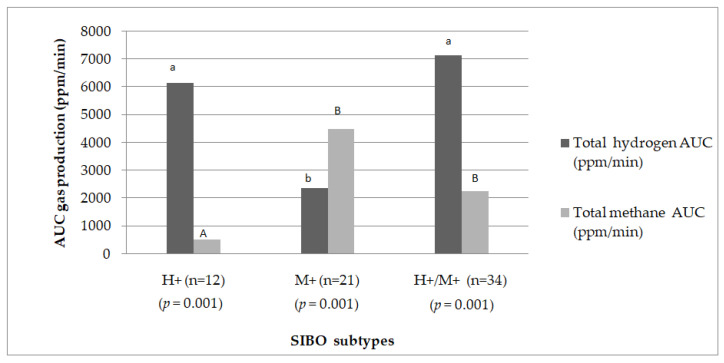
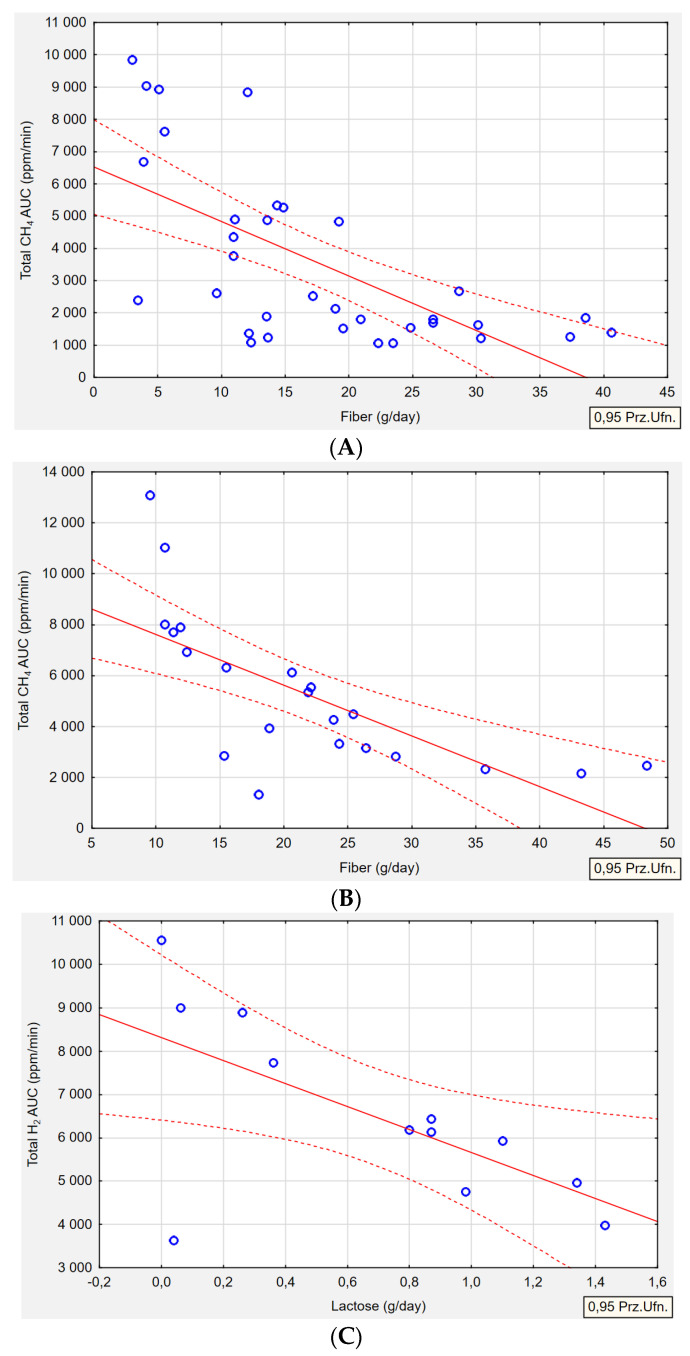
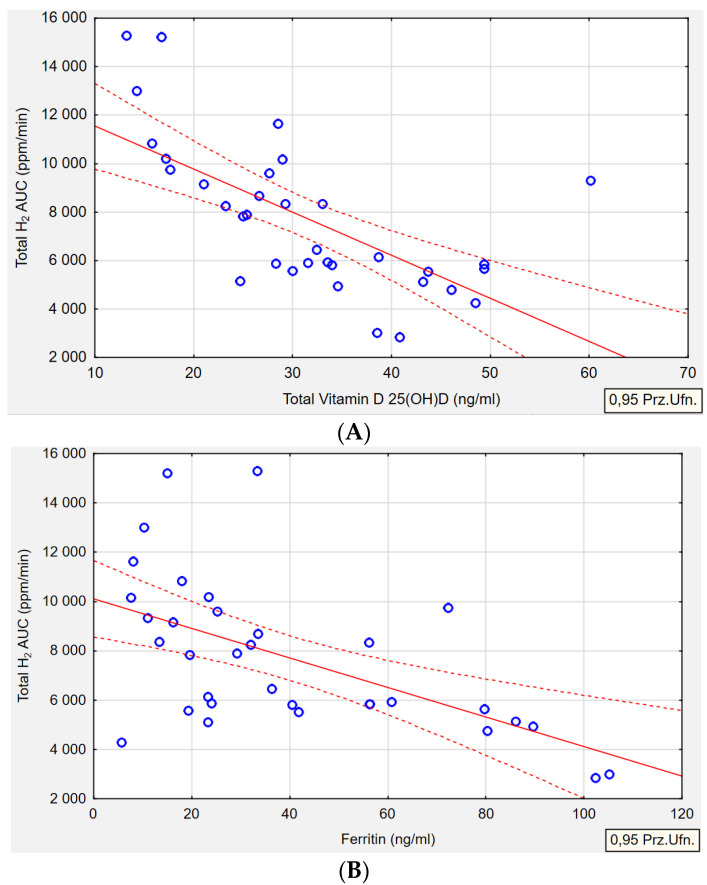
Small intestinal bacterial overgrowth (SIBO) is a pathology of the small intestine and may predispose individuals to various nutritional deficiencies. Little is known about whether specific subtypes of SIBO, such as the hydrogen-dominant (H+), methane-dominant (M+), or hydrogen/methane-dominant (H+/M+), impact nutritional status and dietary intake in SIBO patients. The aim of this study was to investigate possible correlations between biochemical parameters, dietary nutrient intake, and distinct SIBO subtypes. This observational study included 67 patients who were newly diagnosed with SIBO. Biochemical parameters and diet were studied utilizing laboratory tests and food records, respectively. The H+/M+ group was associated with low serum vitamin D ( < 0.001), low serum ferritin ( = 0.001) and low fiber intake ( = 0.001). The M+ group was correlated with high serum folic acid ( = 0.002) and low intakes of fiber ( = 0.001) and lactose ( = 0.002). The H+ group was associated with low lactose intake ( = 0.027). These results suggest that the subtype of SIBO may have varying effects on dietary intake, leading to a range of biochemical deficiencies. Conversely, specific dietary patterns may predispose one to the development of a SIBO subtype. The assessment of nutritional status and diet, along with the diagnosis of SIBO subtypes, are believed to be key components of SIBO therapy.
小肠细菌过度生长(SIBO)是小肠的一种病理状态,可能使个体易患各种营养缺乏症。目前尚不清楚 SIBO 的特定亚型,如产氢型(H+)、产甲烷型(M+)或产氢/甲烷型(H+/M+),是否会影响 SIBO 患者的营养状况和饮食摄入。本研究旨在探讨生化参数、饮食营养素摄入与不同 SIBO 亚型之间可能存在的相关性。这项观察性研究纳入了 67 例新诊断为 SIBO 的患者。利用实验室检测和食物记录分别研究了生化参数和饮食。H+/M+组与血清维生素 D 水平降低(<0.001)、血清铁蛋白水平降低(=0.001)和膳食纤维摄入减少(=0.001)有关。M+组与血清叶酸水平升高(=0.002)和膳食纤维(=0.001)和乳糖(=0.002)摄入减少有关。H+组与乳糖摄入减少(=0.027)有关。这些结果表明,SIBO 亚型可能对饮食摄入有不同的影响,导致一系列生化缺乏。相反,特定的饮食模式可能使个体易患 SIBO 亚型。评估营养状况和饮食,以及 SIBO 亚型的诊断,被认为是 SIBO 治疗的关键组成部分。