Integrative Skin Science and Research, Sacramento, CA 95815, USA.
College of Medicine, California Northstate University, Elk Grove, CA 95757, USA.
Nutrients. 2024 Sep 18;16(18):3149. doi: 10.3390/nu16183149.
Small intestinal bacterial overgrowth (SIBO) is a common, yet underdiagnosed, gut condition caused by gut dysbiosis. A previous study has shown the potential of herbal therapy, providing equivalent results to rifaximin.
The objective of this study was to assess how the use of an oral botanical regimen may modulate the gut microbiome, facial erythema, and intestinal permeability in those with SIBO.
This was an open-label prospective study of adults that had lactulose breath test-confirmed SIBO. Participants received a 10-week oral supplementation of a Biocidin liquid tincture and GI Detox+. If participants were found to be non-responsive to treatment after 10 weeks with a persistently positive lactulose breath test, a third oral supplement, Olivirex, was administered for an additional 4 weeks. Lactulose breath tests were administered at baseline, weeks 6, 10, and 14 to assess for SIBO status. A high-resolution photographic analysis system was utilized to analyze changes in facial erythema. Stool sample collections and venipuncture were performed to analyze the gut microbiome and intestinal permeability.
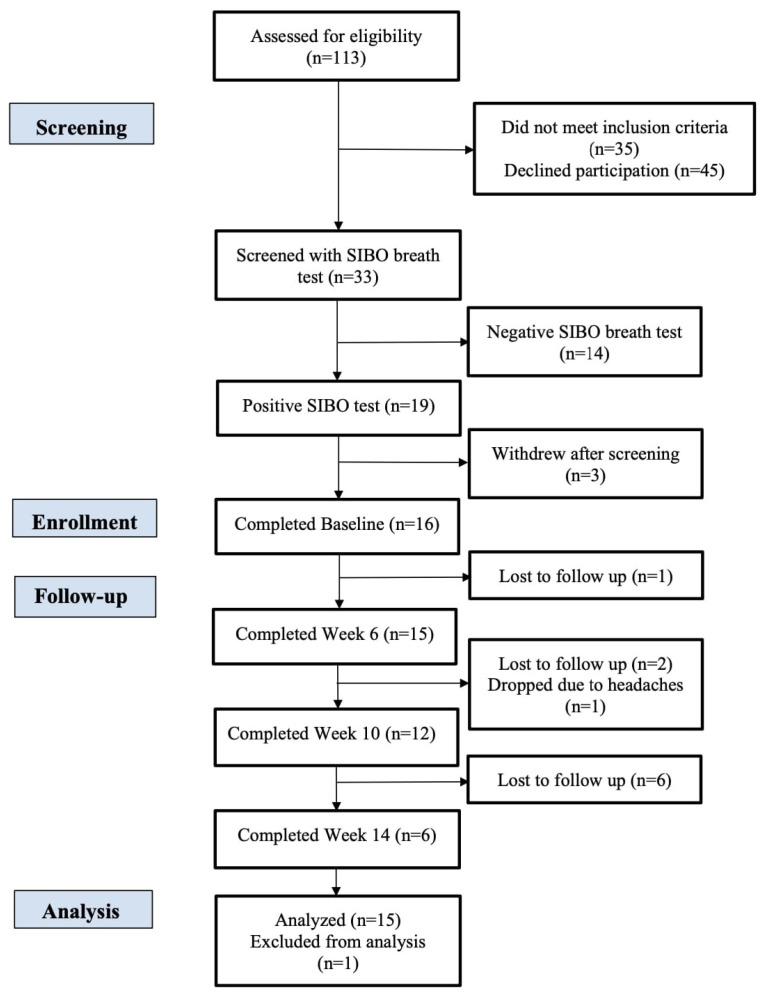
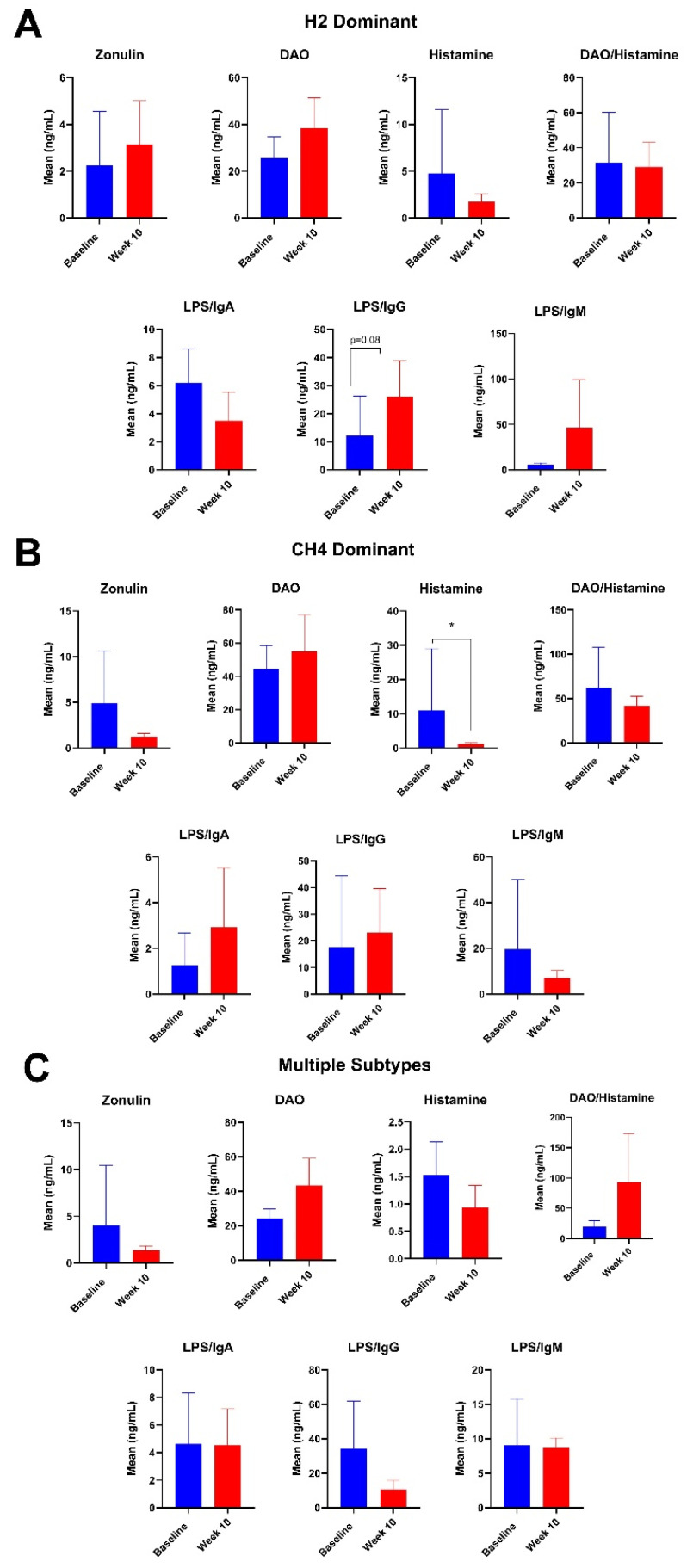
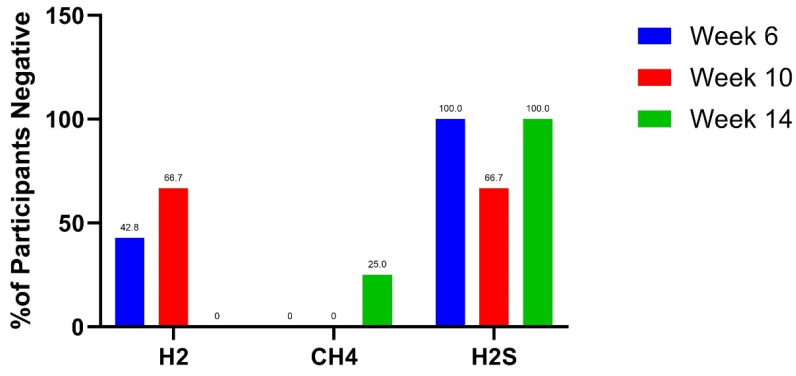
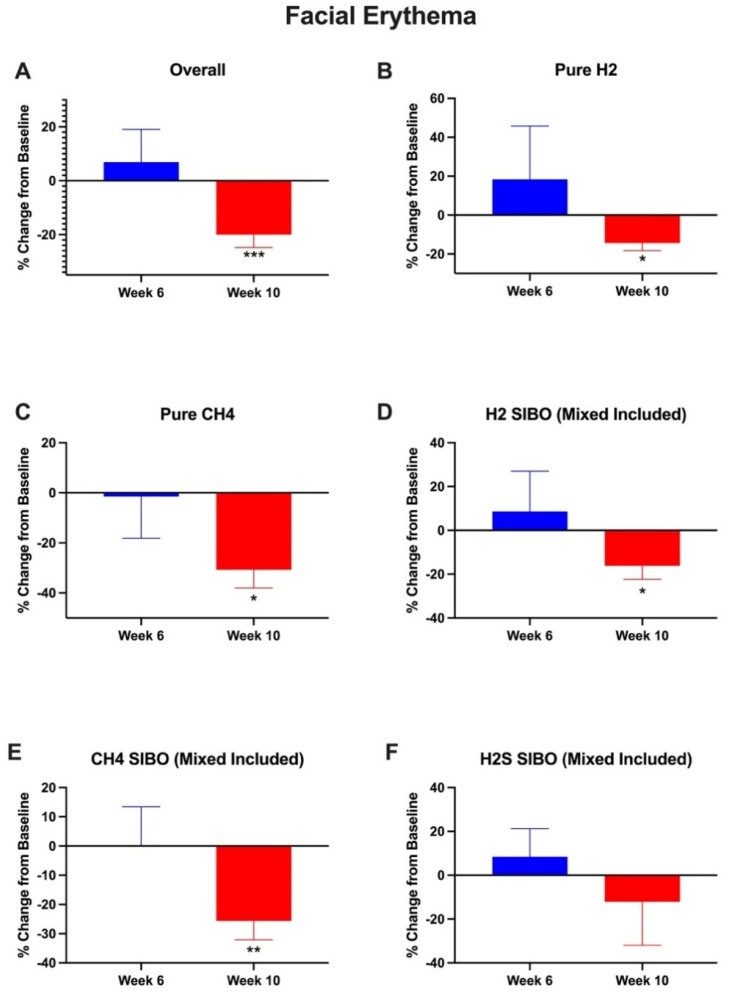
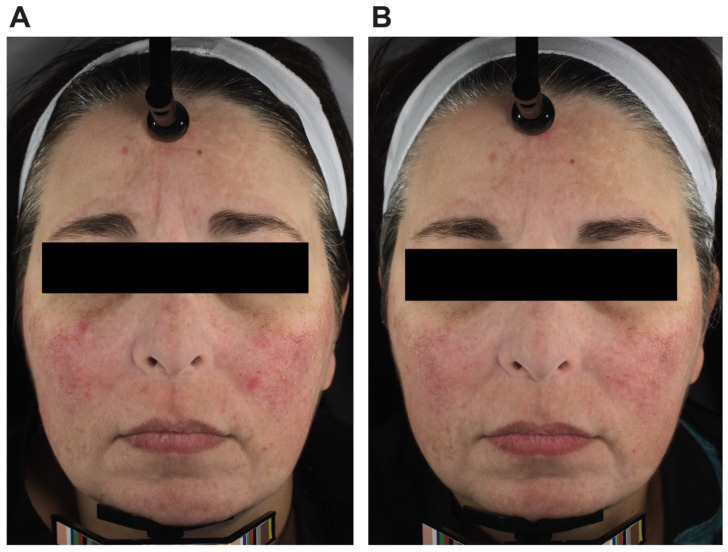
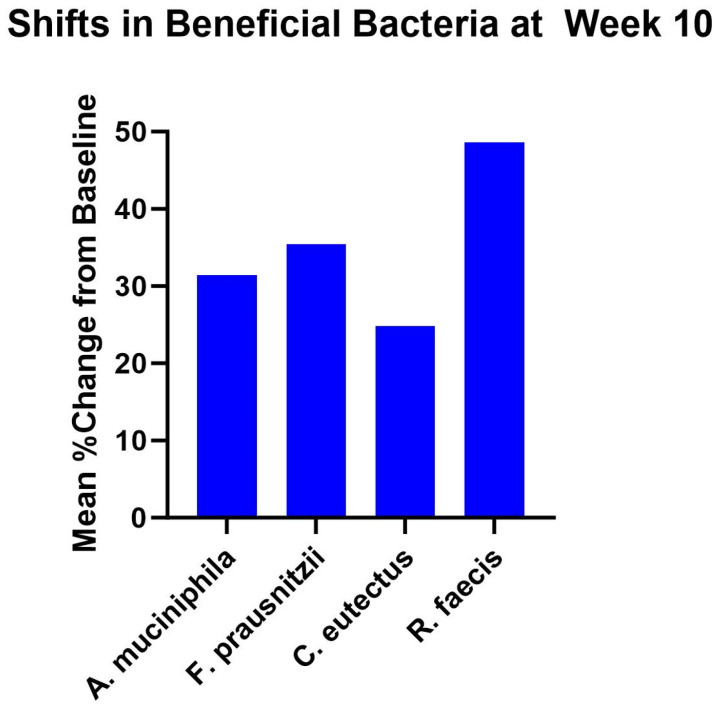
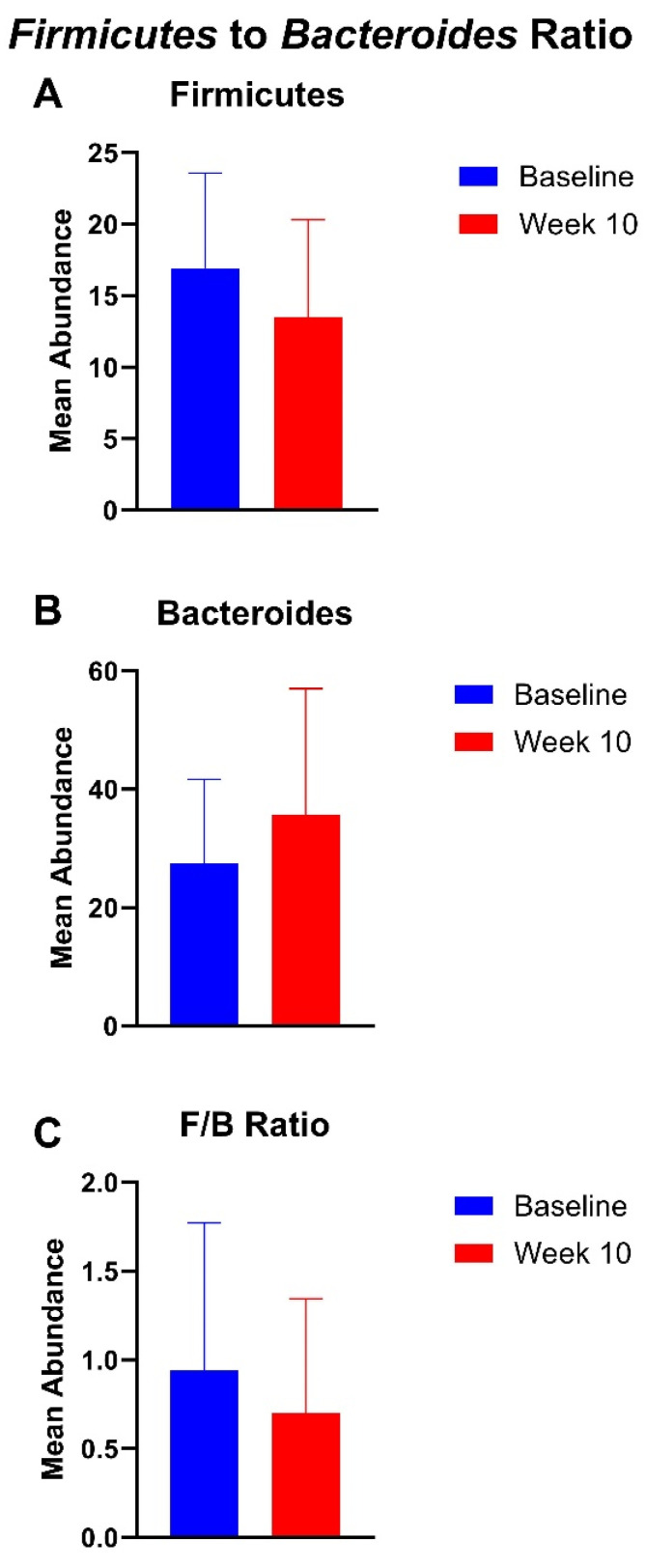
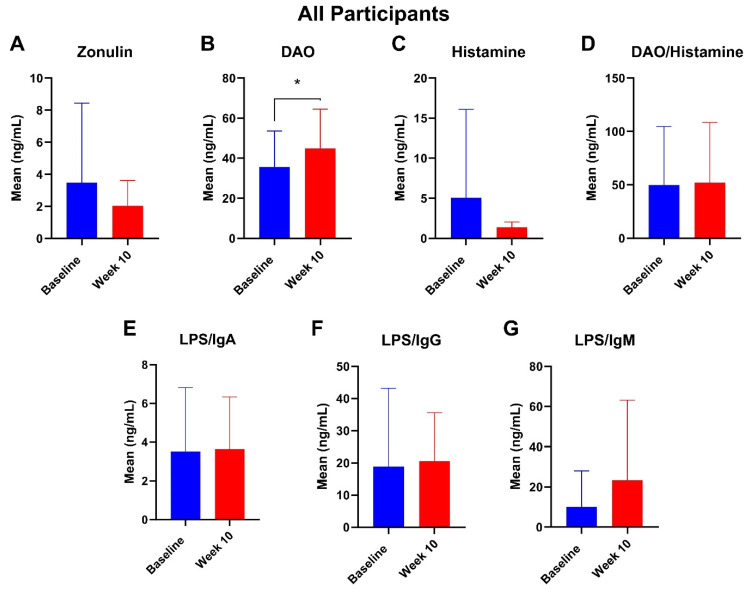
A total of 33 subjects were screened with breath testing, and 19 subjects were found to have SIBO. Three of the subjects withdrew during the screening period prior to baseline, and sixteen subjects enrolled. Four subjects dropped out after baseline. Hydrogen-dominant SIBO was the most common subtype of SIBO, followed by methane and hydrogen sulfide. The botanical regimen was most effective for hydrogen- and hydrogen sulfide-dominant SIBO, leading to negative breath test results at week 10 in 42.8% and 66.7% of participants, respectively. Compared to baseline, supplementation with the botanical regimen led to positive shifts in short-chain fatty acid-producing bacteria such as , , , and by 31.4%, 35.4%, 24.8%, and 48.7% percent at week 10, respectively. The mean abundance of decreased by 20.2%, increased by 30%, and the F/B ratio decreased by 25.4% at week 10 compared to baseline. At week 10, there was a trending 116% increase in plasma LPS/IgG ( = 0.08). There were no significant changes in plasma zonulin, DAO, histamine, DAO/histamine, LPS/IgG, LPS/IgA, or LPS/IgM. Facial erythema was not statistically different at week 6, but at week 10, there was a 20% decrease ( = 0.001) in redness intensity. Among the patients that extended to week 14, there was no statistical change in erythema.
Supplementation with an antimicrobial botanical supplemental regimen may have therapeutic potential in hydrogen and hydrogen-sulfide subtypes of SIBO. Furthermore, the botanical supplemental regimen may reduce facial erythema, increase SCFA-producing bacteria, decrease the F/B ratio, and modulate markers of intestinal permeability.
小肠细菌过度生长(SIBO)是一种常见但诊断不足的肠道疾病,由肠道菌群失调引起。先前的一项研究表明,草药疗法具有潜在的疗效,可与利福昔明达到相当的效果。
本研究旨在评估口服植物制剂对 SIBO 患者的肠道微生物组、面部红斑和肠道通透性的调节作用。
这是一项开放标签的前瞻性研究,纳入了经乳果糖呼气试验确诊为 SIBO 的成年人。参与者接受为期 10 周的口服 Biocidin 液体制剂和 GI 排毒剂治疗。如果在 10 周后,患者的乳果糖呼气试验仍为阳性且无应答,将给予第三种口服补充剂 Olivirex,再治疗 4 周。在基线、第 6、10 和 14 周时进行乳果糖呼气试验以评估 SIBO 状态。利用高分辨率摄影分析系统分析面部红斑的变化。采集粪便样本和静脉血样以分析肠道微生物组和肠道通透性。
共有 33 名患者接受了呼吸测试筛查,其中 19 名患者被确诊为 SIBO。3 名患者在基线前的筛查期间退出,16 名患者入组。4 名患者在基线后退出。以氢气为主导的 SIBO 是最常见的 SIBO 亚型,其次是甲烷和硫化氢。该植物制剂对以氢气和硫化氢为主导的 SIBO 最有效,分别有 42.8%和 66.7%的参与者在第 10 周时呼气试验转为阴性。与基线相比,补充植物制剂后,短链脂肪酸产生菌如 、 、 、 分别增加了 31.4%、35.4%、24.8%和 48.7%,第 10 周时 的丰度下降了 20.2%, 增加了 30%,F/B 比值下降了 25.4%。与基线相比,第 10 周时血浆 LPS/IgG 增加了 116%( = 0.08)。血浆 zonulin、DAO、组胺、DAO/组胺、LPS/IgG、LPS/IgA 和 LPS/IgM 均无显著变化。第 6 周时,面部红斑无统计学差异,但第 10 周时,红斑强度下降了 20%( = 0.001)。在延长至第 14 周的患者中,红斑无统计学变化。
补充具有抗菌作用的植物制剂可能对以氢气和硫化氢为主导的 SIBO 具有治疗潜力。此外,植物制剂可能会减少面部红斑,增加产生短链脂肪酸的细菌,降低 F/B 比值,并调节肠道通透性标志物。