Eye and Brain Mapping Laboratory (iBMLab), Department of Psychology, University of Fribourg, Faucigny 2, 1700, Fribourg, Switzerland.
Laboratoire d'Informatique en Image Et Systèmes d'information, French Centre National de La Recherche Scientifique, University of Lyon, Lyon, France.
Sci Rep. 2024 Jul 13;14(1):16193. doi: 10.1038/s41598-024-66619-4.
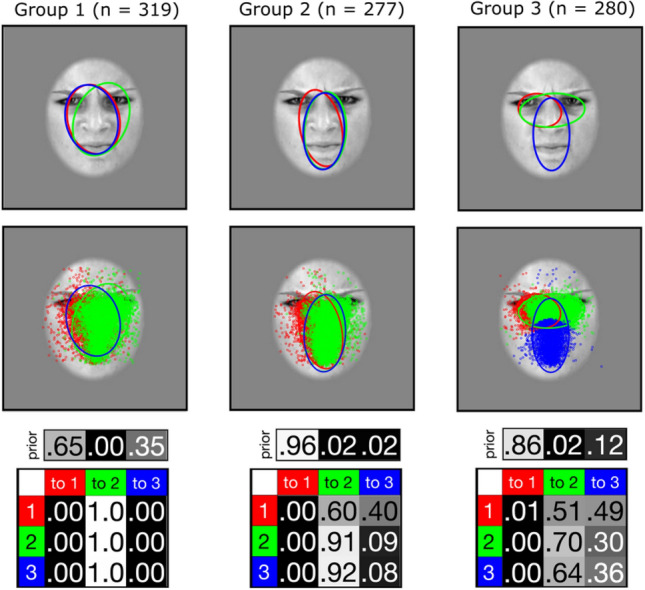
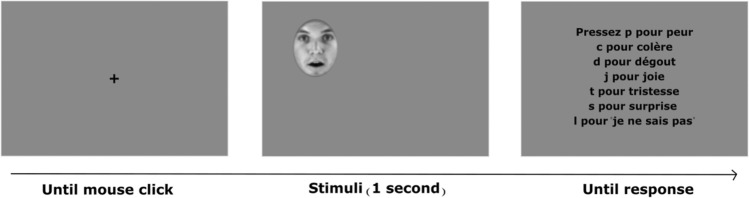
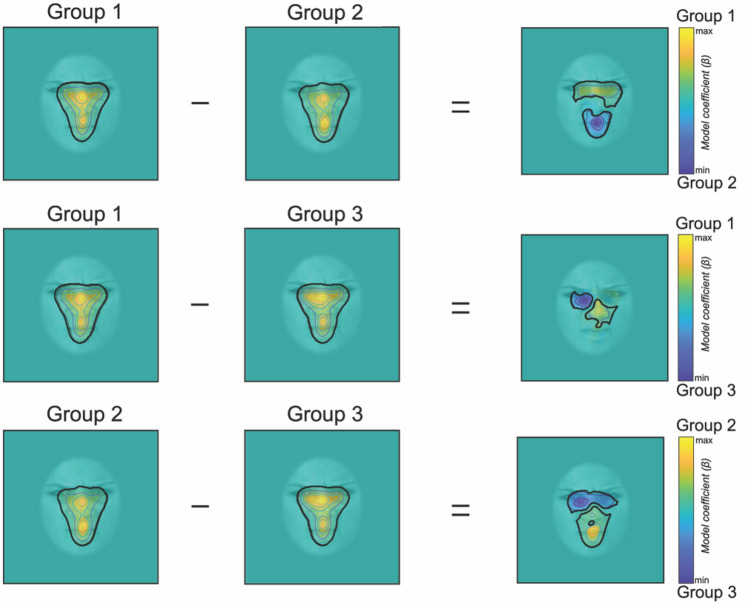
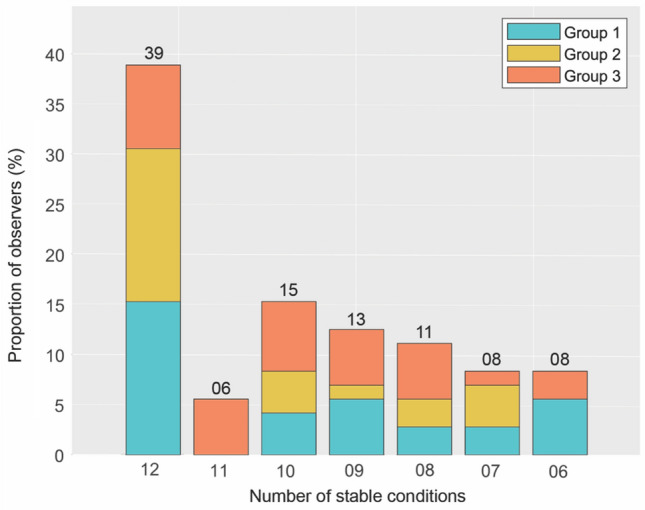
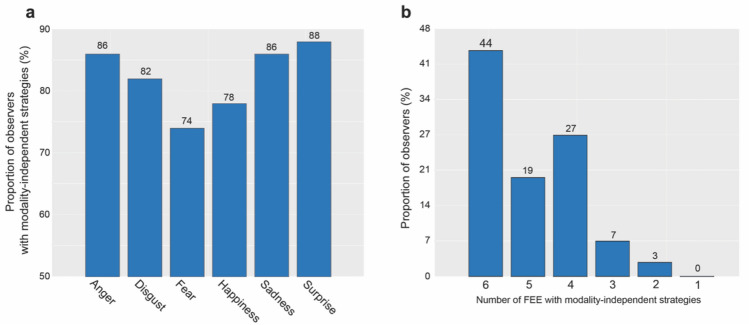
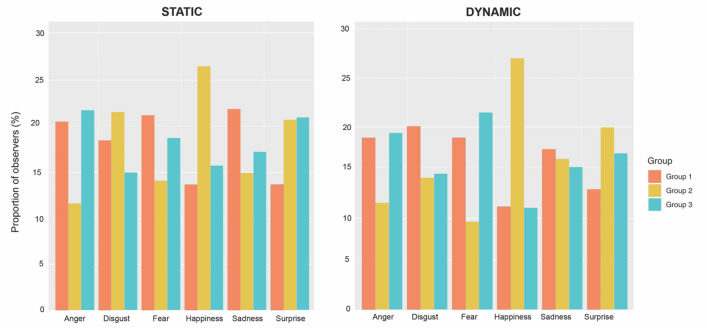
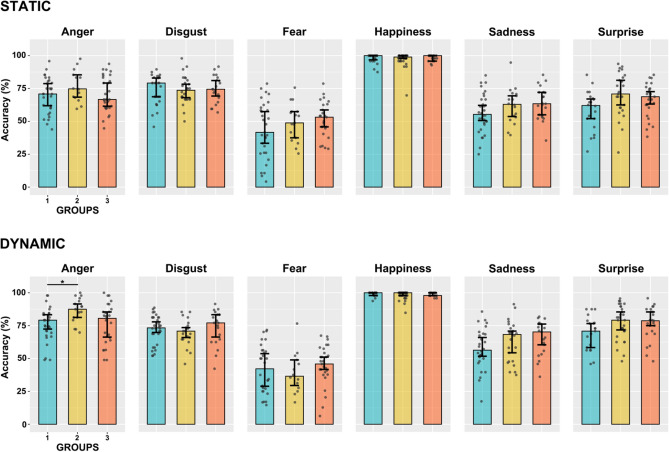
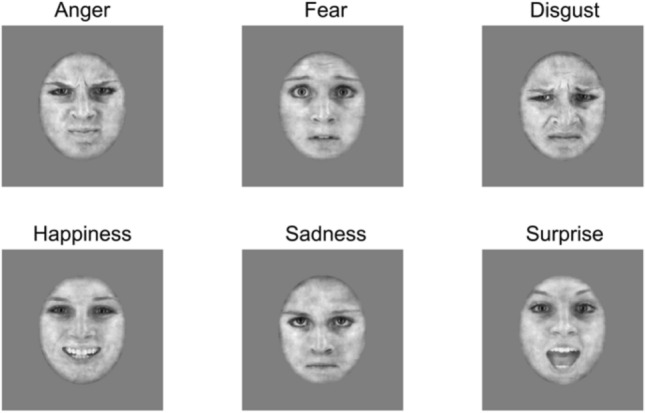
Facial expression recognition (FER) is crucial for understanding the emotional state of others during human social interactions. It has been assumed that humans share universal visual sampling strategies to achieve this task. However, recent studies in face identification have revealed striking idiosyncratic fixation patterns, questioning the universality of face processing. More importantly, very little is known about whether such idiosyncrasies extend to the biological relevant recognition of static and dynamic facial expressions of emotion (FEEs). To clarify this issue, we tracked observers' eye movements categorizing static and ecologically valid dynamic faces displaying the six basic FEEs, all normalized for time presentation (1 s), contrast and global luminance across exposure time. We then used robust data-driven analyses combining statistical fixation maps with hidden Markov Models to explore eye-movements across FEEs and stimulus modalities. Our data revealed three spatially and temporally distinct equally occurring face scanning strategies during FER. Crucially, such visual sampling strategies were mostly comparably effective in FER and highly consistent across FEEs and modalities. Our findings show that spatiotemporal idiosyncratic gaze strategies also occur for the biologically relevant recognition of FEEs, further questioning the universality of FER and, more generally, face processing.
面部表情识别(FER)对于理解人类社交互动中他人的情绪状态至关重要。人们一直认为,人类共享通用的视觉采样策略来完成这项任务。然而,最近对面部识别的研究揭示了引人注目的独特注视模式,这对面部处理的普遍性提出了质疑。更重要的是,人们对于这种独特性是否会延伸到对静态和动态情感面部表情(FEE)的生物相关识别知之甚少。为了澄清这个问题,我们跟踪了观察者在分类静态和具有生态效度的动态面部表情时的眼球运动,这些面部表情显示了六种基本的 FEE,所有表情都经过时间呈现(1 秒)、对比度和整体亮度的归一化处理。然后,我们使用稳健的数据驱动分析方法,将统计注视图与隐马尔可夫模型相结合,探索了 FEE 和刺激模式下的眼球运动。我们的数据揭示了在 FER 过程中三种空间和时间上不同但同样发生的面部扫描策略。至关重要的是,这种视觉采样策略在 FER 中同样有效,并且在 FEE 和模态之间高度一致。我们的发现表明,生物相关的 FEE 识别也会出现空间和时间上的独特注视策略,这进一步质疑了 FER 的普遍性,更广泛地说,也质疑了面部处理的普遍性。