School of Public Health, Lanzhou University, Lanzhou, 730000, PR China.
Gansu Provincial Center for Disease Control and Prevention, Lanzhou, 730000, PR China.
BMC Public Health. 2024 Jul 15;24(1):1877. doi: 10.1186/s12889-024-19380-2.
Angina is a crucial risk signal for cardiovascular disease. However, few studies have evaluated the effects of ambient air pollution exposure on angina.
We aimed to explore the short-term effects of air pollution on hospitalization for angina and its lag effects.
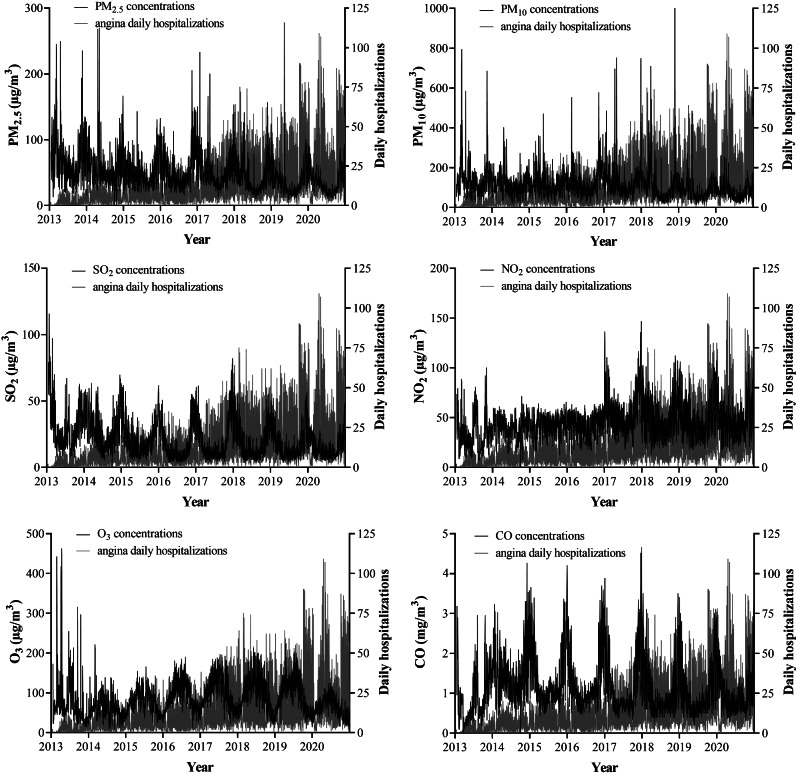
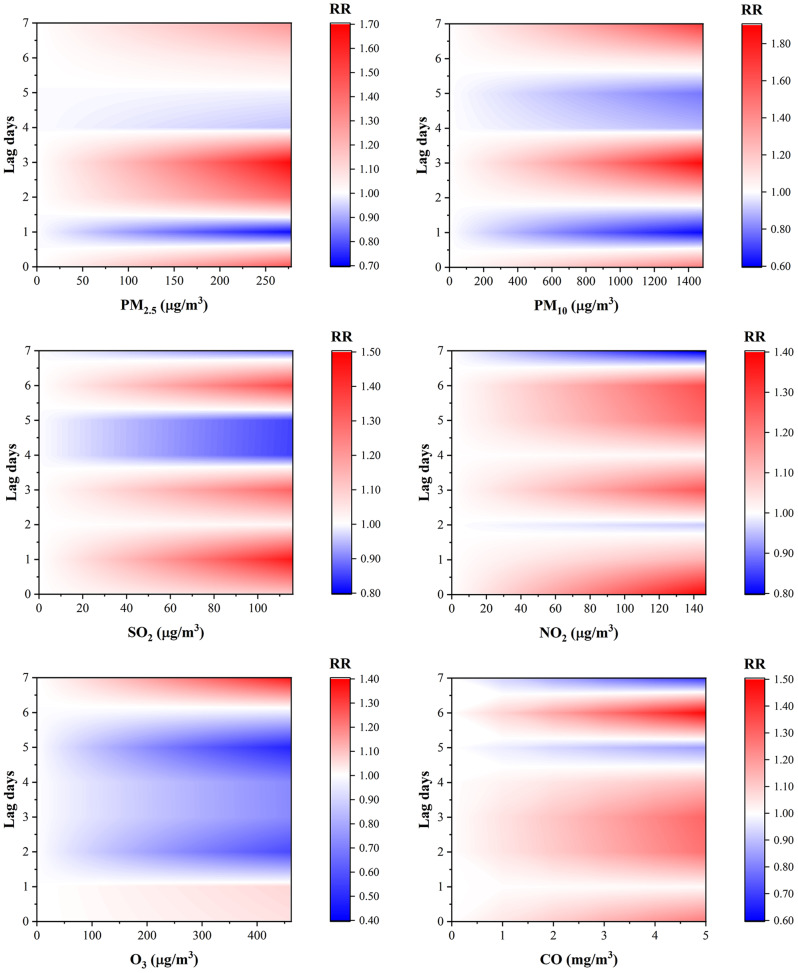
We collected data on air pollutant concentrations and angina hospitalizations from 2013 to 2020. Distributed lag nonlinear model (DLNM) was used to evaluate the short-term effects of air pollutants on angina hospitalization under different lag structures. Stratified analysis by sex, age and season was obtained.
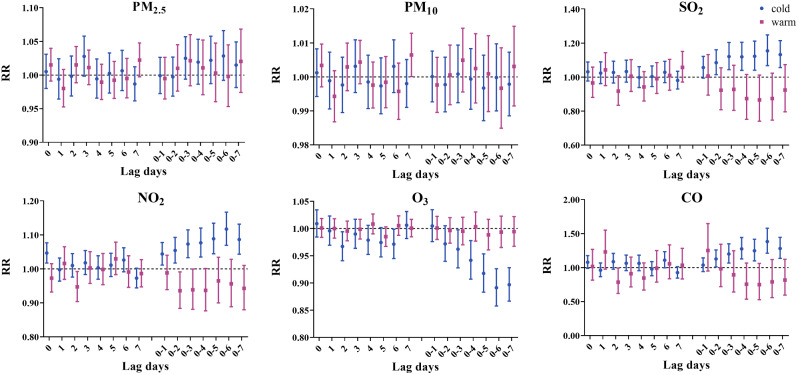
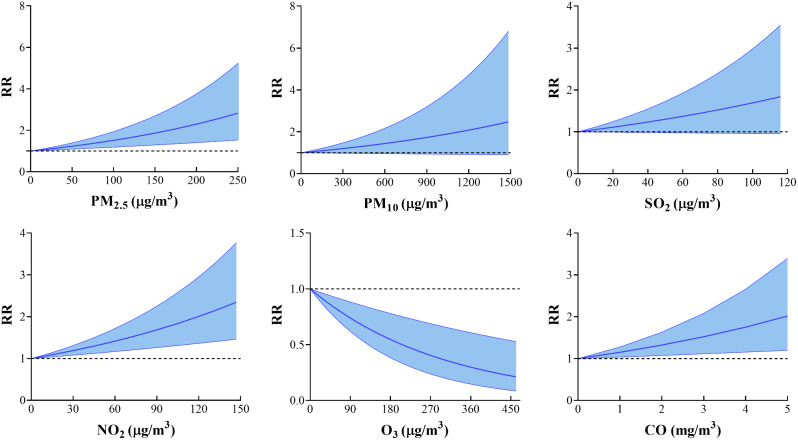
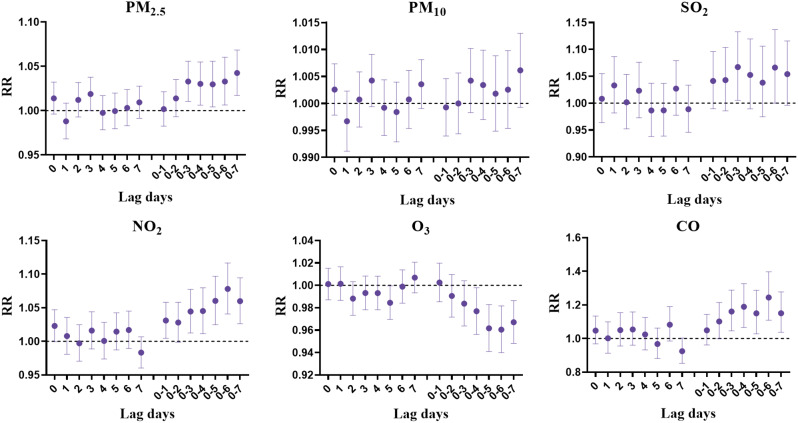
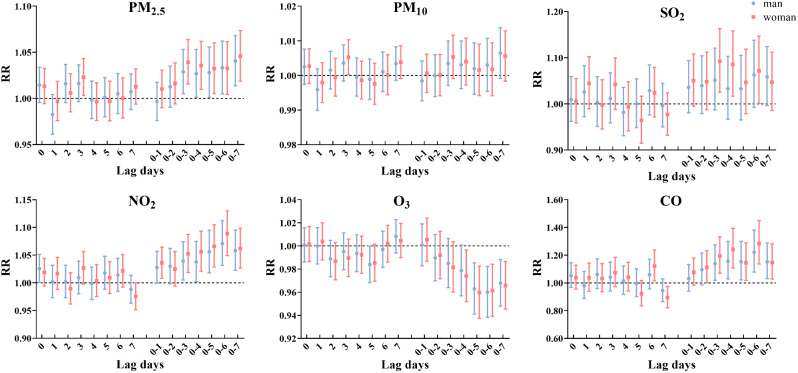
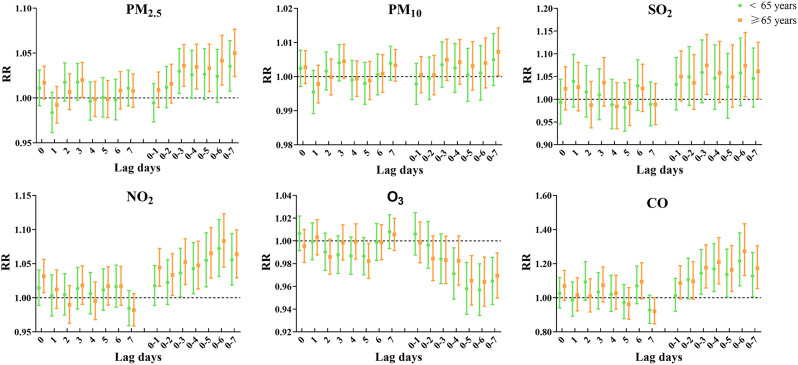
A total of 39,110 cases of angina hospitalization were included in the study. The results showed a significant positive correlation between PM, SO, NO, and CO and angina hospitalization. Their maximum harmful effects were observed at lag0-7 (RR = 1.042; 95% CI: 1.017, 1.068), lag0-3 (RR = 1.067; 95% CI: 1.005, 1.133), lag0-6 (RR = 1.078; 95% CI: 1.041, 1.117), and lag0-6 (RR = 1.244; 95% CI: 1.109, 1.397), respectively. PM did not have an overall risk effect on angina hospitalization, but it did have a risk effect on women and the elderly. O was significantly negatively correlated with angina hospitalization, with the most pronounced effect observed at lag0-6 (RR = 0.960; 95% CI: 0.940, 0.982). Stratified analysis results showed that women and the elderly were more susceptible to pollutants, and the adverse effects of pollutants were stronger in the cold season.
Short-term exposure to PM, SO, NO, and CO increases the risk of hospitalization for angina.
心绞痛是心血管疾病的重要危险信号。然而,很少有研究评估环境空气污染暴露对心绞痛的影响。
本研究旨在探讨空气污染对心绞痛住院的短期影响及其滞后效应。
我们收集了 2013 年至 2020 年期间的空气污染物浓度和心绞痛住院数据。采用分布滞后非线性模型(DLNM)评估不同滞后结构下空气污染物对心绞痛住院的短期影响。通过性别、年龄和季节进行分层分析。
共纳入 39110 例心绞痛住院病例。结果表明,PM、SO、NO 和 CO 与心绞痛住院呈显著正相关。它们对心绞痛的最大有害影响出现在滞后 0-7(RR=1.042;95%CI:1.017,1.068)、滞后 0-3(RR=1.067;95%CI:1.005,1.133)、滞后 0-6(RR=1.078;95%CI:1.041,1.117)和滞后 0-6(RR=1.244;95%CI:1.109,1.397)。PM 对心绞痛住院没有总体风险效应,但对女性和老年人有风险效应。O 与心绞痛住院呈显著负相关,滞后 0-6 时效应最明显(RR=0.960;95%CI:0.940,0.982)。分层分析结果表明,女性和老年人对污染物更敏感,污染物的不利影响在寒冷季节更强。
短期暴露于 PM、SO、NO 和 CO 会增加心绞痛住院的风险。