Sharp Thomas R, Garshelis David L, Larson Wesley
Wildlife SOS Salt Lake City Utah USA.
International Union for Conservation of Nature, Species Survival Commission Bear Specialist Group Gland Switzerland.
Ecol Evol. 2024 Jul 11;14(7):e11524. doi: 10.1002/ece3.11524. eCollection 2024 Jul.
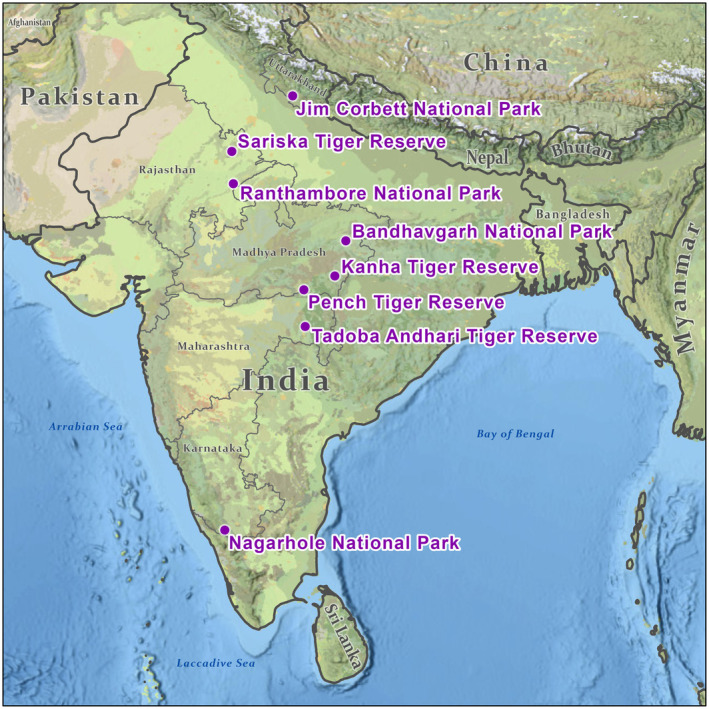
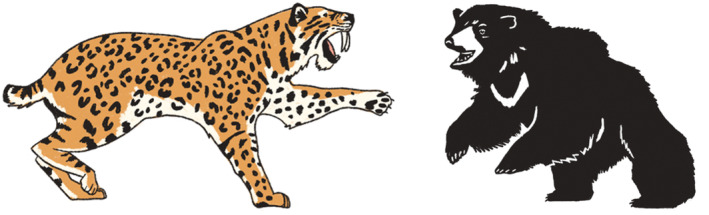
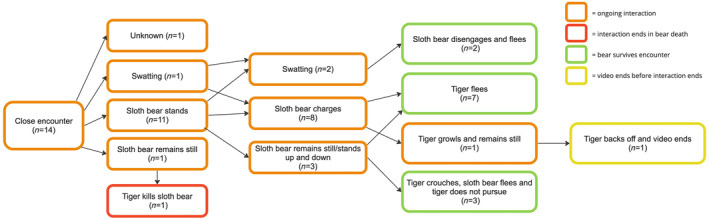
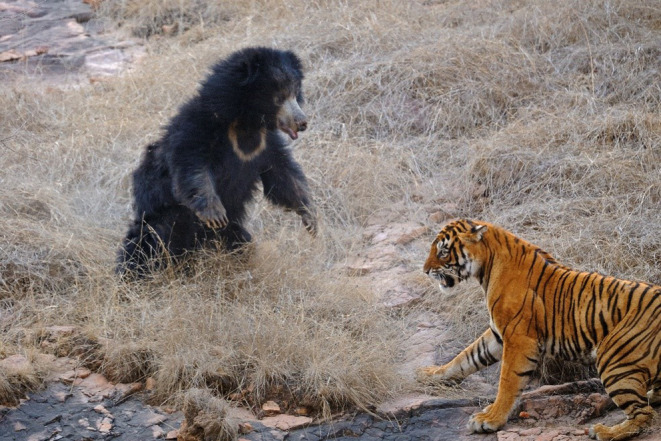
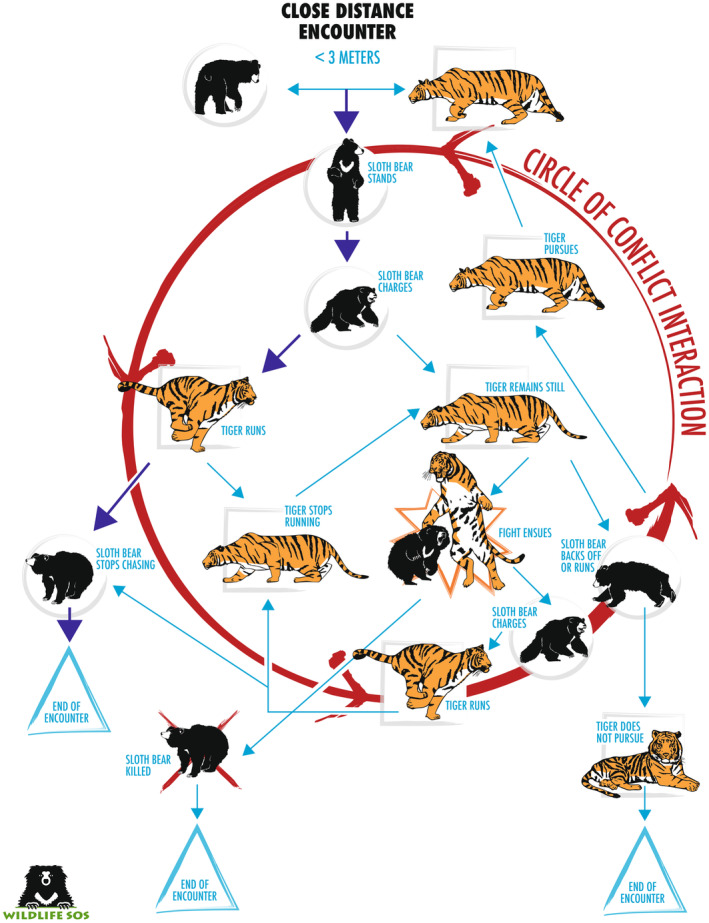
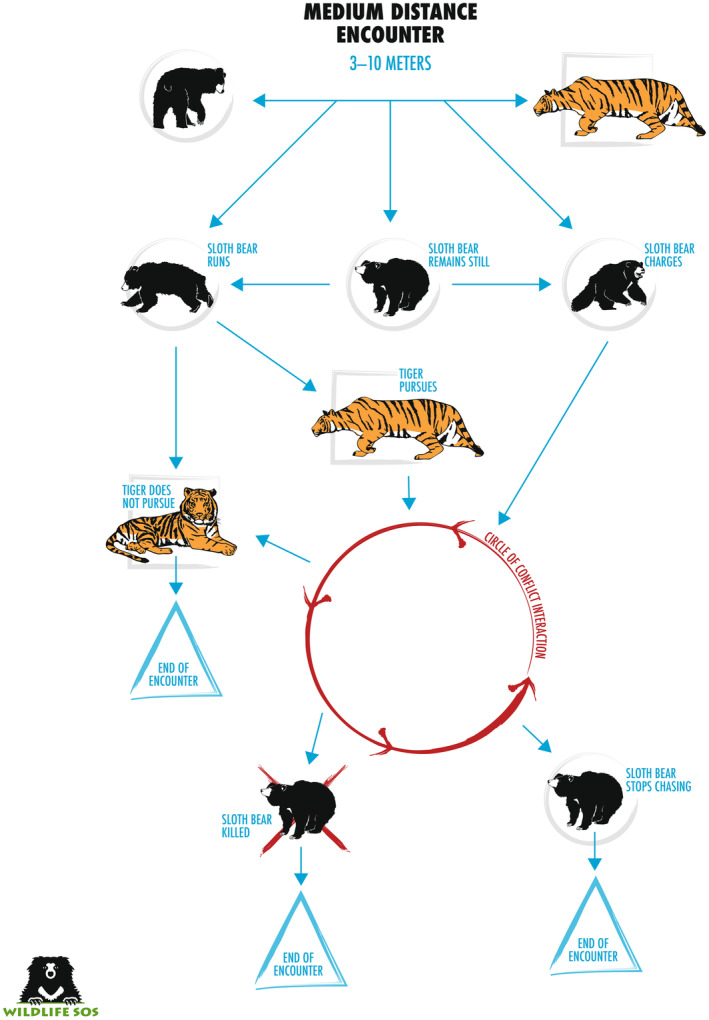
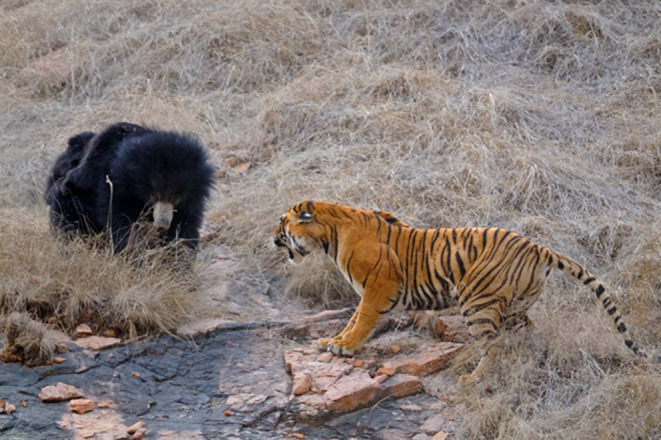
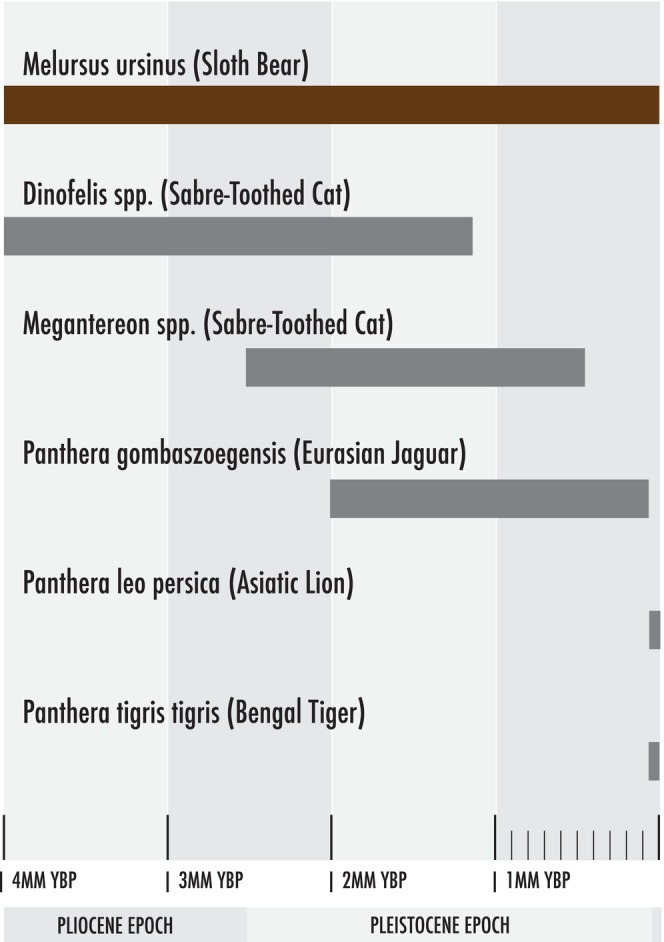
Sloth bears are non-carnivorous yet they attack more people than any other bear. They often stand up and charge explosively if a person mistakenly gets too close. Here, we argue that their aggression toward humans is an extension of their behavior toward tigers, which are their only natural predator. Interactions between sloth bears and tigers have not previously been studied because scientists have rarely observed such events. We collected and examined 43 videos or photo documentations of sloth bear-tiger interactions posted on the internet or social media from 2011 to 2023, mainly by tourists visiting tiger parks in India. We observed that sloth bears were most likely to stand up and charge if they first became aware of the tiger at close range (<3 m away). This aggressive-defensive strategy, intended to dissuade the tiger from attacking, appeared to be successful, in that 86% of interactions ended with no contact, whereas four (9%) culminated in the bear's death. We propose that a myrmecophagous diet led to this species' aggressive behavior: (1) their long, blunt front claws, well adapted for digging termites and ants, hamper their ability to climb trees for escape, and (2) they walk with their head down focused on scents underground, and make considerable noise digging and blowing soil, enabling tigers to approach quite closely without being detected. Sloth bears have coexisted with tigers or other (now extinct) large felid predators for their entire evolutionary history. Whereas their aggressive behavior has served them well for millions of years, more recently, people's fear of and retaliation against sloth bears represents a major threat to their survival. Understanding how sloth bears react to tigers provides guidance for reducing attacks on humans, thereby contributing to sloth bear conservation. Our investigation was made possible by passive citizen scientists, who unknowingly collected valuable data.
懒熊并非肉食性动物,但它们攻击人类的次数却比其他任何熊类都要多。如果有人不小心靠得太近,它们常常会站起来并发起迅猛的冲锋。在此,我们认为它们对人类的攻击性是其对老虎行为的一种延伸,老虎是它们唯一的自然捕食者。此前尚未对懒熊与老虎之间的互动进行过研究,因为科学家很少观察到此类事件。我们收集并研究了2011年至2023年期间发布在互联网或社交媒体上的43段懒熊与老虎互动的视频或照片记录,主要来自参观印度老虎公园的游客。我们观察到,如果懒熊最初在近距离(<3米)察觉到老虎,它们最有可能站起来并发起冲锋。这种旨在劝阻老虎攻击的攻击性防御策略似乎是成功的,因为86%的互动最终没有发生接触,而有四次(9%)以熊的死亡告终。我们认为,食蚁性饮食导致了该物种的攻击性行为:(1)它们又长又钝的前爪非常适合挖掘白蚁和蚂蚁,但不利于它们爬树逃生;(2)它们低着头行走,专注于地下的气味,挖掘和吹开土壤时会发出很大的声响,这使得老虎能够在不被察觉的情况下靠近。懒熊在其整个进化历史中一直与老虎或其他(现已灭绝)大型猫科食肉动物共存。尽管它们的攻击性行为在数百万年里一直对它们很有利,但最近,人们对懒熊的恐惧和报复对它们的生存构成了重大威胁。了解懒熊如何应对老虎为减少对人类的攻击提供了指导,从而有助于懒熊的保护。我们的调查得益于被动的公民科学家,他们在不知不觉中收集了有价值的数据。