Perusko Marija, Grundström Jeanette, Eldh Maria, Reinhardt Annika, Fuhrmann Verena, Düzakin Meltem, Hamsten Carl, Starkhammar Maria, Apostolovic Danijela, van Hage Marianne
Division of Immunology and Allergy, Department of Medicine Solna, Karolinska Institutet and Karolinska University Hospital, Stockholm, Sweden.
Center for Molecular Medicine, Karolinska Institutet, Stockholm, Sweden.
Allergy. 2025 Jan;80(1):181-192. doi: 10.1111/all.16235. Epub 2024 Jul 15.
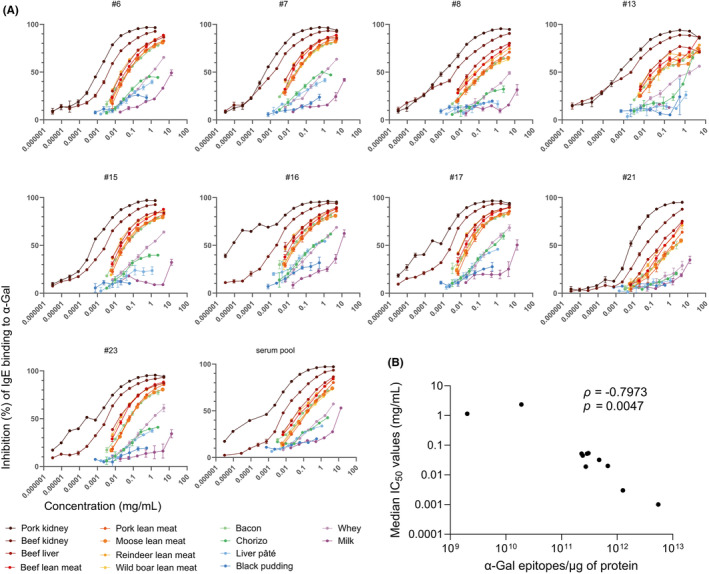
The α-Gal syndrome (AGS) is an emerging allergy to mammalian food caused by IgE-mediated reactions to the carbohydrate galactose-α-1,3-galactose (α-Gal). Mammalian food sources contain α-Gal, but the amount differs. The objective of this study was to investigate the allergenic potency of various foods of mammalian origin among AGS patients.
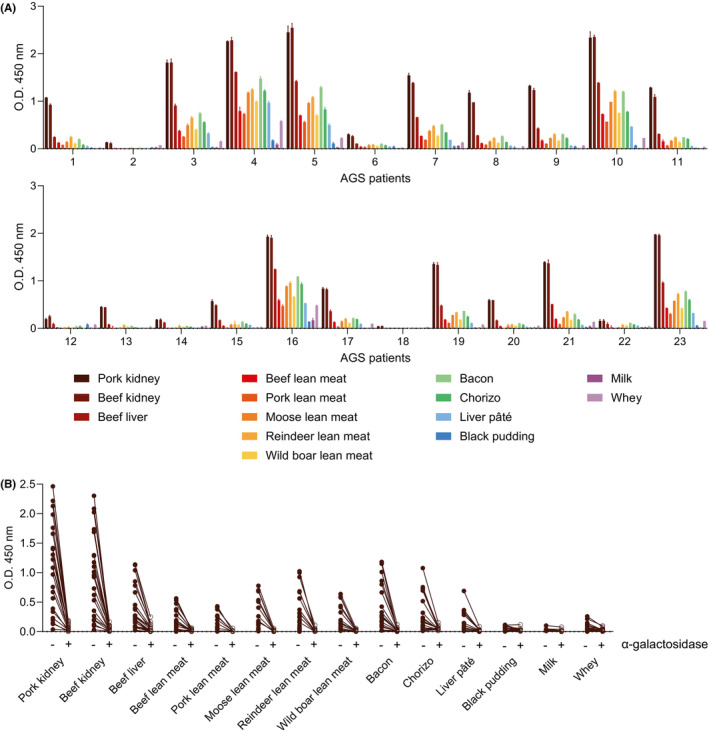
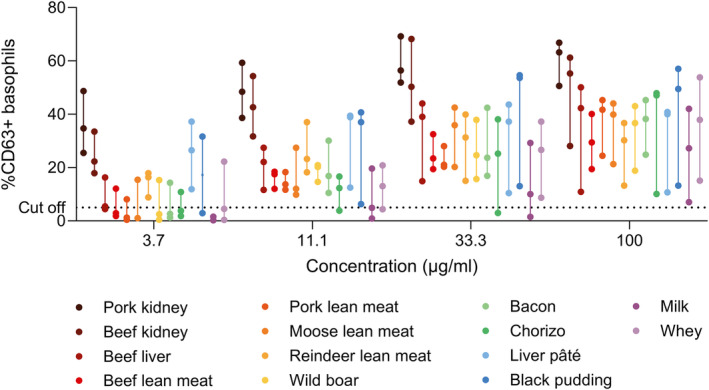
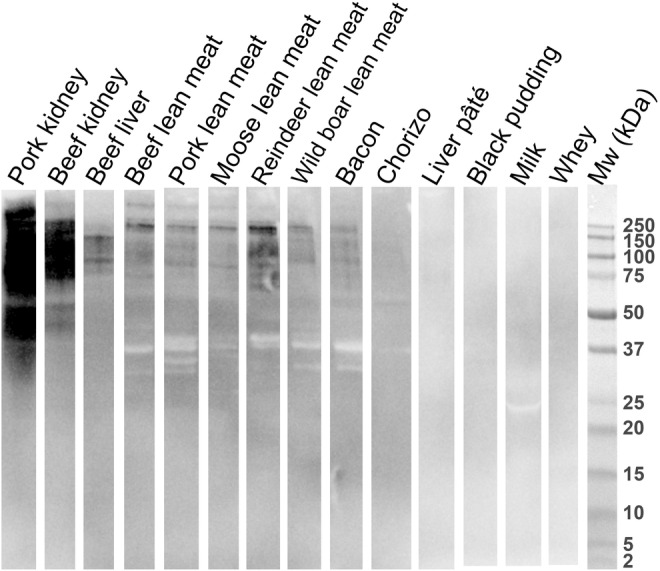
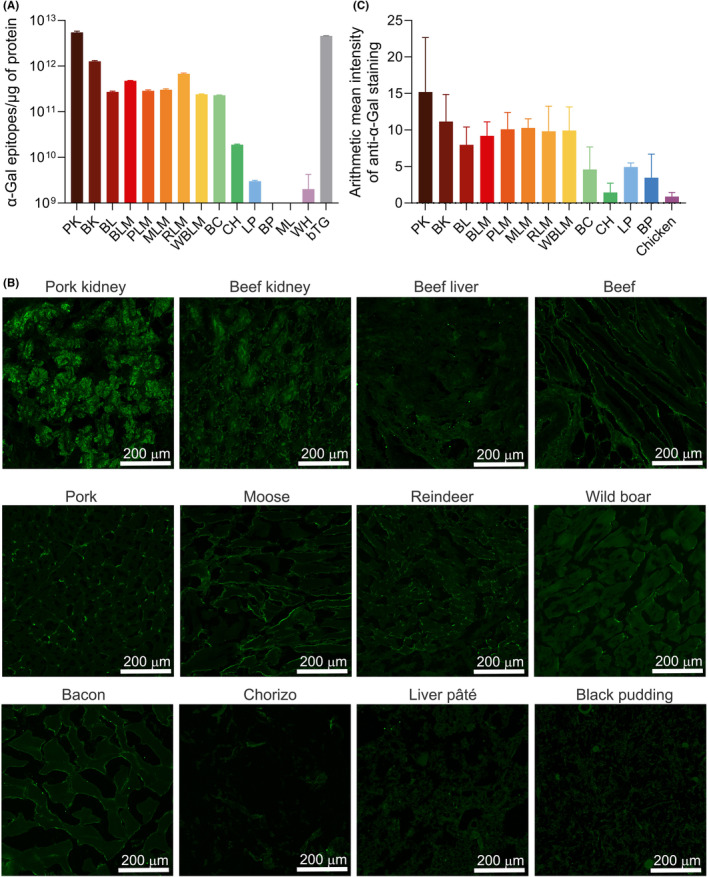
Twenty-six AGS patients were included. Food extracts from innards, lean meats, processed meat products, milk, and whey were analyzed. Immunoblot, ELISA, immunofluorescence, and basophil activation test were used to determine the α-Gal content, characterize IgE binding, and assess foods' allergenicity.
The determined amount of α-Gal, IgE reactivity to food extracts, and food extract potencies to activate patients' basophils correlated well with each other. Pork and beef kidney showed the highest allergenicity. Beef liver and bacon showed allergenicity comparable to that of lean meats. Game meat seemed to have a higher allergenic potency than meats from farm-raised animals. The processed meat products liver pâté and black pudding, despite lower α-Gal content, demonstrated moderate allergenicity. Milk showed the lowest allergenicity. IgE reactivity to food extracts was highly similar for all patients and strongly dominated by the α-Gal epitope.
The allergenic potency of mammalian meat depends on the origin of the meat, the different cuts, and type of processing, with innards posing the greatest risk to AGS patients. Even processed mammalian meat constitutes a risk. Dairy products show the lowest risk. This study highlights the importance of analyzing even more foods to improve the management of AGS.
α-半乳糖综合征(AGS)是一种新出现的对哺乳动物类食物的过敏,由免疫球蛋白E(IgE)介导的对半乳糖-α-1,3-半乳糖(α-Gal)碳水化合物的反应引起。哺乳动物类食物来源含有α-Gal,但含量有所不同。本研究的目的是调查AGS患者中各种哺乳动物来源食物的致敏效力。
纳入26例AGS患者。对内脏、瘦肉、加工肉类产品、牛奶和乳清的食物提取物进行分析。采用免疫印迹法、酶联免疫吸附测定(ELISA)、免疫荧光法和嗜碱性粒细胞活化试验来测定α-Gal含量、表征IgE结合情况并评估食物的致敏性。
所测定的α-Gal含量、食物提取物的IgE反应性以及食物提取物激活患者嗜碱性粒细胞的效力之间相互关联良好。猪肾和牛肾显示出最高的致敏性。牛肝和培根的致敏性与瘦肉相当。野味肉似乎比农场养殖动物的肉具有更高的致敏效力。加工肉类产品肝酱和黑布丁,尽管α-Gal含量较低,但仍表现出中等致敏性。牛奶显示出最低的致敏性。所有患者对食物提取物的IgE反应性高度相似,且主要由α-Gal表位主导。
哺乳动物肉的致敏效力取决于肉的来源、不同切块以及加工类型,内脏对AGS患者构成的风险最大。即使是加工过的哺乳动物肉也有风险。乳制品显示出最低风险。本研究强调了分析更多食物以改善AGS管理的重要性。