Natural History Museum Vienna, Burgring 7, 1010, Vienna, Austria.
Institut Für Erdwissenschaften, NAWI Graz Geocenter, Universität Graz, Heinrichstraße 26, 8010, Graz, Austria.
Sci Rep. 2024 Jul 15;14(1):16288. doi: 10.1038/s41598-024-67370-6.
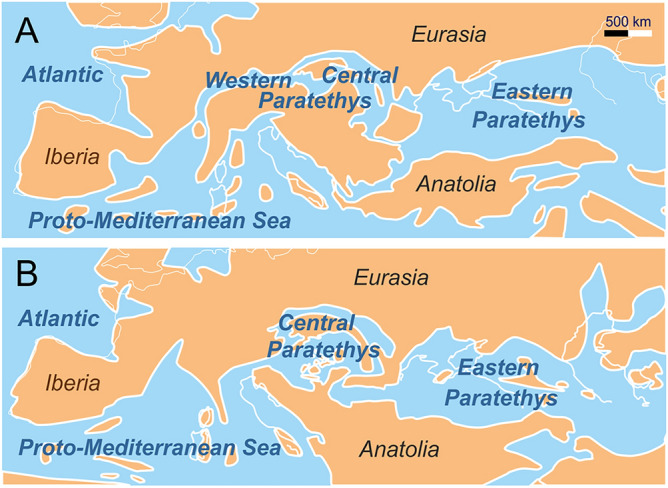
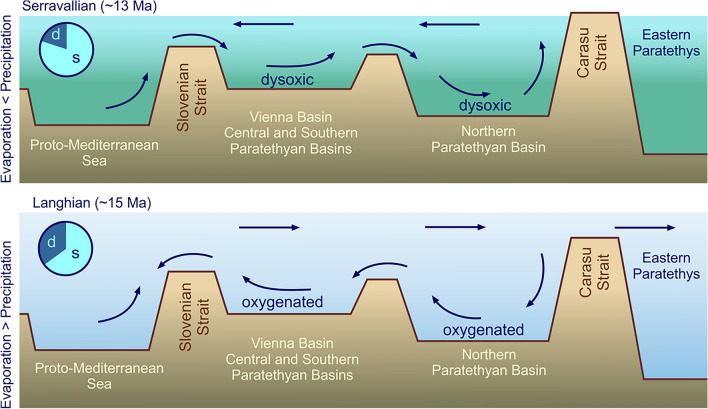
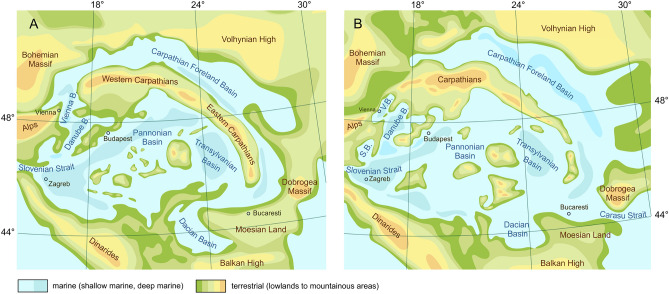
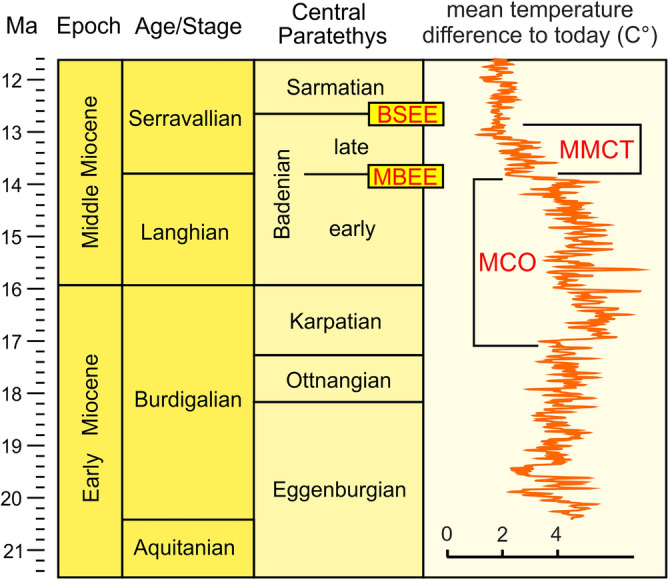
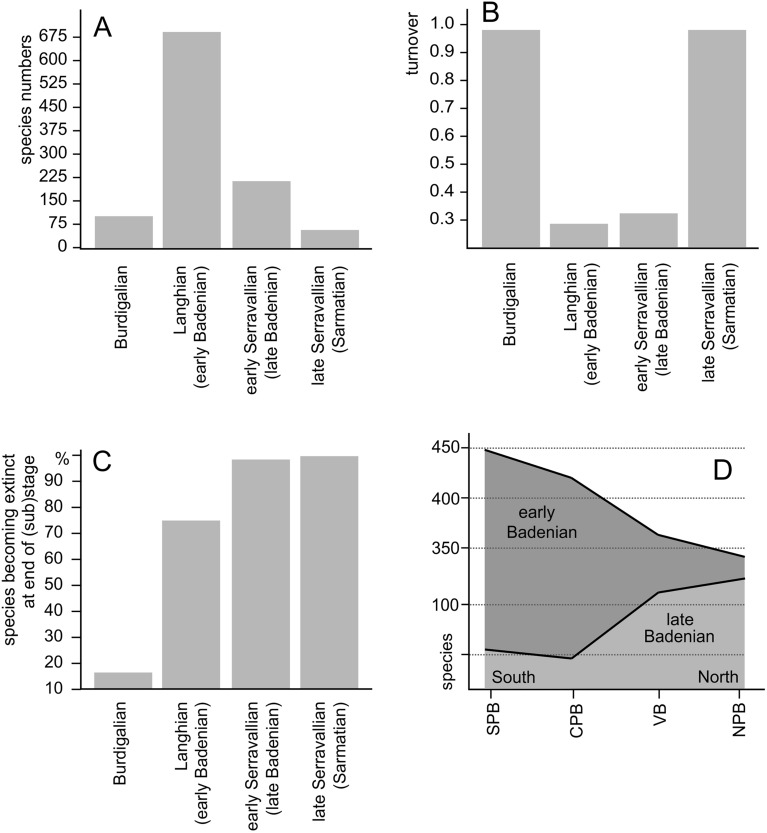
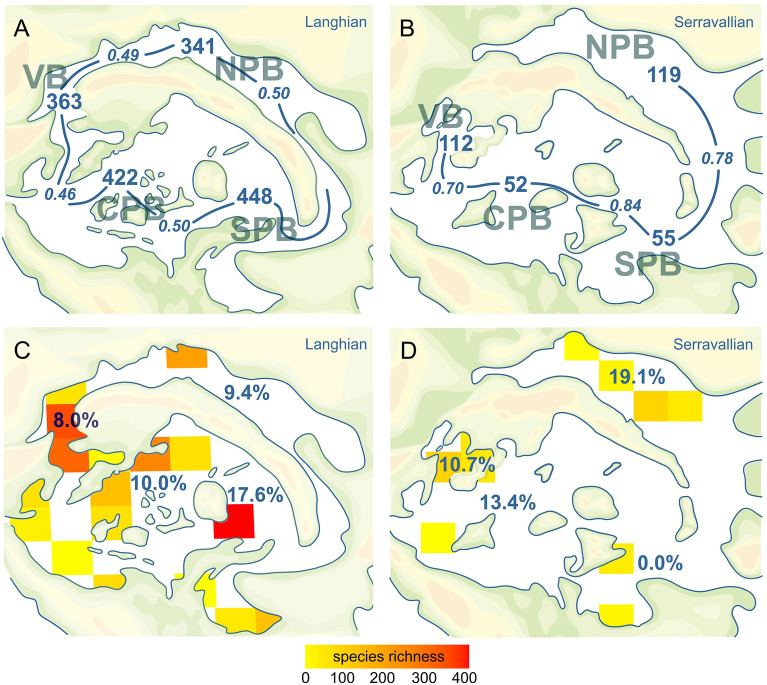
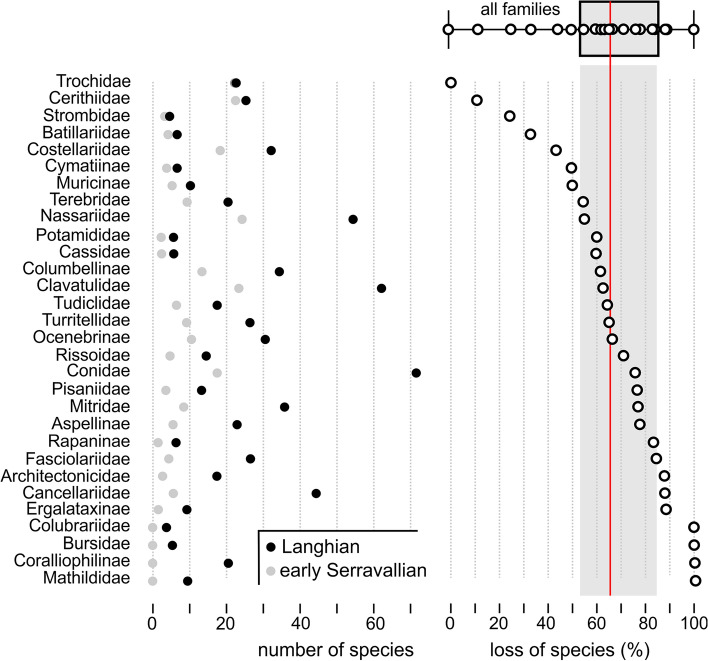
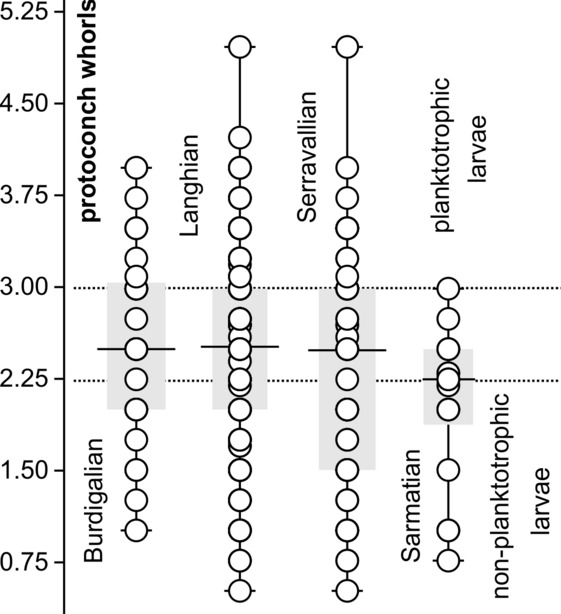
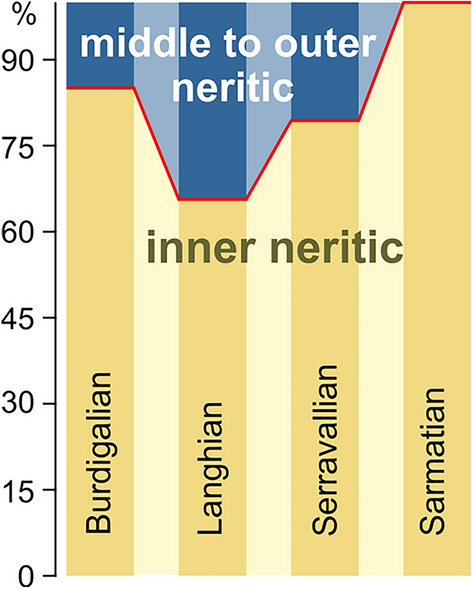
The Miocene Climate Optimum (MCO, ~ 17-14 Ma) was a time of extraordinary marine biodiversity in the Circum-Mediterranean Region. This boom is best recorded in the deposits of the vanished Central Paratethys Sea, which covered large parts of central to southeastern Europe. This sea harbored an extraordinary tropical to subtropical biotic diversity. Here, we present a georeferenced dataset of 859 gastropod species and discuss geodynamics and climate as the main drivers to explain the changes in diversity. The tectonic reorganization around the Early/Middle Miocene boundary resulted in the formation of an archipelago-like landscape and favorable conditions of the MCO allowed the establishment of coral reefs. Both factors increased habitat heterogeneity, which boosted species richness. The subsequent cooling during the Middle Miocene Climate Transition (~ 14-13 Ma) caused a drastic decline in biodiversity of about 67%. Among the most severely hit groups were corallivorous gastropods, reflecting the loss of coral reefs. Deep-water faunas experienced a loss by 57% of the species due to changing patterns in circulation. The low sea level led to a biogeographic fragmentation reflected in higher turnover rates. The largest turnover occurred with the onset of the Sarmatian when bottom water dysoxia eradicated the deep-water fauna whilst surface waters-dwelling planktotrophic species underwent a crisis.
中新世气候适宜期(MCO,约 17-14 百万年前)是环地中海地区海洋生物多样性异常丰富的时期。这种繁荣在已经消失的中欧特提斯海的沉积物中得到了最好的记录,该海域覆盖了欧洲中部到东南部的大片地区。这片海域拥有非凡的热带到亚热带生物多样性。在这里,我们提供了一个 859 种腹足动物物种的地理参考数据集,并讨论了地球动力学和气候作为解释多样性变化的主要驱动因素。早/中中新世边界的构造重组导致了群岛般的景观的形成,而 MCO 的有利条件允许珊瑚礁的建立。这两个因素都增加了栖息地的异质性,从而提高了物种丰富度。随后在中中新世气候转变期间(约 14-13 百万年前),生物多样性急剧下降了约 67%。受打击最严重的群体之一是珊瑚食性腹足动物,反映了珊瑚礁的丧失。由于环流模式的变化,深海动物群的物种减少了 57%。由于海平面下降导致生物地理破碎化,周转率更高。最大的周转率发生在萨尔马提亚期开始时,当底层水缺氧消灭了深海动物群时,而生活在水面上的浮游生物经历了一场危机。