Lenihan-Geels Georgia, Garcia Carrizo Francisco, Leer Marina, Gohlke Sabrina, Oster Moritz, Pöhle-Kronawitter Sophie, Ott Christiane, Chadt Alexandra, Reinisch Isabel N, Galhuber Markus, Li Chen, Jonas Wenke, Jähnert Markus, Klaus Susanne, Al-Hasani Hadi, Grune Tilman, Schürmann Annette, Madl Tobias, Prokesch Andreas, Schupp Michael, Schulz Tim J
Department of Adipocyte Development and Nutrition, German Institute of Human Nutrition Potsdam-Rehbrücke (DIfE), Nuthetal, Germany.
German Center for Diabetes Research (DZD), München-Neuherberg, Germany.
J Cachexia Sarcopenia Muscle. 2024 Oct;15(5):1772-1784. doi: 10.1002/jcsm.13529. Epub 2024 Jul 15.
The ability of skeletal muscle to respond adequately to changes in nutrient availability, known as metabolic flexibility, is essential for the maintenance of metabolic health and loss of flexibility contributes to the development of diabetes and obesity. The tumour suppressor protein, p53, has been linked to the control of energy metabolism. We assessed its role in the acute control of nutrient allocation in skeletal muscle in the context of limited nutrient availability.
A mouse model with inducible deletion of the p53-encoding gene, Trp53, in skeletal muscle was generated using the Cre-loxP-system. A detailed analysis of nutrient metabolism in mice with control and knockout genotypes was performed under ad libitum fed and fasting conditions and in exercised mice.
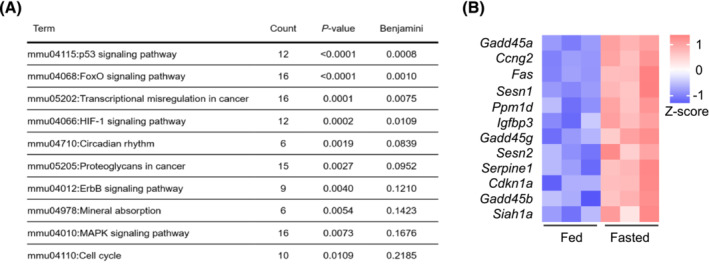
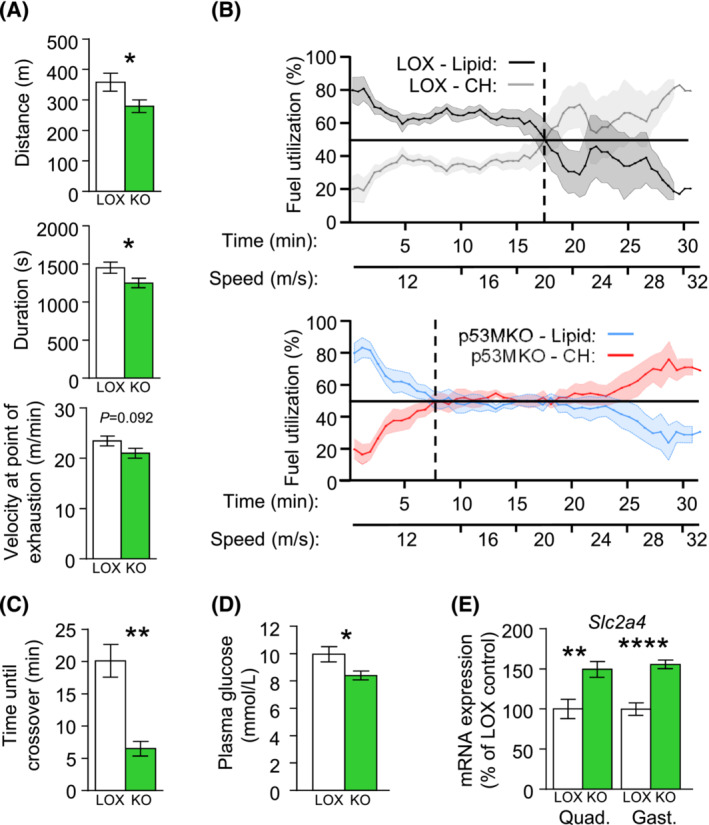
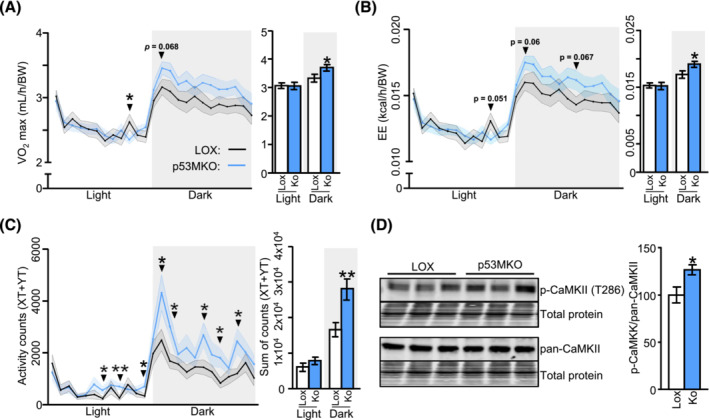
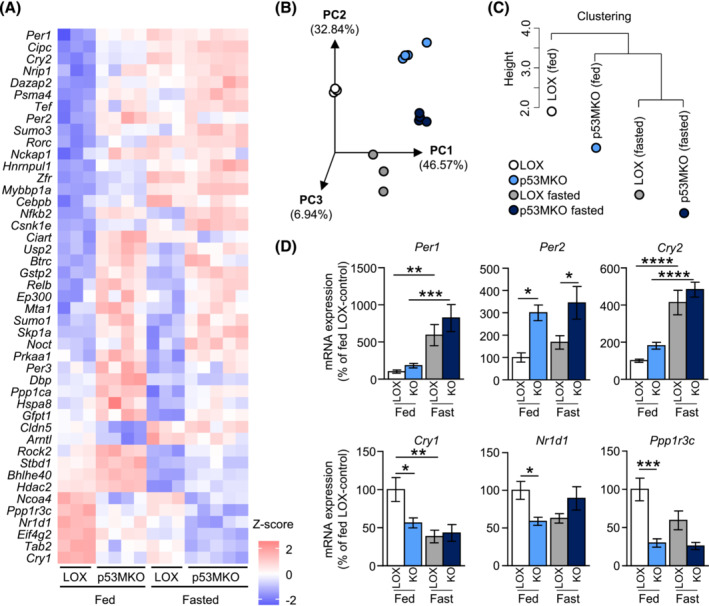
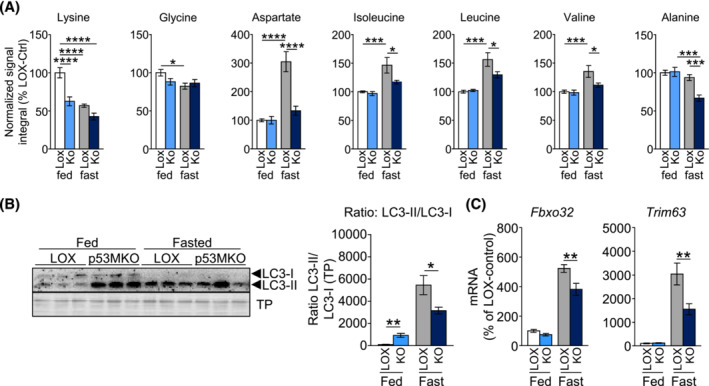
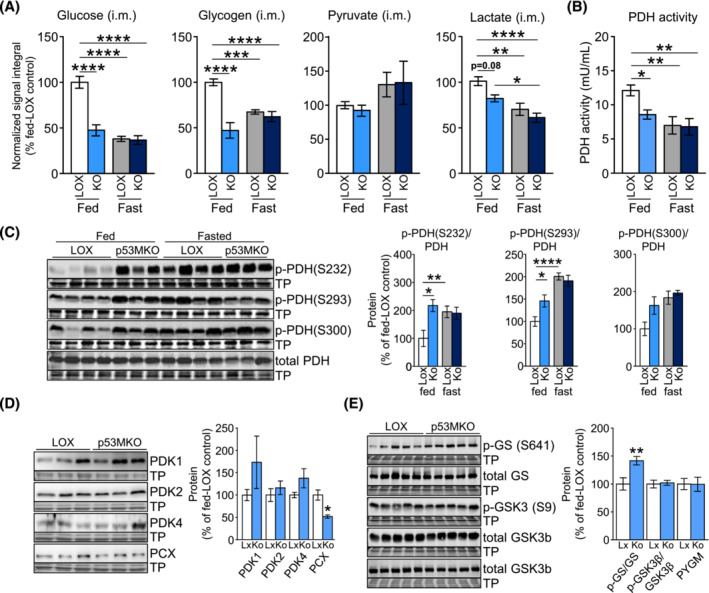
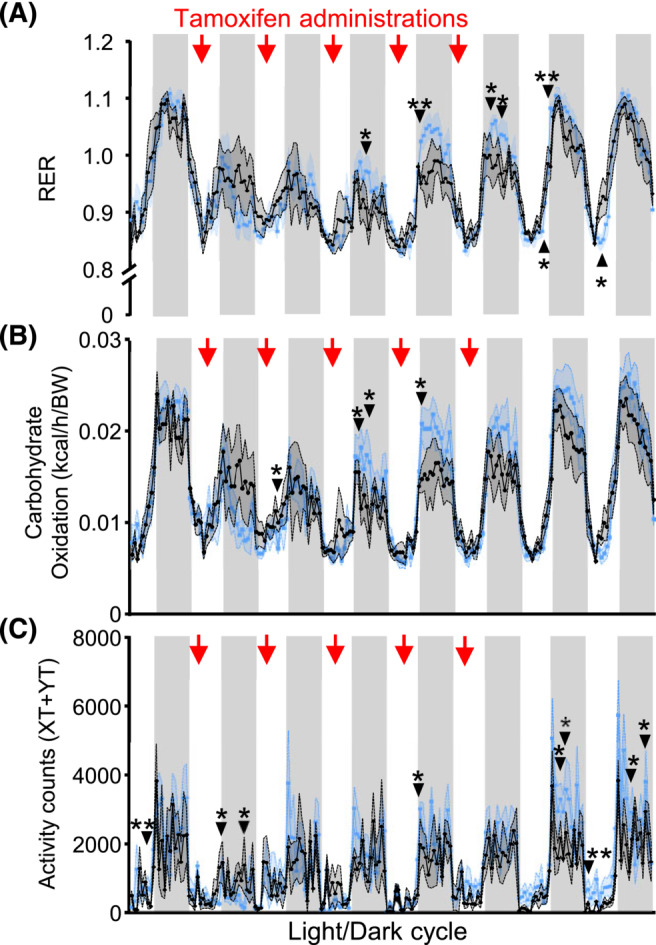
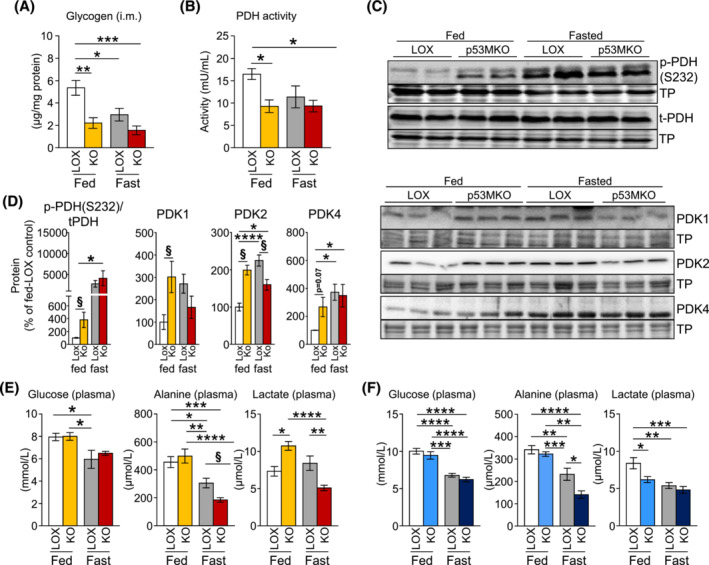
Acute deletion of p53 in myofibres of mice activated catabolic nutrient usage pathways even under ad libitum fed conditions, resulting in significantly increased overall energy expenditure (+10.6%; P = 0.0385) and a severe nutrient deficit in muscle characterized by depleted intramuscular glucose and glycogen levels (-62,0%; P < 0.0001 and -52.7%; P < 0.0001, respectively). This was accompanied by changes in marker gene expression patterns of circadian rhythmicity and hyperactivity (+57.4%; P = 0.0068). These metabolic changes occurred acutely, within 2-3 days after deletion of Trp53 was initiated, suggesting a rapid adaptive response to loss of p53, which resulted in a transient increase in lactate release to the circulation (+46.6%; P = 0.0115) from non-exercised muscle as a result of elevated carbohydrate mobilization. Conversely, an impairment of proteostasis and amino acid metabolism was observed in knockout mice during fasting. During endurance exercise testing, mice with acute, muscle-specific Trp53 inactivation displayed an early exhaustion phenotype with a premature shift in fuel usage and reductions in multiple performance parameters, including a significantly reduced running time and distance (-13.8%; P = 0.049 and -22.2%; P = 0.0384, respectively).
These findings suggest that efficient nutrient conservation is a key element of normal metabolic homeostasis that is sustained by p53. The homeostatic state in metabolic tissues is actively maintained to coordinate efficient energy conservation and metabolic flexibility towards nutrient stress. The acute deletion of Trp53 unlocks mechanisms that suppress the activity of nutrient catabolic pathways, causing substantial loss of intramuscular energy stores, which contributes to a fasting-like state in muscle tissue. Altogether, these findings uncover a novel function of p53 in the short-term regulation of nutrient metabolism in skeletal muscle and show that p53 serves to maintain metabolic homeostasis and efficient energy conservation.
骨骼肌对营养物质可利用性变化做出充分反应的能力,即代谢灵活性,对于维持代谢健康至关重要,而灵活性的丧失会导致糖尿病和肥胖的发展。肿瘤抑制蛋白p53与能量代谢的调控有关。我们在营养物质可利用性有限的情况下,评估了其在骨骼肌营养分配急性调控中的作用。
使用Cre-loxP系统构建了骨骼肌中p53编码基因Trp53可诱导缺失的小鼠模型。在自由进食、禁食条件下以及运动小鼠中,对具有对照和敲除基因型的小鼠的营养代谢进行了详细分析。
即使在自由进食条件下,小鼠肌纤维中p53的急性缺失也激活了分解代谢性营养物质利用途径,导致总体能量消耗显著增加(+10.6%;P = 0.0385),并且肌肉中出现严重的营养物质缺乏,其特征为肌肉内葡萄糖和糖原水平耗尽(分别为-62.0%;P < 0.0001和-52.7%;P < 0.0001)。这伴随着昼夜节律和多动的标记基因表达模式的变化(+57.4%;P = 0.0068)。这些代谢变化在启动Trp53缺失后的2 - 3天内急性发生,表明对p53缺失的快速适应性反应,这导致由于碳水化合物动员增加,未运动肌肉向循环中释放的乳酸短暂增加(+46.6%;P = 0.0115)。相反,在禁食期间,敲除小鼠中观察到蛋白质稳态和氨基酸代谢受损。在耐力运动测试中,急性、肌肉特异性Trp53失活的小鼠表现出早期疲劳表型,燃料使用过早转变,多个性能参数降低,包括跑步时间和距离显著减少(分别为-13.8%;P = 0.049和-22.2%;P = 0.0384)。
这些发现表明,有效的营养物质保存是由p53维持的正常代谢稳态的关键要素。代谢组织中的稳态状态被积极维持,以协调有效的能量保存和对营养应激的代谢灵活性。Trp53的急性缺失开启了抑制营养物质分解代谢途径活性的机制,导致肌肉内能量储备大量损失,这促成了肌肉组织中的类似禁食状态。总之,这些发现揭示了p53在骨骼肌营养代谢短期调控中的新功能,并表明p53有助于维持代谢稳态和有效的能量保存。