Faculty of Health and Life Sciences, University of Exeter, Exeter, United Kingdom.
Centre for Environment, Fisheries and Aquaculture Science (Cefas), Weymouth, United Kingdom.
PeerJ. 2024 Jul 12;12:e17605. doi: 10.7717/peerj.17605. eCollection 2024.
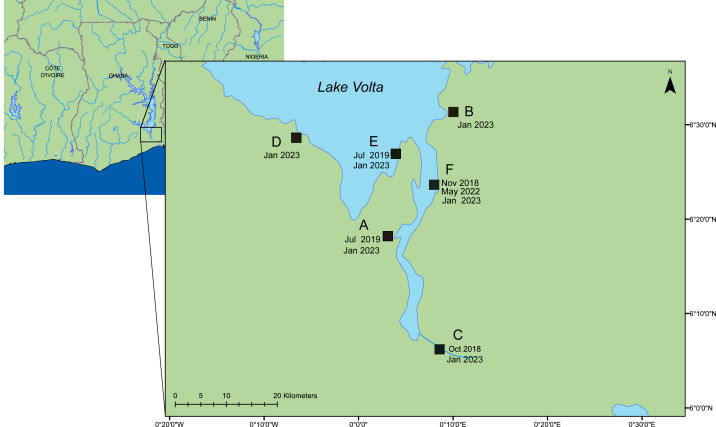
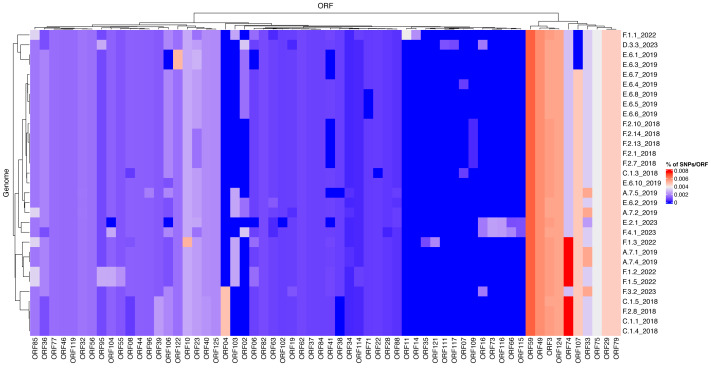
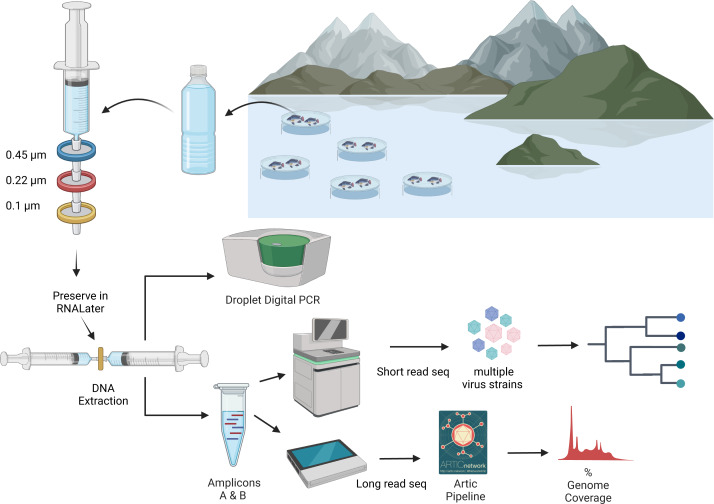
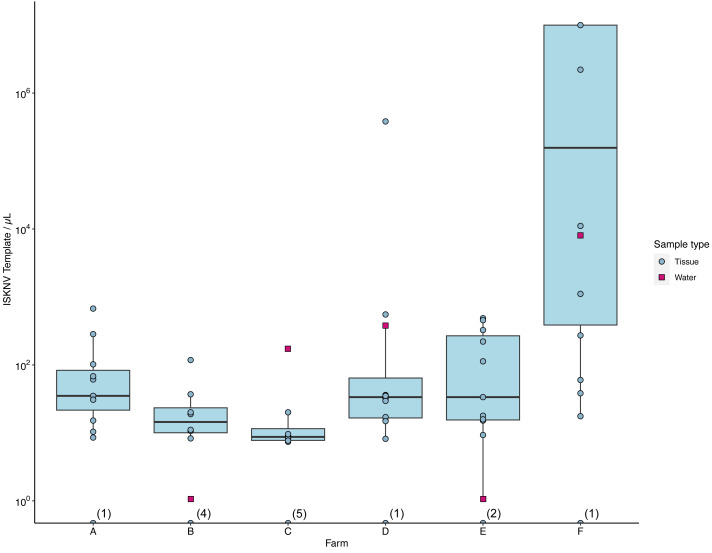
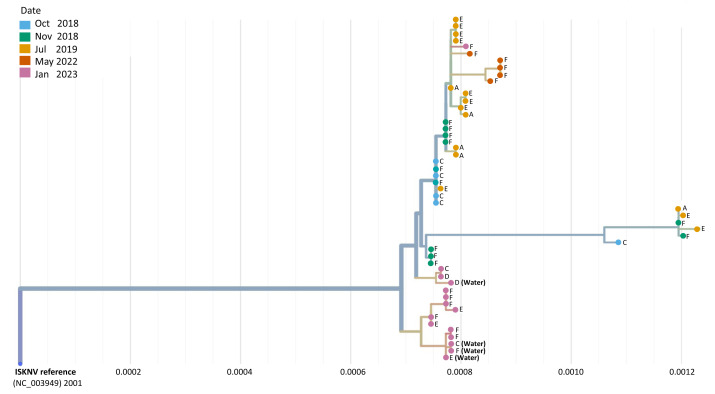
Viral outbreaks are a constant threat to aquaculture, limiting production for better global food security. A lack of diagnostic testing and monitoring in resource-limited areas hinders the capacity to respond rapidly to disease outbreaks and to prevent viral pathogens becoming endemic in fisheries productive waters. Recent developments in diagnostic testing for emerging viruses, however, offers a solution for rapid monitoring of viral outbreaks. Genomic epidemiology has furthermore proven highly effective in detecting viral mutations involved in pathogenesis and assisting in resolving chains of transmission. Here, we demonstrate the application of an in-field epidemiological tool kit to track viral outbreaks in aquaculture on farms with reduced access to diagnostic labs, and with non-destructive sampling. Inspired by the "lab in a suitcase" approach used for genomic surveillance of human viral pathogens and wastewater monitoring of COVID19, we evaluated the feasibility of real-time genome sequencing surveillance of the fish pathogen, Infectious spleen and kidney necrosis virus (ISKNV) in Lake Volta. Viral fractions from water samples collected from cages holding Nile tilapia () with suspected ongoing ISKNV infections were concentrated and used as a template for whole genome sequencing, using a previously developed tiled PCR method for ISKNV. Mutations in ISKNV in samples collected from the water surrounding the cages matched those collected from infected caged fish, illustrating that water samples can be used for detecting predominant ISKNV variants in an ongoing outbreak. This approach allows for the detection of ISKNV and tracking of the dynamics of variant frequencies, and may thus assist in guiding control measures for the rapid isolation and quarantine of infected farms and facilities.
病毒爆发是水产养殖的持续威胁,限制了生产,不利于全球粮食安全。在资源有限的地区缺乏诊断检测和监测,阻碍了对疾病爆发做出快速反应的能力,也无法防止病毒病原体在渔业生产水域成为地方病。然而,新兴病毒诊断检测的最新进展为快速监测病毒爆发提供了一种解决方案。基因组流行病学在检测与发病机制相关的病毒突变以及协助解决传播链方面也被证明非常有效。在这里,我们展示了一种现场流行病学工具包在减少获得诊断实验室和非破坏性采样的水产养殖中跟踪病毒爆发的应用。受用于人类病毒病原体基因组监测和 COVID19 废水监测的“手提箱实验室”方法的启发,我们评估了实时基因组测序监测 Lake Volta 中鱼类病原体传染性脾坏死病毒 (ISKNV)的可行性。从疑似持续感染 ISKNV 的笼养尼罗罗非鱼 ()中采集的水样中的病毒部分被浓缩,并用作全基因组测序的模板,使用先前开发的用于 ISKNV 的平铺 PCR 方法。从笼周围水样中采集的 ISKNV 突变与从感染笼养鱼中采集的突变相匹配,表明水样可用于检测正在进行的爆发中的主要 ISKNV 变体。这种方法允许检测 ISKNV 并跟踪变异频率的动态,因此有助于指导控制措施,以便快速隔离和检疫受感染的农场和设施。