Agbemanyole Koffi Adzinyo, Agbohessou Kokouvi Geovani, Pons Christelle, Lenca Philippe, Rémy-Néris Olivier, Goff-Pronost Myriam Le
IMT Atlantique, LaTIM, UMR INSERM 1101, F-29238, Brest, France.
IMT Atlantique, Lab-STICC, UMR CNRS 6285, F-29238, Brest, France.
Health Econ Rev. 2024 Jul 17;14(1):52. doi: 10.1186/s13561-024-00523-5.
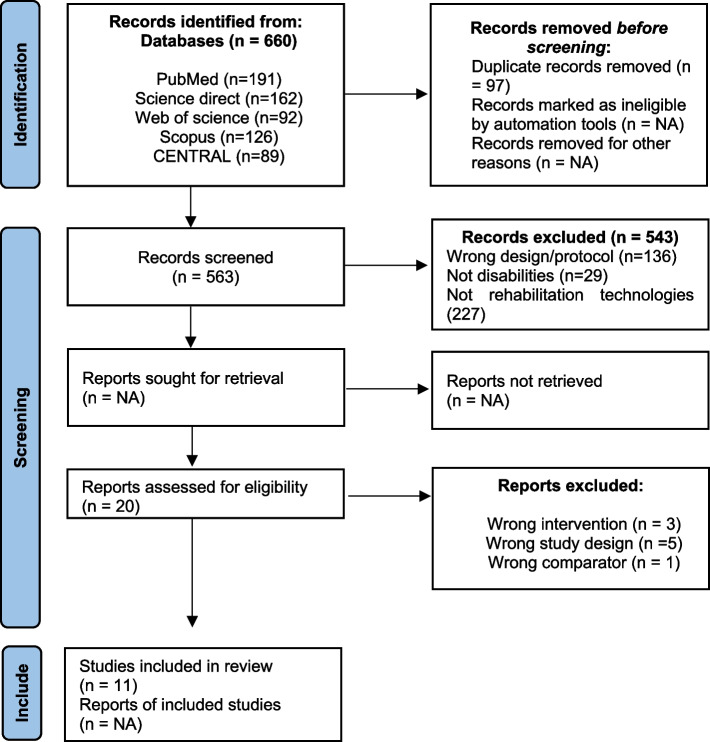
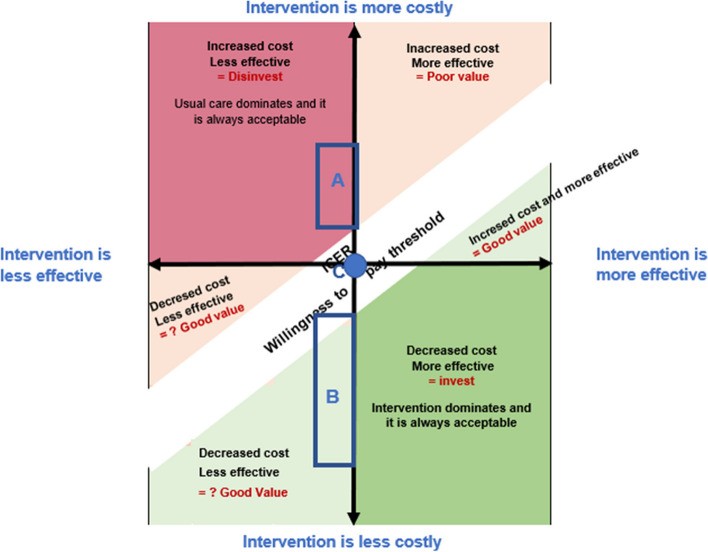
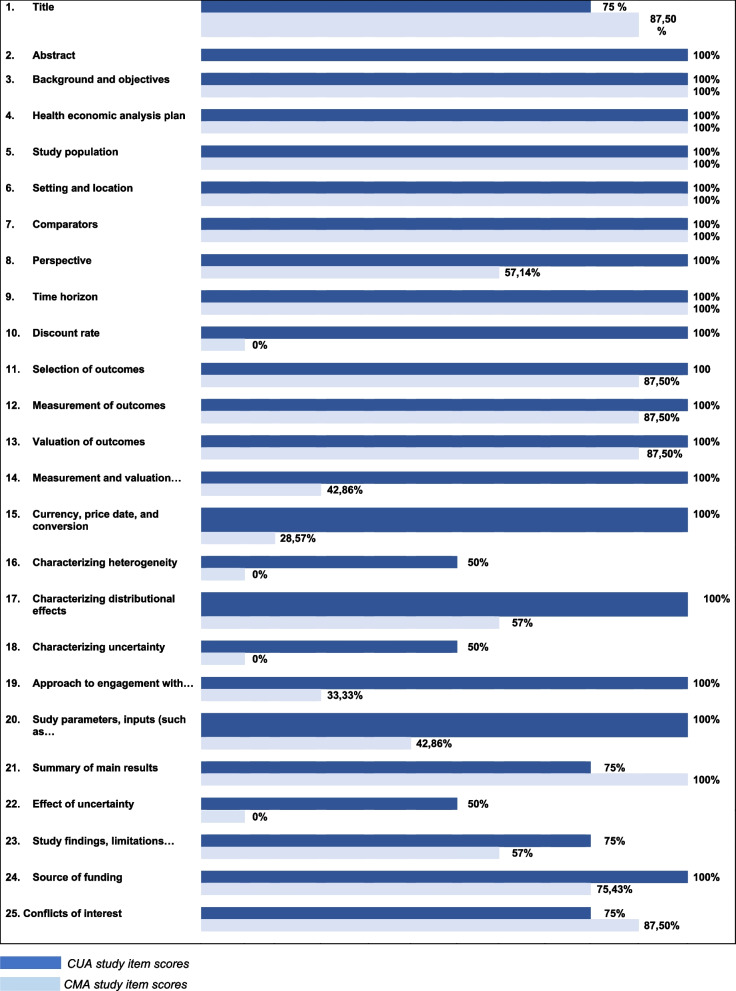
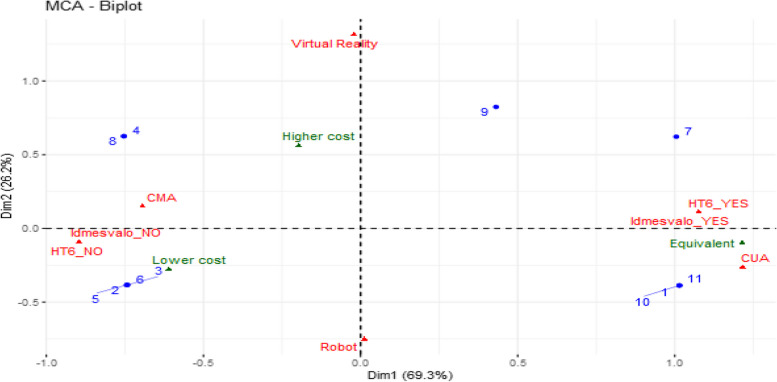
Rehabilitation technologies offer promising opportunities for interventions for patients with motor disabilities. However, their use in routine care remains limited due to their high cost and persistent doubts about their cost-effectiveness. Providing solid evidence of the economic efficiency of rehabilitation technologies would help dispel these doubts in order to better take advantage of these technologies. In this context, this systematic review aimed to examine the cost-effectiveness of rehabilitation interventions based on the use of digital technologies. In total, 660 articles published between 2011 and 2021 were identified, of which eleven studies met all the inclusion criteria. Of these eleven studies, seven proved to be cost-effective, while four were not. Four studies used cost-utility analyses (CUAs) and seven used cost-minimization analyses (CMAs). The majority (ten studies) focused on the rehabilitation of the upper and/or lower limbs after a stroke, while only one study examined the rehabilitation of the lower limbs after knee arthroplasty. Regarding the evaluated devices, seven studies analyzed the cost-effectiveness of robotic rehabilitation and four analyzed rehabilitation with virtual reality.The assessment of the quality of the included studies using the CHEERS (Consolidated Health Economic Evaluation Reporting Standards) suggested that the quality was related to the economic analysis method: all studies that adopted a cost-utility analysis obtained a high quality score (above 80%), while the quality scores of the cost-minimization analyses were average, with the highest score obtained by a CMA being 72%. The average quality score of all the articles was 75%, ranging between 52 and 100. Of the four studies with a considering score, two concluded that there was equivalence between the intervention and conventional care in terms of cost-effectiveness, one concluded that the intervention dominated, while the last one concluded that usual care dominated. This suggests that even considering the quality of the included studies, rehabilitation interventions based on digital technologies remain cost-effective, they improved health outcomes and quality of life for patients with motor disorders while also allowing cost savings.
康复技术为运动障碍患者的干预提供了充满希望的机会。然而,由于其高昂的成本以及对其成本效益的持续质疑,它们在常规护理中的应用仍然有限。提供康复技术经济效率的确凿证据将有助于消除这些疑虑,以便更好地利用这些技术。在此背景下,本系统评价旨在研究基于数字技术使用的康复干预措施的成本效益。总共识别出2011年至2021年间发表的660篇文章,其中11项研究符合所有纳入标准。在这11项研究中,7项被证明具有成本效益,而4项则不具有。4项研究使用了成本效用分析(CUA),7项使用了成本最小化分析(CMA)。大多数研究(10项)关注中风后上肢和/或下肢的康复,而只有1项研究考察了膝关节置换术后下肢的康复。关于评估的设备,7项研究分析了机器人康复的成本效益,4项分析了虚拟现实康复的成本效益。使用CHEERS(综合卫生经济评价报告标准)对纳入研究的质量进行评估表明,质量与经济分析方法有关:所有采用成本效用分析的研究都获得了高分(80%以上),而成本最小化分析的质量得分是中等的,CMA获得的最高分是72%。所有文章的平均质量得分为75%,范围在52至100之间。在4项具有考虑分数的研究中,2项得出干预措施与常规护理在成本效益方面相当的结论,1项得出干预措施占优的结论,而最后1项得出常规护理占优的结论。这表明,即使考虑到纳入研究的质量,基于数字技术的康复干预措施仍然具有成本效益,它们改善了运动障碍患者的健康结局和生活质量,同时还实现了成本节约。