Ben-Porat Nir, Ohayon Amital, Rosenberg Tali, Musa Abdulafiz, Petersen Erik, Mills Erez
Department of Animal Sciences, Robert H. Smith Faculty of Agriculture, Food, and Environment, The Hebrew University of Jerusalem, Rehovot, Israel.
Department of Health Sciences, College of Public Health, East Tennessee State University, Johnson City, TN, United States.
Front Bioeng Biotechnol. 2024 Jul 1;12:1404218. doi: 10.3389/fbioe.2024.1404218. eCollection 2024.
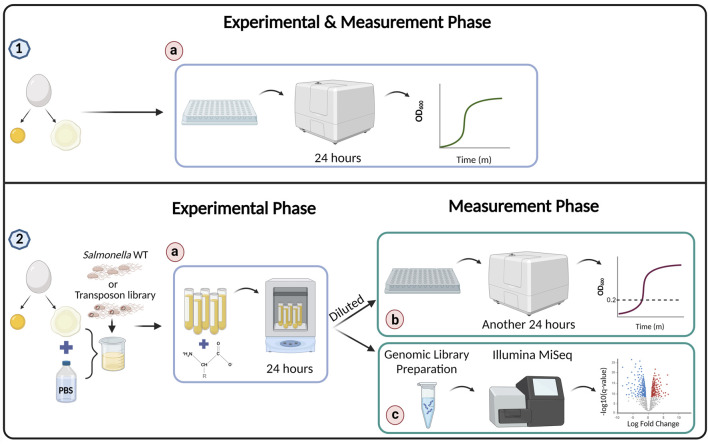
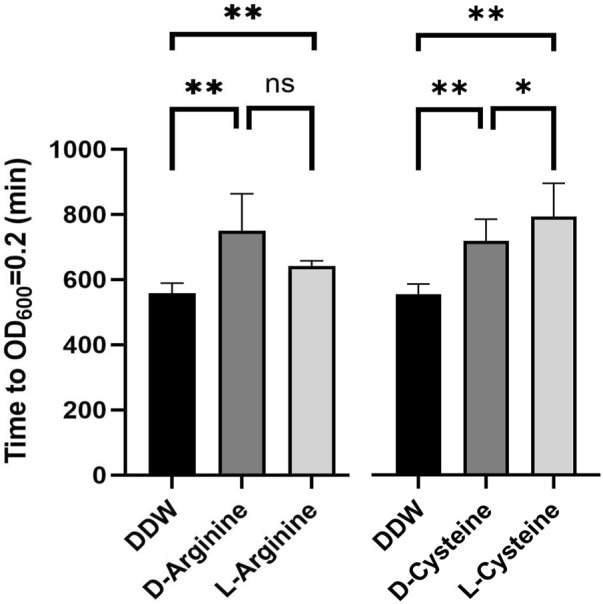
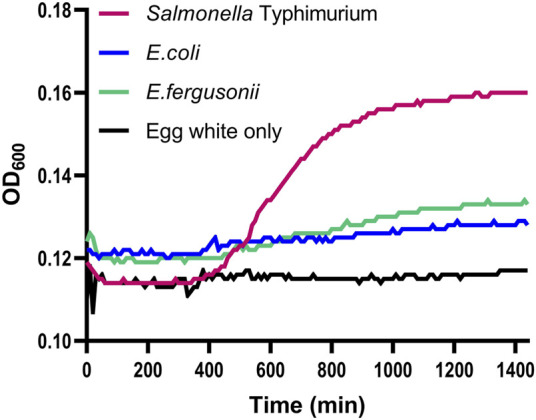
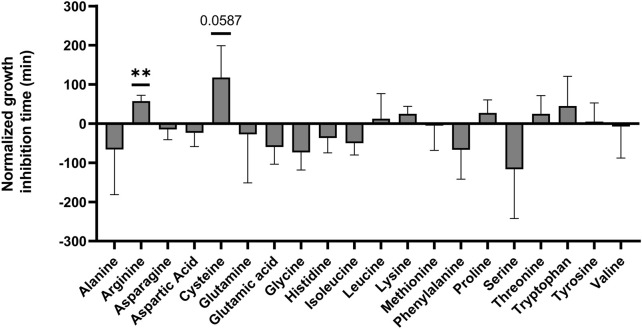
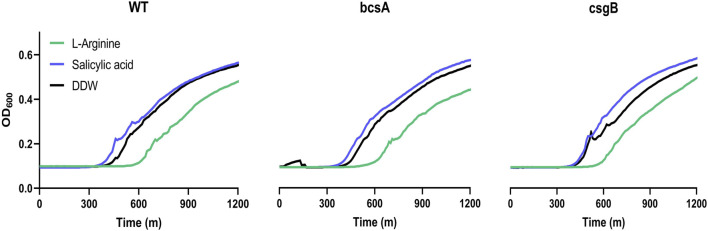
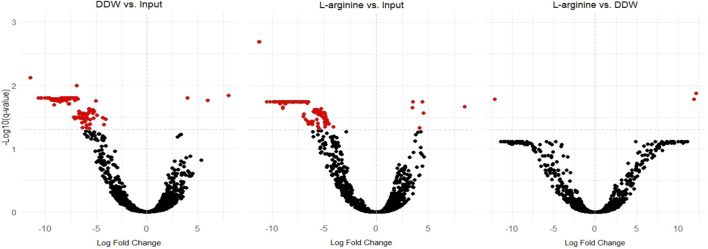
Because of growing levels of antibiotic resistance, new methods to combat bacteria are needed. We hypothesized that because bacteria evolved to survive in specific environments, the addition of compounds, including nutrient type compounds, to an environment, might result in a modification of that environment that will disrupt bacterial growth or in maladaptive bacterial behavior, i.e., gene expression. As a proof of concept, we focused on the egg white environment and the pathogen . Despite egg white's antibacterial nature, is able to survive and grow in egg white, and this ability of leads to infection of chicks and humans. Here, the 20 L-amino-acids were screened for their ability to affect the growth of in egg white. L-arginine and L-cysteine were found to reduce growth in egg white in physiologically relevant concentrations. To determine the mechanism behind L-arginine inhibition TnSeq was utilized. TnSeq identified many genes required for survival in egg white including genes required for iron import, biotin synthesis, stress responses, cell integrity, and DNA repair. However, a comparison of in egg white with and without L-arginine identified only a few differences in the frequency of transposon insertions, including the possible contribution of perturbations in the cell envelope to the inhibition mechanism. Finally, both D-arginine and D-cysteine were found to inhibit in egg white. This implied that the effect of arginine and cysteine in egg white is chemical rather than biological, likely on the egg white environment or on the bacterial outer membrane. To conclude, these results show that this approach of addition of compounds, including nutrient type compounds, to an environment can be used to limit bacterial growth. Importantly, these compounds have no inherent anti-bacterial properties, are used as nutrients by animals and bacteria, and only become anti-bacterial in a specific environmental context. Future research screening for the effects of compounds in relevant environments might uncover new ways to reduce pathogen levels in the poultry industry and beyond.
由于抗生素耐药性水平不断提高,需要新的抗菌方法。我们推测,由于细菌进化出在特定环境中生存的能力,向环境中添加包括营养类化合物在内的化合物,可能会导致该环境发生改变,从而破坏细菌生长或导致细菌出现适应不良行为,即基因表达改变。作为概念验证,我们聚焦于蛋清环境和该病原体。尽管蛋清具有抗菌特性,但该病原体仍能在蛋清中存活和生长,其这种能力会导致雏鸡和人类感染。在此,对20种L -氨基酸影响该病原体在蛋清中生长的能力进行了筛选。发现L -精氨酸和L -半胱氨酸在生理相关浓度下可降低其在蛋清中的生长。为确定L -精氨酸抑制作用背后的机制,采用了转座子全基因组测序(TnSeq)。TnSeq鉴定出许多在蛋清中生存所需的该病原体基因,包括铁摄取、生物素合成、应激反应、细胞完整性和DNA修复所需的基因。然而,对有和没有L -精氨酸的蛋清中的该病原体进行比较,仅发现转座子插入频率存在一些差异,包括细胞膜扰动对抑制机制的可能作用。最后,发现D -精氨酸和D -半胱氨酸均可抑制该病原体在蛋清中的生长。这意味着精氨酸和半胱氨酸在蛋清中的作用是化学性而非生物学性的,可能是对蛋清环境或细菌外膜产生影响。总之,这些结果表明,向环境中添加包括营养类化合物在内的化合物这种方法可用于限制细菌生长。重要的是,这些化合物没有固有的抗菌特性,被动物和细菌用作营养物质,且仅在特定环境背景下才具有抗菌作用。未来在相关环境中筛选化合物作用的研究可能会揭示降低家禽业及其他领域病原体水平的新方法。