Center of Excellence for Poultry Science, University of Arkansas System Division of Agriculture, Fayetteville, Arkansas, USA.
Cell and Molecular Biology Program, University of Arkansas, Fayetteville, Arkansas, USA.
Microbiol Spectr. 2021 Dec 22;9(3):e0015521. doi: 10.1128/Spectrum.00155-21. Epub 2021 Dec 8.
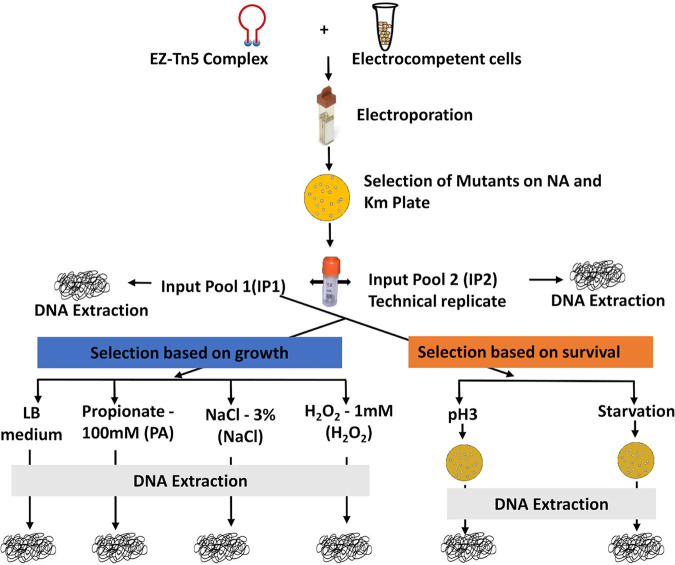
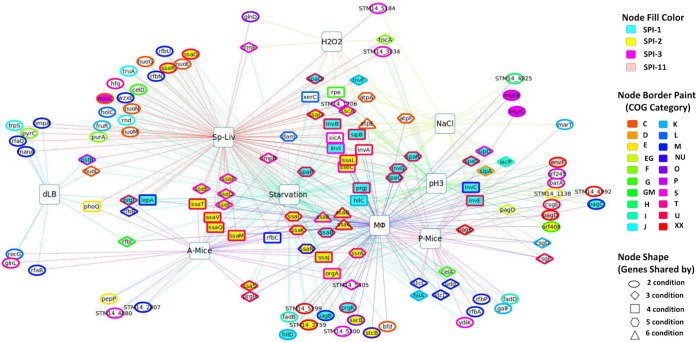
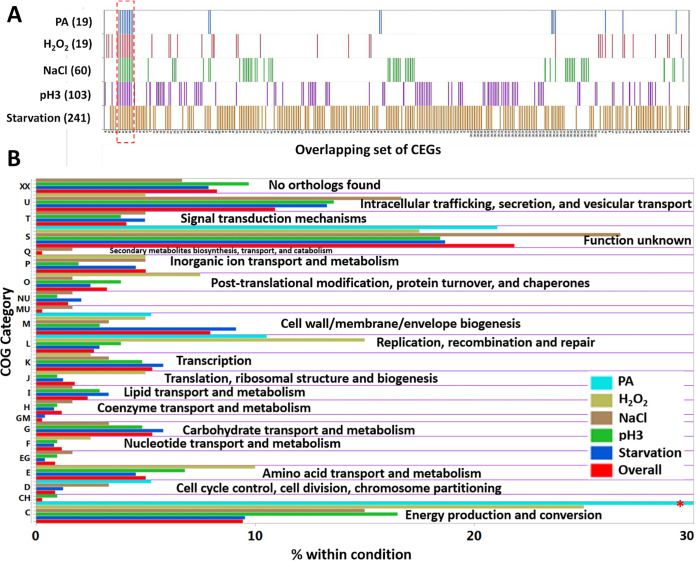
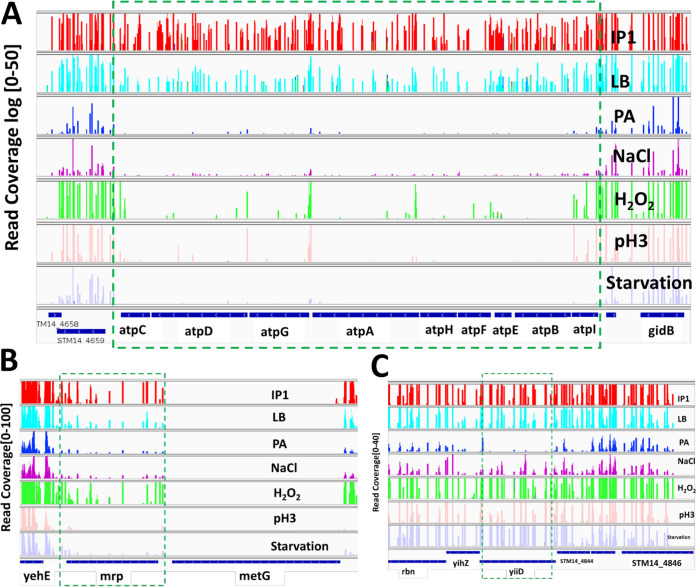
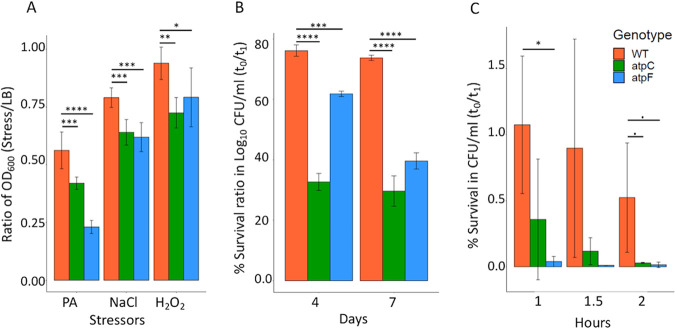
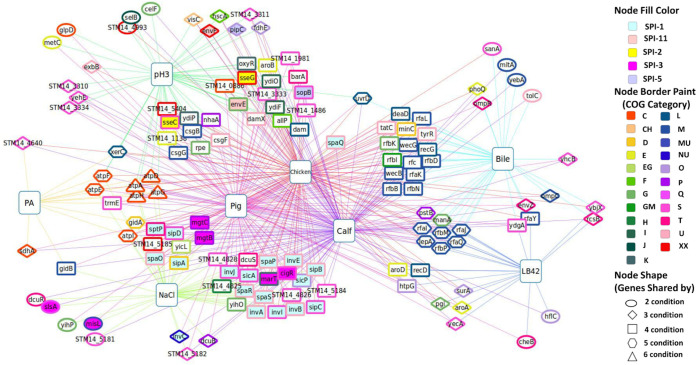
Salmonella enterica serotype Typhimurium, a nontyphoidal Salmonella (NTS), results in a range of enteric diseases, representing a major disease burden worldwide. There is still a significant portion of Salmonella genes whose mechanistic basis to overcome host innate defense mechanisms largely remains unknown. Here, we have applied transposon insertion sequencing (Tn-seq) method to unveil the genetic factors required for the growth or survival of Typhimurium under various host stressors simulated . A highly saturating Tn5 library of Typhimurium 14028s was subjected to selection during growth in the presence of short-chain fatty acid (100 mM propionate), osmotic stress (3% NaCl), or oxidative stress (1 mM HO) or survival in extreme acidic pH (30 min in pH 3) or starvation (12 days in 1× phosphate-buffered saline [PBS]). We have identified a total of 339 conditionally essential genes (CEGs) required to overcome at least one of these conditions mimicking host insults. Interestingly, all eight genes encoding FF-ATP synthase subunit proteins were required for fitness in all five stresses. Intriguingly, a total of 88 genes in Salmonella pathogenicity islands (SPI), including SPI-1, SPI-2, SPI-3, SPI-5, SPI-6, and SPI-11, are also required for fitness under the conditions. Additionally, by comparative analysis of the genes identified in this study and the genes previously shown to be required for fitness, we identified novel genes (, , , , , , and the genes encoding putative proteins STM14_1138, STM14_3334, STM14_4825, and STM_5184) that have compelling potential for the development of vaccines and antibacterial drugs to curb Salmonella infection. Salmonella enterica serotype Typhimurium is a major human bacterial pathogen that enters the food chain through meat animals asymptomatically carrying this pathogen. Despite the rich genome sequence data, a significant portion of Salmonella genes remain to be characterized for their potential contributions to virulence. In this study, we used transposon insertion sequencing (Tn-seq) to elucidate the genetic factors required for growth or survival under various host stressors, including short-chain fatty acids, osmotic stress, oxidative stress, extreme acid, and starvation. Among the total of 339 conditionally essential genes (CEGs) that are required under at least one of these five stress conditions were 221 previously known virulence genes required for fitness during infection in at least one of four animal species, including mice, chickens, pigs, and cattle. This comprehensive map of virulence phenotype-genotype in Typhimurium provides a roadmap for further interrogation of the biological functions encoded by the genome of this important human pathogen to survive in hostile host environments.
肠炎沙门氏菌血清型鼠伤寒,非伤寒沙门氏菌(NTS),导致一系列肠道疾病,是全球主要疾病负担之一。仍有相当一部分沙门氏菌基因的机制基础,以克服宿主先天防御机制在很大程度上仍然未知。在这里,我们应用转座子插入测序(Tn-seq)方法来揭示在各种宿主应激下生长或存活所需的遗传因素。鼠伤寒 14028s 的高饱和度 Tn5 文库在存在短链脂肪酸(100mM 丙酸盐)、渗透压应激(3%NaCl)或氧化应激(1mM HO)时进行选择,或在极端酸性 pH(pH3 下 30min)或饥饿(1×磷酸缓冲盐水[PBS]中 12 天)下存活。我们总共鉴定出 339 个条件必需基因(CEGs),这些基因至少需要克服一种模拟宿主损伤的条件。有趣的是,所有编码 FF-ATP 合酶亚基蛋白的八个基因都需要在所有五种应激下适应。有趣的是,沙门氏菌致病岛(SPI)中的总共 88 个基因,包括 SPI-1、SPI-2、SPI-3、SPI-5、SPI-6 和 SPI-11,在这些条件下也需要适应。此外,通过对本研究中鉴定的基因与先前显示适应所需的基因进行比较分析,我们鉴定出了一些新的基因(,,,,,, 和编码假定蛋白 STM14_1138、STM14_3334、STM14_4825 和 STM_5184 的基因),这些基因具有开发疫苗和抗菌药物以抑制沙门氏菌感染的巨大潜力。肠炎沙门氏菌血清型鼠伤寒是一种主要的人类细菌病原体,通过无症状携带这种病原体的肉用动物进入食物链。尽管有丰富的基因组序列数据,但仍有相当一部分沙门氏菌基因有待对其在毒力方面的潜在贡献进行特征描述。在这项研究中,我们使用转座子插入测序(Tn-seq)来阐明在各种宿主应激下生长或存活所需的遗传因素,包括短链脂肪酸、渗透压应激、氧化应激、极端酸和饥饿。在至少一种五种应激条件下需要的总共 339 个条件必需基因(CEGs)中,有 221 个是先前已知的毒力基因,这些基因在至少一种四种动物物种(包括小鼠、鸡、猪和牛)的感染期间适应。这种鼠伤寒的毒力表型-基因型的综合图谱为进一步研究该重要人类病原体基因组编码的生物学功能提供了路线图,以使其在宿主环境中生存。