Degens Hans, Paudyal Arjun, Kwakkel Gert, Slevin Mark, Maas Huub
Department of Life Sciences, Manchester Metropolitan University, Manchester, UK.
Institute of Sport Science and Innovations, Lithuanian Sports University, Kaunas, Lithuania.
Physiol Rep. 2024 Jul;12(14):e16153. doi: 10.14814/phy2.16153.
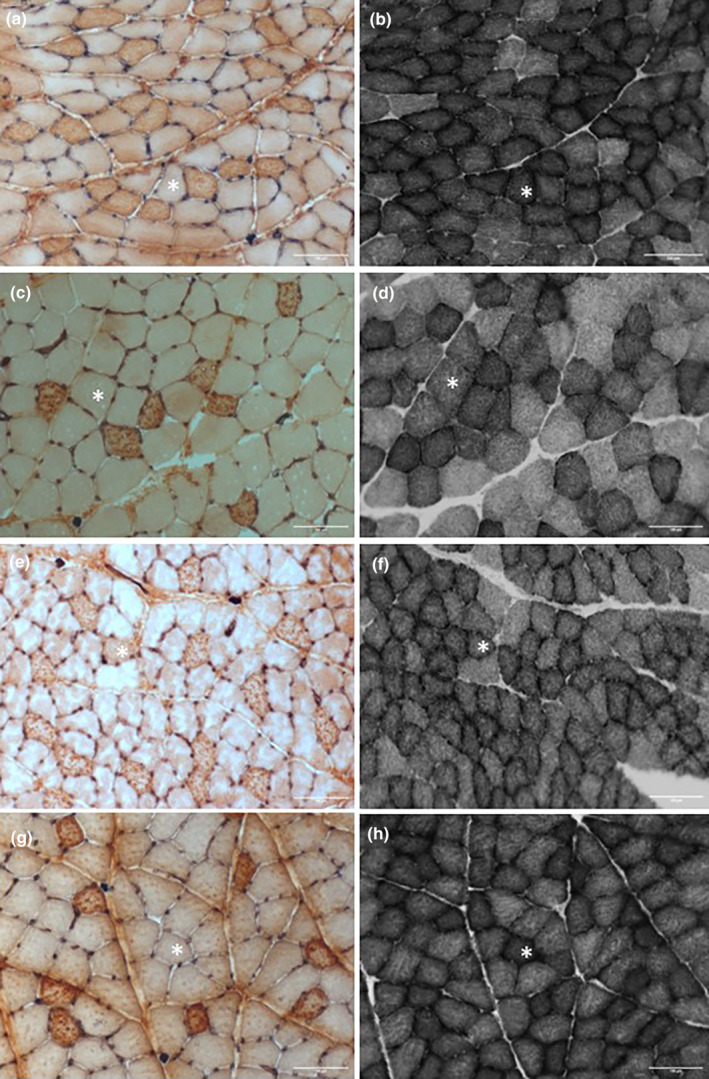
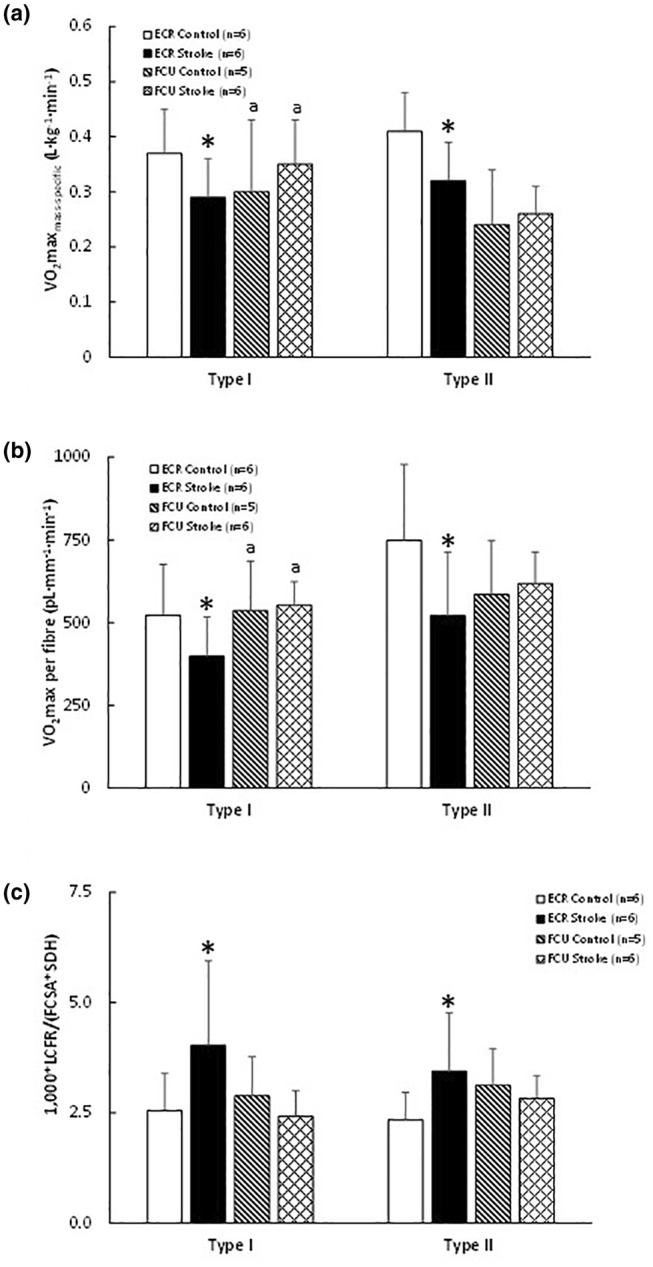
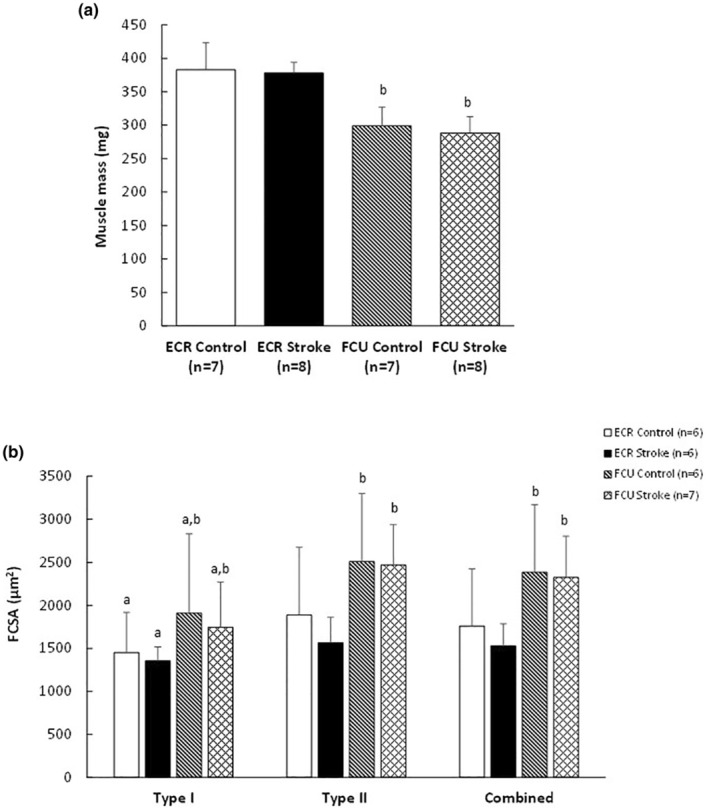
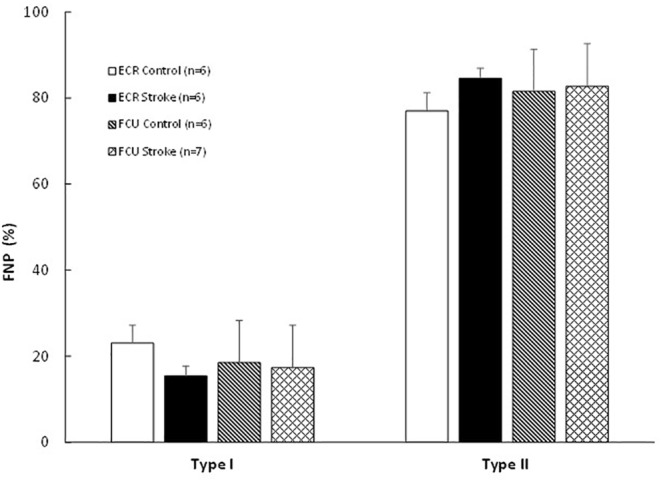
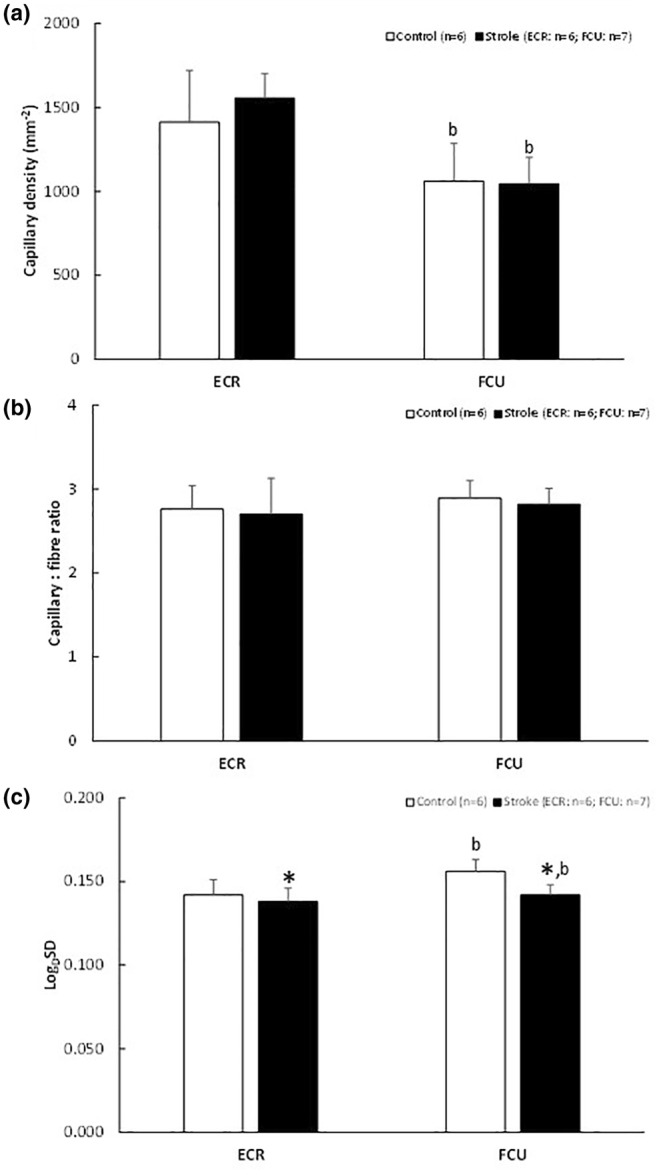
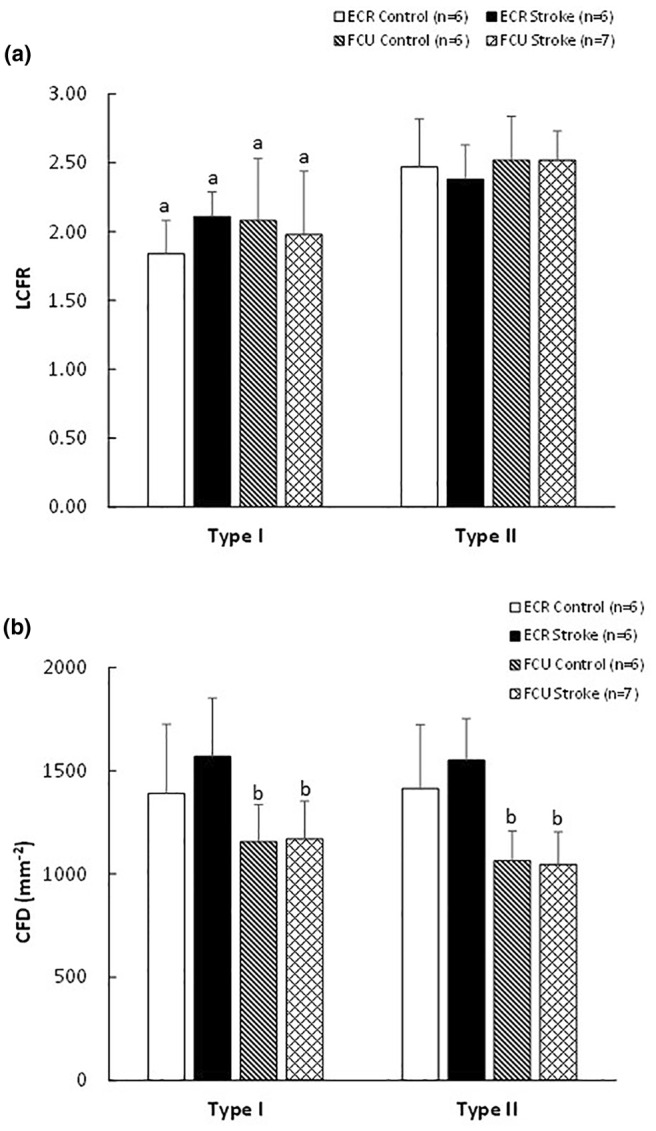
Stroke is not only associated with muscle weakness, but also associated with reduced muscle fatigue resistance and reduced desaturation during exercise that may be caused by a reduced oxidative capacity and/or microvasculature. Therefore, the objective of the present study was to determine the effects of stroke on muscle mass, fiber size and shape, capillarization and oxidative capacity of the rat m. extensor carpi radialis (ECR) and m. flexor carpi ulnaris (FCU) after a photothrombotic stroke in the forelimb region of the primary sensorimotor cortex. The main observation of the present study was that 4 weeks after induction of stroke there were no significant changes in muscle fiber size and shape. Although there was no significant capillary rarefaction, there was some evidence for remodeling of the capillary bed as reflected by a reduced heterogeneity of capillary spacing (p = 0.006) that may result in improved muscle oxygenation. In the ECR, but not in the FCU, this was accompanied by reduction in muscle fiber oxidative capacity as reflected by reduced optical density of sections stained for succinate dehydrogenase (p = 0.013). The reduced oxidative capacity and absence of significant capillary rarefaction resulted in a capillary to fiber ratio per unit of oxidative capacity that was higher after stroke in the ECR (p = 0.01), but not in the FCU. This suggests that at least during the early stages, stroke is not necessarily accompanied by muscle fiber atrophy, and that stroke-induced reductions in oxidative capacity resulting in relative excess of capillarization are muscle specific.
中风不仅与肌肉无力有关,还与运动期间肌肉抗疲劳能力降低和去饱和作用减弱有关,这可能是由氧化能力和/或微血管系统降低所致。因此,本研究的目的是确定在初级感觉运动皮层前肢区域进行光血栓性中风后,中风对大鼠桡侧腕伸肌(ECR)和尺侧腕屈肌(FCU)的肌肉质量、纤维大小和形状、毛细血管化和氧化能力的影响。本研究的主要观察结果是,中风诱导后4周,肌肉纤维大小和形状没有显著变化。虽然没有明显的毛细血管稀疏,但有一些证据表明毛细血管床发生了重塑,这表现为毛细血管间距异质性降低(p = 0.006),这可能会改善肌肉氧合。在ECR中,但在FCU中未出现这种情况,同时伴随着肌肉纤维氧化能力的降低,这表现为琥珀酸脱氢酶染色切片的光密度降低(p = 0.013)。氧化能力降低且无明显的毛细血管稀疏导致单位氧化能力的毛细血管与纤维比率在中风后ECR中较高(p = 0.01),但在FCU中并非如此。这表明至少在早期阶段,中风不一定伴有肌肉纤维萎缩,且中风引起的氧化能力降低导致毛细血管相对过剩具有肌肉特异性。