School of Biomedical Sciences, University of Leeds, UK.
Department of Life Sciences, Manchester Metropolitan University, UK.
J Physiol. 2020 Mar;598(6):1187-1203. doi: 10.1113/JP278975. Epub 2020 Feb 26.
Loss of skeletal muscle capillaries is thought to contribute to a reduction in exercise tolerance, but the relative contribution of a compromised microcirculation with disease, in isolation of co-morbidities, to impaired muscle function is unknown. We therefore developed a novel method to randomly occlude capillaries in the rat hindlimb to mimic the capillary rarefaction observed in many conditions. We demonstrate that muscle fatigue resistance is closely coupled with functional microvascular density, independent of arterial blood flow, while disturbance of the microcirculation leads to long-term impairment of muscle function if left untreated. Mechanical stretch due to muscle overload causes a restoration of fatigue resistance via angiogenic remodelling. These observations highlight the importance of a healthy microcirculation and suggest that restoring impaired microvascular supply, regardless of disease co-morbidities, will assist recovery of exercise tolerance in a variety of conditions that limit quality of life.
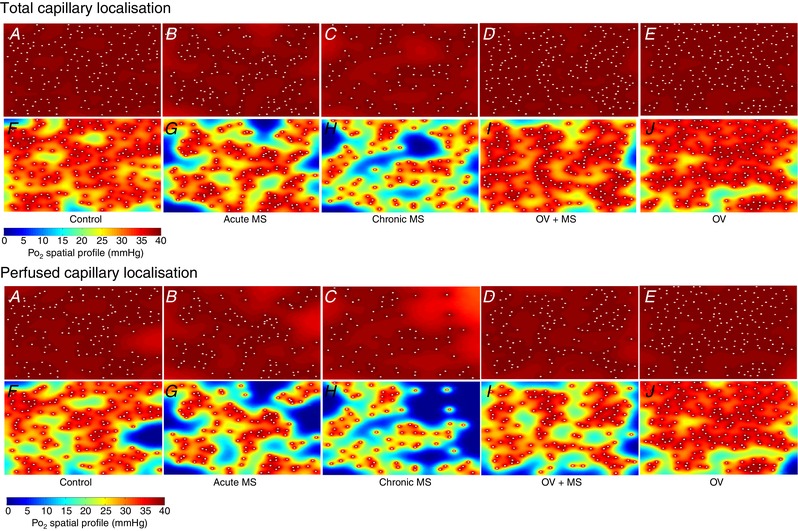
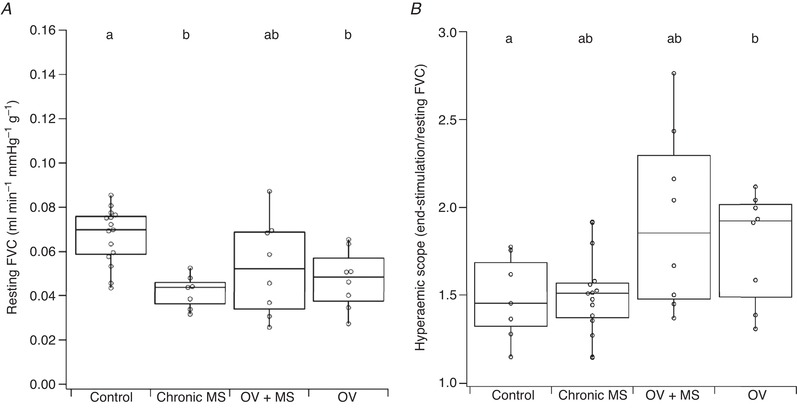
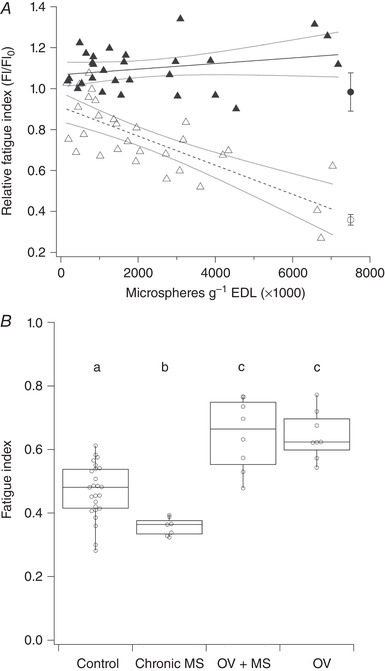
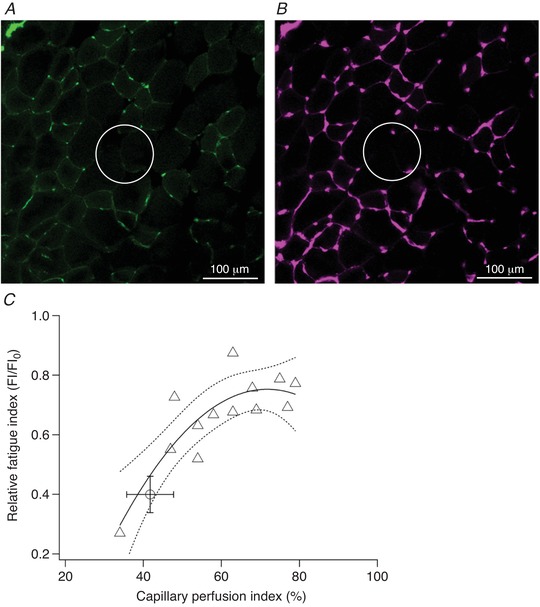
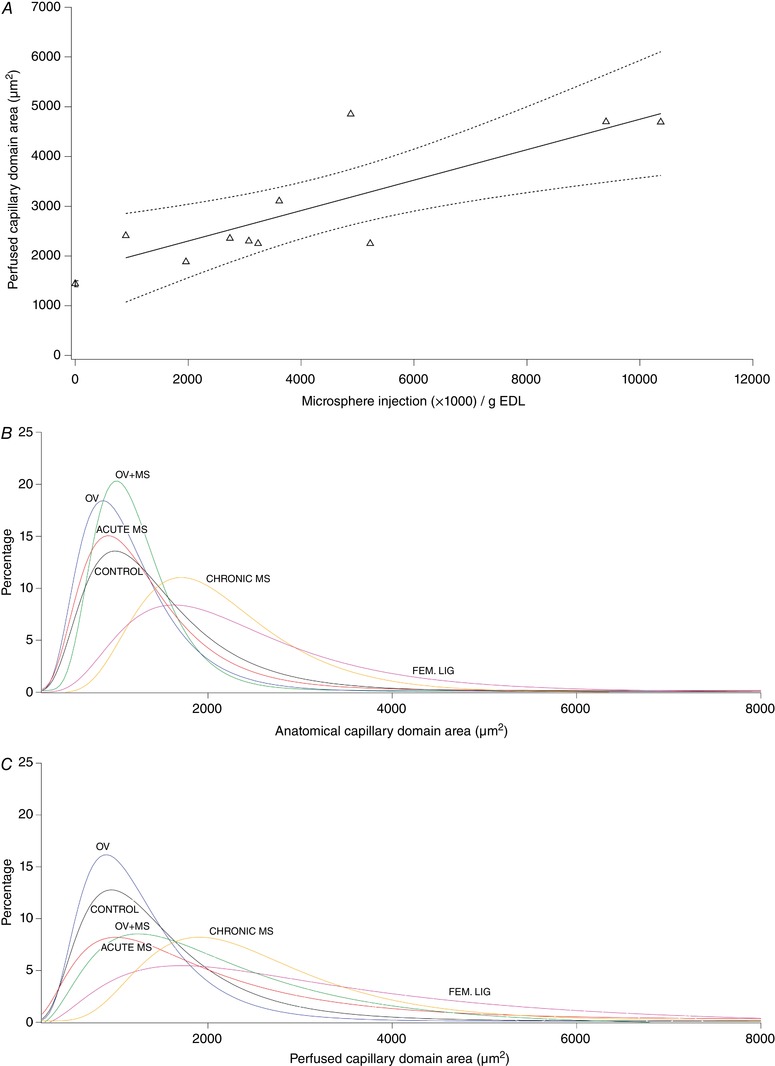
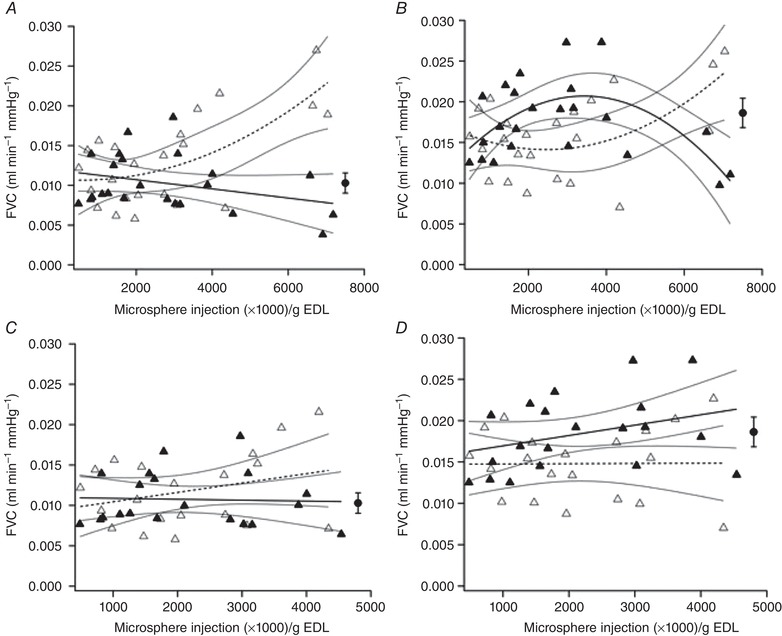
To what extent microvascular rarefaction contributes to impaired skeletal muscle function remains unknown. Our understanding of whether pathological changes in the microcirculation can be reversed remains limited by a lack of basic physiological data in otherwise healthy tissue. The principal objectives here were to: (1) quantify the effect of random microvascular rarefaction on limb perfusion and muscle performance, and (2) determine if these changes could be reversed. We developed a novel protocol in rats whereby microspheres injected into the femoral artery allowed a unilateral reduction in functional capillary density in the extensor digitorum longus (EDL), and assessed acute and chronic effects on muscle function. Simultaneous bilateral EDL force and hindlimb blood flow measurements were made during electrical stimulation. Following functional capillary rarefaction there was an acute microsphere dose-dependent reduction in muscle fatigue resistance (P < 0.001), despite preserved femoral artery perfusion. Histological analysis of EDL samples taken from injected animals confirmed a positive correlation between the proportion of functional capillaries and fatigue resistance (P = 0.002). Such impaired performance persisted for at least 2 weeks (P = 0.016). Concomitant mechanical overload improved both perfused capillary density and fatigue resistance (P<0.05), confirming that the capacity for muscle remodelling was retained following chronic distributed ischaemia, and that the impact of capillary rarefaction could be alleviated. These results demonstrate that loss of functional capillaries is detrimental to muscle function, even in otherwise healthy tissue, independent of arterial perfusion. Restoration of muscle performance following a mechanical overload stimulus indicates that angiogenic treatments to alleviate microvascular rarefaction may be key to restoring exercise tolerance.
骨骼肌毛细血管的丧失被认为导致运动耐量降低,但在不考虑合并症的情况下,疾病引起的微循环受损对肌肉功能的相对贡献尚不清楚。因此,我们开发了一种新方法来随机阻塞大鼠后肢的毛细血管,以模拟许多情况下观察到的毛细血管稀疏。我们证明肌肉疲劳抵抗力与功能性微血管密度密切相关,与动脉血流无关,而如果不加以治疗,微循环的干扰会导致肌肉功能的长期损害。肌肉超负荷引起的机械拉伸通过血管生成重塑恢复疲劳抵抗力。这些观察结果强调了健康微循环的重要性,并表明无论疾病合并症如何,恢复受损的微血管供应都将有助于在各种限制生活质量的情况下恢复运动耐量。
微循环稀疏对骨骼肌功能的影响程度尚不清楚。我们对病理变化是否可以逆转的理解仍然受到健康组织中基本生理数据缺乏的限制。这里的主要目标是:(1)量化随机微血管稀疏对肢体灌注和肌肉性能的影响,以及(2)确定这些变化是否可以逆转。我们在大鼠中开发了一种新方案,其中注射到股动脉中的微球允许在伸趾长肌(EDL)中单侧降低功能性毛细血管密度,并评估了对肌肉功能的急性和慢性影响。在电刺激期间同时进行双侧 EDL 力和后肢血流测量。在功能毛细血管稀疏后,尽管股动脉灌注保持不变,但肌肉疲劳抵抗力仍呈微球剂量依赖性降低(P < 0.001)。从注射动物中取出的 EDL 样本的组织学分析证实了功能性毛细血管比例与疲劳抵抗力之间的正相关关系(P = 0.002)。这种受损的性能至少持续 2 周(P = 0.016)。同时进行机械超负荷可改善灌注毛细血管密度和疲劳抵抗力(P < 0.05),证实了肌肉重塑能力在慢性分布性缺血后保留,并且毛细血管稀疏的影响可以减轻。这些结果表明,即使在健康组织中,功能性毛细血管的丧失也会对肌肉功能造成损害,而与动脉灌注无关。机械超负荷刺激后肌肉性能的恢复表明,缓解微血管稀疏的血管生成治疗可能是恢复运动耐量的关键。